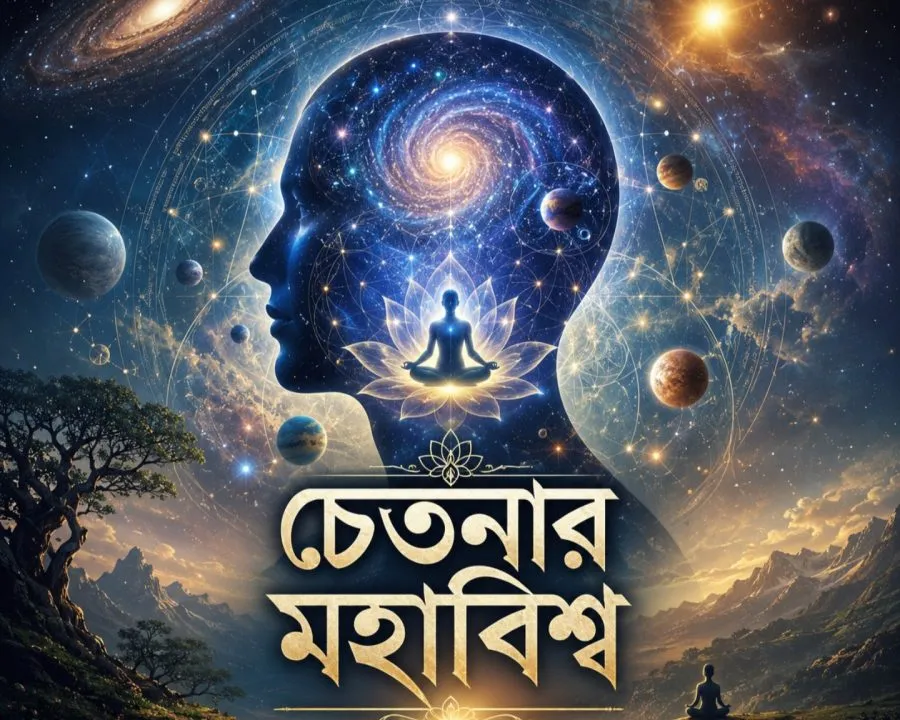
A Universe of Consciousness: Exploring Panpsychism
For decades, orthodox neuroscience maintained that human consciousness was purely an epiphenomenon of the brain. Complex electrical and chemical signaling across trillions of neuronal synapses gave rise to emotions, memories, and self-awareness—and that was considered the full story.
Panpsychism: Consciousness as a Fundamental Cosmic Property
Yet the explanatory gap known as the “hard problem” of consciousness remains unresolved. Today, a growing circle of physicists and philosophers are revisiting an ancient concept: panpsychism. This philosophical perspective suggests that consciousness is not confined exclusively to complex mammalian brains, but may represent an intrinsic, foundational feature of physical reality itself. In its modern formulation, the rudiments of experiential proto-consciousness may reside within the elementary fabric of the universe.
Once dismissed as mystical conjecture, recent advances at the intersection of physics and neurobiology have prompted serious academic re-examination.
Quantum Biology and the Human Brain
The emerging discipline of quantum biology plays an influential role in this dialogue. Scientists have confirmed that non-trivial quantum phenomena, such as coherence and tunneling, operate within biological systems, including avian magnetoreception and photosynthetic energy transport. This raises an inevitable question: could similar quantum processes function within the human brain?
The Orchestrated Objective Reduction Hypothesis
In response to this question, mathematical physicist Roger Penrose and anesthesiologist Stuart Hameroff formulated the controversial Orch OR (Orchestrated Objective Reduction) hypothesis. They proposed that quantum computations occur within cellular protein structures called microtubules inside brain neurons, and that the collapse of these quantum wavefunctions gives rise to conscious moments.
Consciousness in the Deep Fabric of Spacetime
Some theoretical physicists hypothesize that quantum informational states associated with consciousness may exhibit non-locality, implying that awareness is not an isolated intracranial product, but intrinsically woven into the geometric fabric of the cosmos.
None of these frameworks have achieved definitive experimental verification. Science has not yet resolved whether consciousness is an emergent biological computation or an irreducible cosmic primitive.
Yet one physical truth remains beyond dispute: every atom composing our bodies was forged within the thermonuclear cores of ancient dying stars. We are transformed stardust. Today, that stardust contemplates, questions, and marvels at its own existence.
We do not merely inhabit the universe; through conscious observation, the cosmos experiences itself. Whether consciousness is an accidental byproduct of biology or a fundamental property of spacetime remains one of science’s ultimate frontiers.