Visualizing the Electron Wave Function: The First Direct Quantum Image
From Mathematical Fiction to Physical Reality
At the dawn of quantum mechanics in the 1920s, physicists discovered that subatomic particles such as electrons do not orbit atomic nuclei in neat classical trajectories like planets around a star. Instead, an electron exists as a probability cloud described by a mathematical equation: the electron wave function.
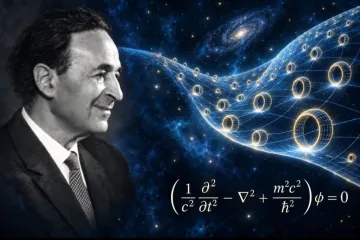
Formulated by Austrian physicist Erwin Schrödinger—who was awarded the 1933 Nobel Prize in Physics—the wave function ($psi$) defines the quantum probability amplitude of discovering an electron at any specific coordinate in space. For nearly a century, however, this wave function remained an abstract mathematical tool, inaccessible to direct visual observation.
Photoionization Microscopy: Capturing the Unseen
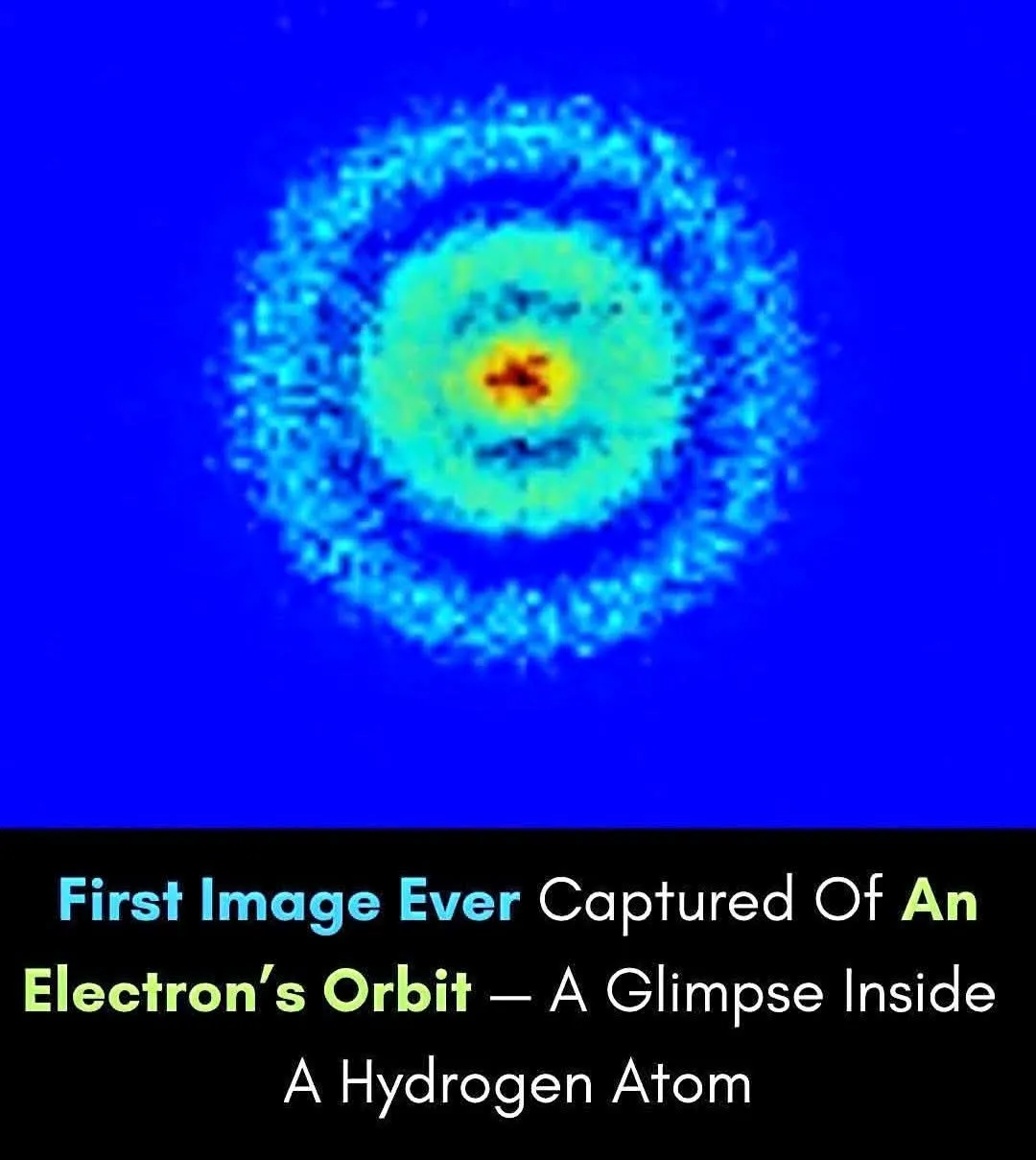
In 2013, an international team of experimental physicists led by researchers at Lund University in Sweden achieved a historic breakthrough. Utilizing an advanced technique known as photoionization microscopy, the team produced the world’s first direct visual snapshot of an atomic electron orbital.
The experimental setup involved ionizing hydrogen atoms trapped inside a high-voltage electrostatic chamber using precisely tuned laser pulses. When irradiated, the hydrogen atom’s solitary electron absorbs optical energy, detaching from the proton core.
Interference Patterns and Quantum Imaging
As the liberated electron escaped the atomic potential well, its quantum wave nature generated an interference pattern as it drifted toward a specialized two-dimensional microchannel plate detector. By recording the arrival coordinates of hundreds of thousands of individual photoelectrons, researchers reconstructed the spatial interference rings with extraordinary precision.
The resulting visual image matched Schrödinger’s theoretical hydrogen wave function predictions exactly, capturing the resonant nodal structures and concentric probability lobes that describe where an electron spends its time around the nucleus.
Decoding the Probability Density Cloud
The image revealed concentric rings of light and shadow, representing the probability density ($|psi|^2$):
- Bright, luminous bands represent regions where the likelihood of finding the electron is highest.
- Dark, unilluminated nodes represent regions where the probability density drops to zero.
This image provided unambiguous visual evidence that atomic electrons do not follow sharp classical tracks; rather, their very existence in an atom is defined by a diffuse, oscillating quantum wave envelope.
Conclusion
The direct imaging of an electron wave function stands as a landmark validation of quantum mechanics. A mathematical construct conceived on paper a century ago can now be seen by human eyes, confirming that nature at its most fundamental level is woven from probability waves.