Does Consciousness Die?
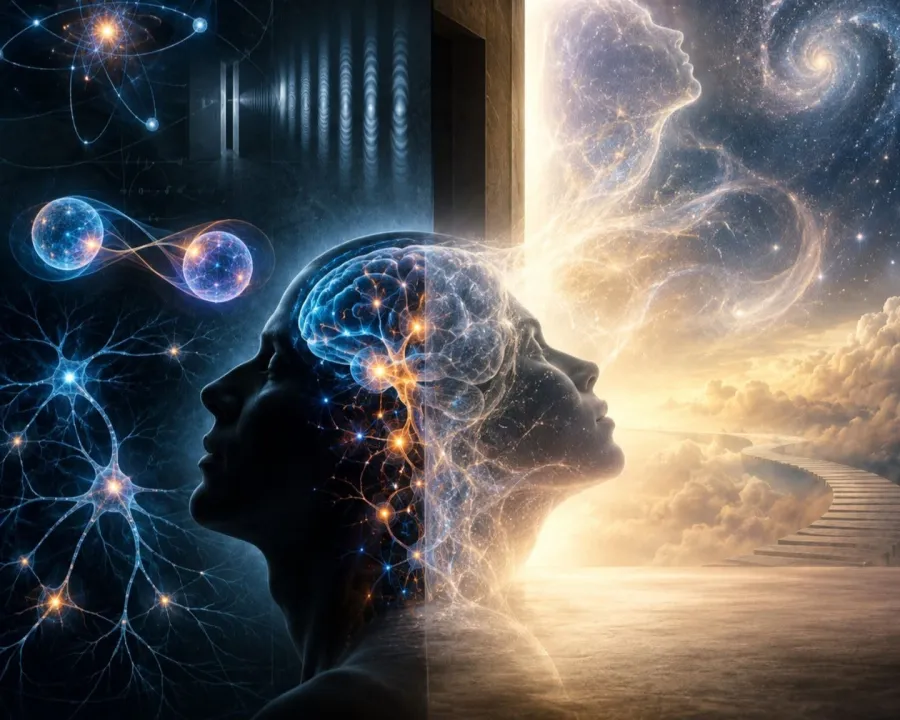
Does bodily death signify the absolute extinction of personal experience? This timeless inquiry has engaged theology, philosophy, and literature for millennia. Yet for contemporary science, the mystery takes a subtly different angle: what is the true physical nature of our awareness, and when brain activity ceases, does consciousness die? Astonishingly, modern science still lacks a definitive answer even to the initial premise.
The Bizarre Fabric of Quantum Reality
Over the past century, quantum physics has demonstrated that the subatomic realm operates under principles completely foreign to our macroscopic, everyday experience.
A quantum system can persist in a superposition of multiple mutually exclusive states simultaneously. Furthermore, two entangled particles can become interconnected such that neither can be fully described without reference to the other, regardless of spatial distance. The physical reality of quantum entanglement was rigorously vindicated through pioneering experiments that earned Alain Aspect, John Clauser, and Anton Zeilinger the 2022 Nobel Prize in Physics.
Even more counterintuitively, the configuration of an experimental apparatus and the specific physical properties measured intimately dictate the observed outcomes, as famously demonstrated by the double-slit experiment.
Yet it is crucial to dismantle a widespread misconception: this does not imply that human consciousness conjures reality into existence. No accepted principle of quantum mechanics mandates that a conscious observer must be present for a quantum state reduction to occur.
The Mystery of Subjective Experience
Here lies the heart of the neuroscientific dilemma. We know that conscious awareness is intimately intertwined with brain activity. Yet how do electrical spikes and neurotransmitter fluxes across billions of biological neurons give rise to the rich tapestry of subjective experience—the “qualia” of perceiving redness, feeling affection, or experiencing physical pain?
Science does not yet possess a consensus framework for consciousness. Models like Global Workspace Theory, Integrated Information Theory, and Predictive Processing offer valuable paradigms, yet none has conclusively solved the “hard problem”.
Confronted with this impasse, some theorists have asked whether subtle quantum processes operate within neural wetware to orchestrate conscious experience.
Penrose’s Provocative Hypothesis: Orch-OR
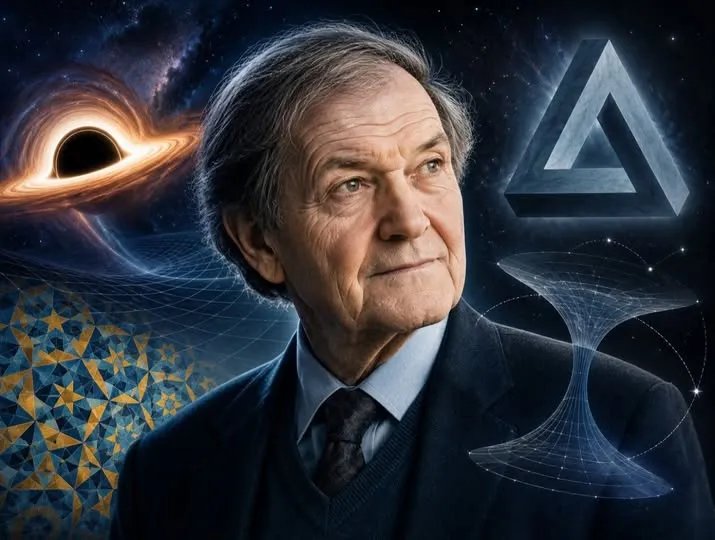
Nobel laureate physicist Sir Roger Penrose and anesthesiologist Stuart Hameroff advanced one of the most vigorously debated proposals in modern biophysics: Orchestrated Objective Reduction (Orch-OR).
They hypothesized that quantum computations take place within microtubules—structural protein lattices inside the cytoskeleton of neurons—and that these quantum events underpin conscious cognition.
While the concept is undeniably fascinating, it remains far from an established scientific fact. Whether coherent quantum states can endure inside the warm, noisy environment of the brain is intensely contested, and empirical verification remains scarce.
What Happens Beyond Biological Death?
This leads directly to the most contentious question of all: if consciousness possesses quantum mechanical roots, could it somehow persist after the biological brain dies?
While a tempting thought, this is precisely where scientific rigor must draw the line. Quantum physics has provided zero empirical evidence that human consciousness, personality, or memory survives biological death.
Superposition exists. Quantum entanglement is real. The quantum realm is delightfully strange. Yet none of these phenomena demonstrates that personal identity endures in some ethereal quantum realm after the heart and brain expire.
Such conjectures remain speculative philosophy rather than verified science. As of today, there is no credible scientific evidence supporting the post-mortem survival of consciousness.
The Enduring Enigma
And yet, the mystery persists. The deepest unknown here is not quantum mechanics—it is consciousness itself.
We have charted neural pathways, mapped cerebral blood flow, and deciphered cortical regions. Yet how a three-pound bundle of organic tissue generates subjective self-awareness, dreams, love, and grief remains nature’s greatest puzzle.
To assert that consciousness survives bodily demise lacks scientific proof. Yet modern physics teaches us that nature is frequently far stranger than our common sense suggests.
Perhaps the complete explanation of consciousness will eventually emerge purely from neurobiology; perhaps it will require uncovering deeper physical principles.
The beauty of science lies right here: not in claiming answers we do not possess, but in standing before the unknown and candidly acknowledging, “We do not know yet.”