A Unique Legacy: Father-and-Son Winners in Nobel Prize History
The Prestige of the Nobel Prize
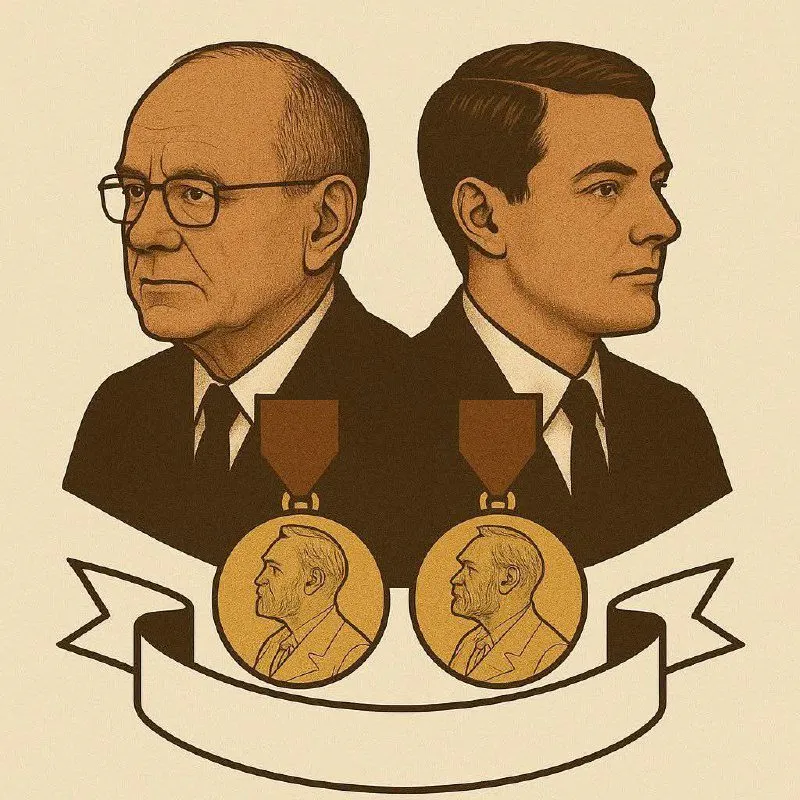
Winning a Nobel Prize represents the pinnacle of global scientific recognition, celebrating contributions that fundamentally advance human knowledge. But when two successive generations of the same family—father and son—both earn this supreme accolade, it transcends personal achievement into an extraordinary dynastic legacy.
Seven Famous Father-and-Son Laureate Pairs
Such intellectual continuity is exceedingly rare; in the history of the Nobel Prize, only seven father-and-son pairs have achieved this monumental honor, either through independent breakthroughs or collaborative partnerships.
The Electron Pioneers: J. J. Thomson and George Thomson
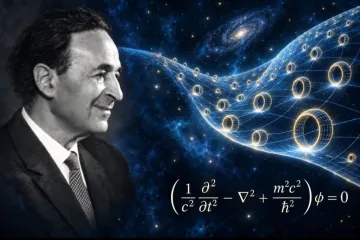
Perhaps the most celebrated scientific dynasty is J. J. Thomson and his son George Paget Thomson. The elder Thomson won the 1906 Nobel Prize in Physics for discovering the electron as a fundamental subatomic particle. Decades later in 1937, his son George received the Nobel Prize in Physics for demonstrating electron diffraction, proving that electrons also behave as waves. In a poetic scientific symmetry, the father proved the electron is a particle, and the son proved it is a wave.
X-Ray Crystallography: The Bragg Partnership
William Henry Bragg and his son William Lawrence Bragg shared the 1915 Nobel Prize in Physics for establishing the science of X-ray crystallography, showing how X-ray diffraction patterns reveal the atomic architecture of crystals. Lawrence Bragg received the prize at just 25 years of age, remaining to this day the youngest Nobel laureate in any scientific discipline.
Quantum Physics: Niels Bohr and Aage Bohr
Niels Bohr and his son Aage Bohr represent another towering lineage in physics. Niels Bohr was awarded the 1922 Nobel Prize in Physics for his foundational quantum model of atomic structure. In 1975, his son Aage Bohr received the Nobel Prize in Physics for developing the collective model of the atomic nucleus. The father uncovered the architecture of the atom, while the son decoded the complex geometry of its nucleus.
Precision Spectroscopy: The Siegbahn Family
Swedish physicists Manne Siegbahn and his son Kai Siegbahn left an enduring mark on spectroscopy. Manne won the 1924 Nobel Prize in Physics for breakthroughs in X-ray spectroscopy, while Kai was awarded the 1981 prize for developing high-resolution electron spectroscopy (ESCA), a technique indispensable to modern chemical analysis.
Enzymes and Neurotransmitters: The von Euler Dynasty
In biochemistry and physiology, Hans von Euler-Chelpin won the 1929 Nobel Prize in Chemistry for his research on sugar fermentation and enzyme function. Forty-one years later in 1970, his son Ulf von Euler won the Nobel Prize in Physiology or Medicine for identifying noradrenaline and discovering the mechanisms of neurotransmission in nerve terminals.
DNA Synthesis and Transcription: The Kornberg Family
American biochemists Arthur Kornberg and Roger Kornberg form a legendary molecular biology duo. Arthur received the 1959 Nobel Prize in Physiology or Medicine for discovering DNA polymerase and synthesizing DNA in vitro. In 2006, his son Roger was awarded the Nobel Prize in Chemistry for elucidating the molecular basis of eukaryotic transcription—the process by which genetic instructions in DNA are copied into RNA.
From Prostaglandins to Ancient DNA: Bergström and Pääbo
The most recent example is Sune Bergström and his son Svante Pääbo. Sune won the 1982 Nobel Prize in Physiology or Medicine for discoveries concerning prostaglandins. Forty years later in 2022, Svante Pääbo received the Nobel Prize in Physiology or Medicine for pioneering paleogenomics, extracting and sequencing ancient DNA from Neanderthals to unravel human evolutionary origins.
The Generational Flow of Curiosity and Excellence
These seven extraordinary father-and-son pairs illustrate that when boundless intellectual curiosity and rigorous scientific dedication are nurtured across generations, profound breakthroughs naturally follow.
An Enduring Inscription in the Annals of Science
Beyond gold medals and honors, the Nobel Prize recognizes transformative human insight. When shared across two generations, it stands as one of science’s most inspiring family traditions.