Quantum Consciousness: Is the Brain a Quantum Computer?
The Enigma of Subjective Experience
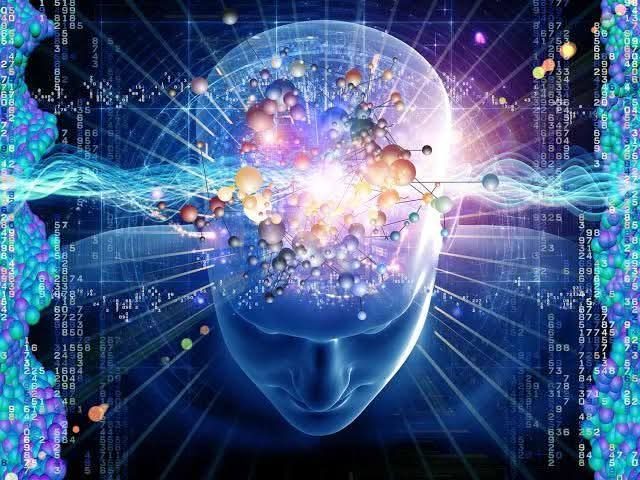
When we are moved by music, reflect on a cherished memory, or contemplate the nature of reality, where do these subjective experiences truly originate? Mainstream neuroscience asserts that subjective awareness arises solely from chemical and electrical signaling across roughly 100 billion neurons in the human brain. Yet can electrical currents coursing through synaptic junctions truly generate subjective consciousness—the raw feeling of “what it is like to be”? Pondering this profound question, a daring group of physicists and neuroscientists proposed a radical hypothesis: the human brain may operate not merely as a classical biological processor, but as a biological quantum computer. This framework is known as quantum consciousness.
The Orch-OR Theory of Penrose and Hameroff
In the mid-1990s, this idea found mathematical and biological expression through an extraordinary collaboration between Nobel laureate physicist Sir Roger Penrose and anesthesiologist Dr. Stuart Hameroff. Together, they introduced the Orchestrated Objective Reduction theory, commonly known as Orch-OR. Penrose argued that human understanding is inherently non-computational—it transcends formal algorithmic rules and Gödelian limits—suggesting that consciousness must tap into fundamental quantum processes woven into the geometry of spacetime.
Microtubules as Quantum Resonators
Where could delicate quantum states survive within the warm biological brain? Dr. Hameroff pointed to microtubules—tiny cylindrical protein polymers that constitute the structural cytoskeleton inside neurons. According to the Orch-OR model, tubulin subunits within microtubules sustain coherent quantum superpositions. When these quantum states reach a specific gravitational threshold, they undergo objective reduction—a collapse orchestrated by cellular architecture. Each collapse event corresponds to an elementary moment of conscious perception, and the continuous cascade across billions of neurons synthesizes our unified stream of consciousness.
Skepticism, Decoherence, and the Scientific Debate
Orch-OR remains one of modern science’s most fiercely contested ideas. Mainstream neuroscientists and physicists largely criticized the theory, centering their objections on quantum decoherence. Quantum superpositions are notoriously fragile, requiring ultra-cold, vibration-free environments to prevent environmental noise from collapsing them. By contrast, the human brain is warm, wet, and chemically chaotic. Physicist Max Tegmark calculated that quantum superpositions inside neural microtubules would decohere in fractions of a femtosecond—far too rapidly to drive biological brain functions operating on millisecond timescales.
New Frontiers in Quantum Biology
Despite heavy skepticism, the emerging discipline of quantum biology has demonstrated that nature often harnesses quantum phenomena in ambient biological conditions, such as excitation energy transfer in plant photosynthesis and magnetoreception in migratory birds. Furthermore, recent studies on how volatile anesthetics selectively bind to microtubule proteins without disrupting synaptic receptors have rekindled interest in Orch-OR hypotheses. If consciousness truly has quantum roots, it implies that classical artificial intelligence may never achieve genuine sentience without quantum architectures. Whether our thoughts are tethered to the quantum fabric of the universe remains one of science’s greatest unanswered mysteries.