The Hidden Mathematics of Nature

We typically appreciate nature through the lens of aesthetic wonder. Floral petals, seashell spirals, branching oak boughs, intricate snowflakes, winding river meanders, and jagged lightning bolts appear as works of spontaneous art. Yet beneath this outward beauty lies a profound reality: nature operates according to strict mathematical principles. Ancient Greek philosopher Pythagoras believed that numbers formed the ultimate foundation of reality; modern science suggests he was remarkably close to the truth.
The Fibonacci Sequence and the Golden Ratio
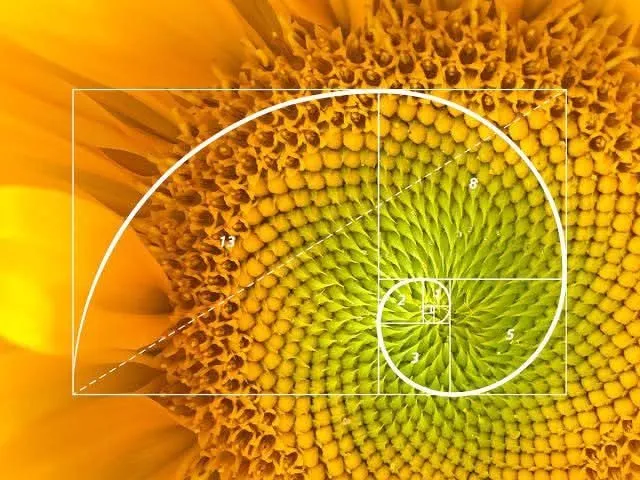
Among the most famous manifestations of natural mathematics is the Fibonacci sequence: 1, 1, 2, 3, 5, 8, 13, 21, and so on, where each term is the sum of the preceding two. Italian mathematician Leonardo of Pisa, known as Fibonacci, brought this progression to widespread prominence. Intriguingly, the spiral arrangement of sunflower florets, the scales of pine cones, the hexagonal geometry of pineapples, and petal counts in roses follow this exact sequence. The underlying driver is evolutionary efficiency: nature seeks maximum packaging and light exposure with minimal energy expenditure. Connected to this sequence is the Golden Ratio, roughly 1.618, whose logarithmic spirals appear in nautilus shells, phyllotaxis, and even the sweeping arms of spiral galaxies.
Turing Patterns: Chemical Blueprints in Biology
Natural mathematics extends beyond geometric spirals. In 1952, British polymath Alan Turing demonstrated that simple reaction-diffusion chemical systems can spontaneously generate complex biological patterns. Known today as Turing patterns, this mathematical mechanism explains how zebras develop stripes, leopards grow rosettes, and tropical fish display intricate skin tessellations.
Fractal Geometry: Nature’s Self-Similarity
Another profound principle is fractal geometry, pioneered by Benoit Mandelbrot. Fractals describe structures displaying self-similarity: recursive patterns repeating across descending scales of magnitude. A single tree illustrates this elegantly: main limbs branch into boughs, boughs divide into twigs, and twigs split into fine shoots, repeating identical structural rules.
Fractals Across Anatomy and the Earth
The human lung mirrors this recursive architecture. The trachea bifurcates into bronchi, which branch into narrower bronchioles and terminal alveoli, packing vast gas-exchange surface area into a compact thoracic volume. Our vascular networks follow identical branching rules. Viewed from orbit, terrestrial river drainage basins resemble circulatory veins across the landscape—a fractal network carved by water seeking paths of least hydraulic resistance. Lightning operates similarly, carving stepped leaders along pathways of minimal electrical resistance. Even an instantaneous atmospheric spark represents a physical calculation of least action.
Lévy Flights: Mathematics in Animal Foraging
Mathematical patterns even govern animal locomotion. Field observations show that many predatory species forage using a statistical strategy known as a Lévy flight: clusters of short, localized searches punctuated by occasional long-range leaps, optimizing food discovery in scarce landscapes.
From DNA to the Cosmos: The Rule of Number
At the molecular core of our bodies, DNA encodes genetic blueprints through the combinatorial permutations of four nucleotide bases. Researchers have even identified Golden Ratio proportions within the helical geometry of DNA. This universal mathematics extends into deep space: Johannes Kepler revealed that planets traverse elliptical rather than circular orbits; Isaac Newton unified falling apples and lunar orbits under universal gravitation; and Albert Einstein reimagined gravity as the curvature of spacetime. As Galileo Galilei remarked centuries ago, “The book of nature is written in the language of mathematics.”
When we look at a blossom, we observe beauty; nature computes geometry. When we gaze at lightning, we see wonder; nature resolves energy equations. When we contemplate the cosmos, we perceive mystery. Deep within that mystery lies a universal mathematical order that modern physics continues to decipher.