Carbon Credits: The New Economy of Agriculture
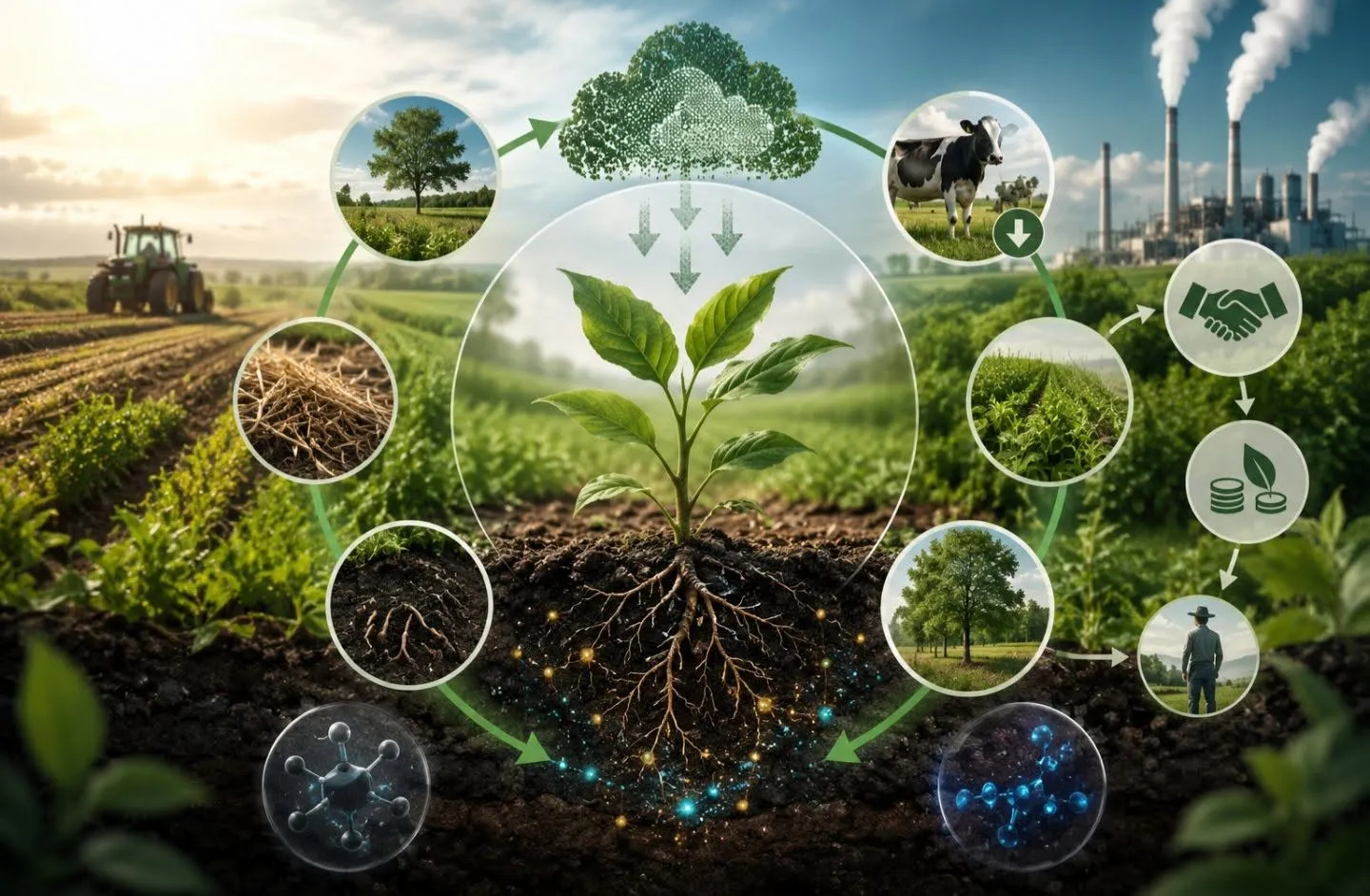
Historically, the value of agriculture was measured solely in crop yields: how much rice, wheat, fruit, or vegetables a field produced. But the world is evolving. Today, the same plot of land can produce food while simultaneously generating revenue by drawing carbon dioxide from the atmosphere. In countries like Australia, a thriving economy has emerged where sequestered carbon is treated as a tradeable agricultural commodity.
To understand how this works, consider the regulatory landscape.
Heavy industries emit immense volumes of carbon dioxide every year, driving global warming. Governments have established strict emissions caps. Facilities exceeding these limits must pay regulatory penalties or purchase carbon credits to offset their emissions.
What Exactly Is a Carbon Credit?
The concept is straightforward. If an enterprise removes one metric tonne of carbon from the atmosphere—by planting trees, locking carbon into agricultural soil, reducing livestock enteric methane emissions, or deploying beneficial soil microbes—it earns one carbon credit unit. In Australia, this is known as an Australian Carbon Credit Unit (ACCU). One unit equates to one tonne of carbon dioxide equivalent stored or avoided.
How do farmers lock carbon into their soil?
Agronomists deploy several proven techniques:
- Practicing conservation tillage or no-till farming
- Retaining crop stubble and returning organic biomass to the soil
- Planting cover crops between harvest seasons
- Integrating agroforestry and shelterbelts along field margins
- Enhancing soil microbial biodiversity
Carbon Sequestration and Financial Returns
The entire mechanism rests upon photosynthesis. Plants capture carbon dioxide from the air using solar energy, converting it into carbohydrates and organic matter. A substantial portion of this carbon travels into the soil through roots, exudates, and decomposing plant residue, remaining stably trapped in soil organic matter. This long-term storage is known as carbon sequestration.
Specialized soil sampling and remote sensing methodologies quantify the newly sequestered carbon. Once certified by accredited regulatory bodies, farmers receive tradable credits.
In Australia, an ACCU trades between thirty and thirty-five dollars. If a landholder sequesters one thousand tonnes of carbon annually across their property, that translates into thirty to thirty-five thousand dollars in additional revenue, paid by industrial emitters seeking to offset their footprint.
A New Economic Frontier for Agriculture
Under this model, farmers are not merely selling food; they are effectively selling clean air. Their land produces crops, enriches its soil biology, and captures carbon—with farmers compensated directly for their role in climate mitigation. This practice is termed carbon farming.
Where farm revenue was once dictated entirely by rainfall, yields, and commodity prices, a new revenue stream now exists: financial rewards for keeping the planet cool.
What does this mean for Bangladesh?
The framework is steadily gaining traction across South Asia. Opportunities in forestry, agro-waste management, and manufacturing are expanding. In agriculture, the potential is vast. If millions of smallholders adopt regenerative soil management practices, carbon credits could eventually complement rice and jute harvests with tangible income.
Achieving this requires rigorous carbon accounting, long-term monitoring, verified registries, and international certification. Yet the direction of travel is unmistakable. Future agriculture will integrate three pillars: feeding humanity, sequestering carbon, and restoring ecological equilibrium.