Signs of Life on Exoplanet K2-18b: JWST Discovery
New Horizons in the Search for Extraterrestrial Life
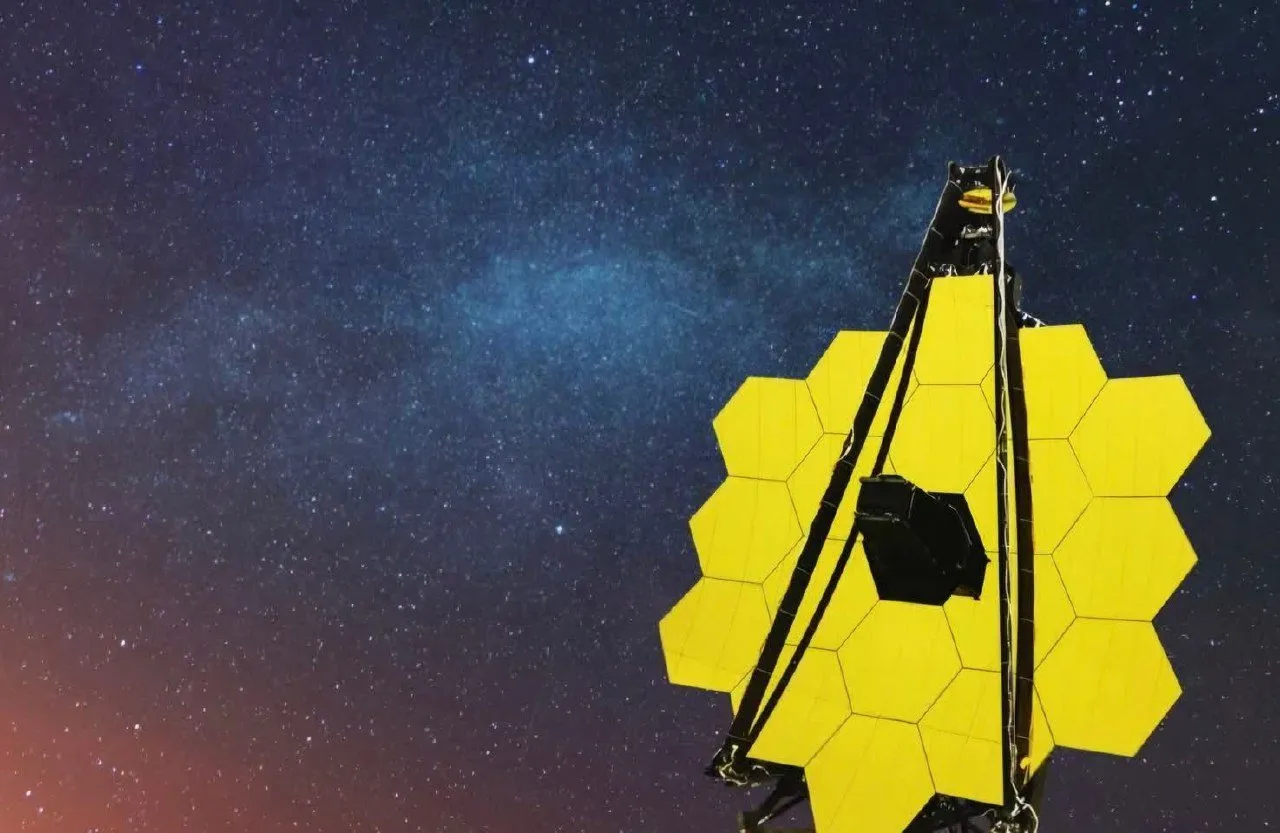
Are we alone in the universe? This ancient question has captivated humanity for millennia. Today, the search for answers has entered a thrilling new era. NASA’s James Webb Space Telescope (JWST) recently detected potential chemical biosignatures in the atmosphere of a distant habitable-zone exoplanet—molecules that on Earth are produced almost exclusively by biological organisms.
The Hycean World K2-18b in the Goldilocks Zone
Located approximately 124 light-years from Earth in the constellation Leo, K2-18b is classified as a “Hycean” exoplanet—a world thought to possess a planet-wide liquid water ocean beneath a thick, hydrogen-rich atmosphere. Roughly 2.6 times the radius and 8.6 times the mass of Earth, K2-18b orbits within the habitable or “Goldilocks” zone of its host red dwarf star, where surface temperatures may allow liquid water to persist.
Detection of Atmospheric Biosignature Candidates
Using JWST’s Mid-Infrared Instrument (MIRI) and Near-Infrared Spectrograph (NIRSpec), astronomers analyzed starlight filtering through K2-18b’s atmosphere. In addition to abundant carbon-bearing molecules like methane and carbon dioxide, the spectroscopic data revealed tentative evidence of dimethyl sulfide (DMS) and dimethyl disulfide (DMDS). On Earth, DMS is predominantly released into the atmosphere by marine phytoplankton and microbial life.
Scientific Caution and the Criteria for Biosignatures
Astrobiologists remain cautious. While DMS is a recognized biosignature candidate, non-biological photochemical pathways could theoretically produce trace organosulfur compounds in exotic hydrogen-rich atmospheres. Further observations with JWST are underway to confirm the signal’s spectral significance and rule out abiotic false positives.
Publication in The Astrophysical Journal Letters
The detailed findings were published in April 2025 in The Astrophysical Journal Letters, under the title “New Constraints on DMS and DMDS in the Atmosphere of K2-18b from JWST MIRI.” The study provides the most stringent atmospheric characterization of a habitable-zone sub-Neptune exoplanet to date.
Implications for the Abundance of Life
If confirmed by future transit observations, K2-18b could represent the first detection of an extraterrestrial biosignature outside our solar system, suggesting that life may be far more widespread throughout the cosmos than previously imagined.