The Journey to Mars
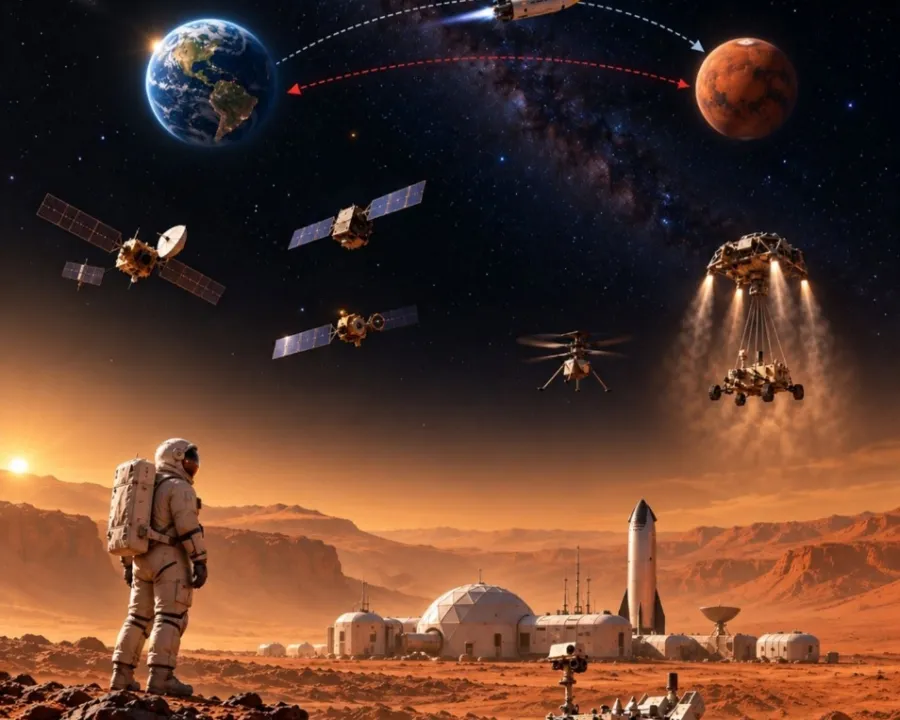
Humans first set foot on the Moon in 1969. Now, humanity’s ambitions reach much farther—to Mars. When will human footprints finally mark the Martian dust?
NASA aims to develop the capabilities to send humans to Mars starting in the 2030s. However, a specific date for that historic first touchdown has yet to be announced.
The sheer magnitude of the challenge is reflected in the long history of Martian exploration.
Landers and Rovers
Humans have not yet journeyed to Mars, but our robotic landers and rovers have arrived there time and again.
The first breakthrough came from the Soviet Union. In 1971, Mars 3 achieved humanity’s first successful soft landing on the Martian surface, though communication was lost merely seconds after touchdown.
Subsequently, the United States achieved the greatest track record of success. In 1976, NASA’s Viking 1 and Viking 2 touched down successfully. In 1997, Mars Pathfinder delivered Sojourner, the first rover to roll across Martian terrain.
Then came Spirit and Opportunity. These twin rovers uncovered compelling geological evidence that liquid water once flowed on ancient Mars.
In 2012, the Curiosity rover touched down. In 2018, InSight began investigating the Red Planet’s seismic tremors and interior structure.
In 2021, Perseverance arrived. The tiny Ingenuity helicopter tucked beneath its belly made history by completing the first powered, controlled flight on another world.
Other Nations Join the Quest
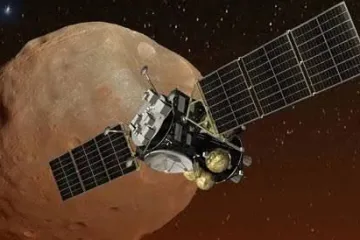
Mars exploration is no longer limited to the United States and Russia. The European Space Agency’s Mars Express has been orbiting and observing the planet since 2003. In 2016, the ExoMars Trace Gas Orbiter arrived to investigate the Martian atmosphere. Although two European landers—Beagle 2 and Schiaparelli—did not succeed, ESA’s next major goal is the Rosalind Franklin rover, planned for launch in 2028.
India’s Mangalyaan successfully entered Martian orbit on its very first attempt in 2014, marking the country’s first interplanetary mission.
In 2021, the United Arab Emirates’ Hope probe also reached Mars orbit.
That same year, China’s Tianwen-1 mission entered orbit; its lander touched down safely, and the Zhurong rover began roving across the Martian plains. China thus became the only nation besides the United States to successfully operate a rover on Mars.
Long before humans arrive, spacecraft from around the world are blazing the trail for our species.
How Far Is Mars?
Although Mars is Earth’s neighbour, the distance between them is never constant. Both planets orbit the Sun, but along different paths and at different speeds.
At their closest approach, the two worlds draw within about 54.6 million kilometres of each other. When on opposite sides of the Sun, that gap widens to roughly 400 million kilometres.
There is no single answer to how far Mars is from Earth; planetary orbits cause the distance to fluctuate dramatically over time.
This immense gulf also complicates radio communication. Even at closest approach, a radio signal takes about three minutes to travel one way. At maximum distance, a transmission can take over twenty-two minutes to bridge the void.
If an emergency strikes on Mars, mission control on Earth cannot issue instantaneous commands.
The Long Voyage
Because Earth and Mars circle the Sun at differing orbital speeds, a favourable window opens roughly every twenty-six months, allowing spacecraft to make the crossing using minimal fuel. This is known as a launch window—the reason missions to Mars cannot depart at just any time.
With current chemical rocketry, the voyage typically takes several months. Perseverance required about seven months to reach the Red Planet. For a crewed expedition, however, the round trip could stretch into a two- to three-year mission.
Rehearsing on the Moon
The Moon is playing an indispensable role in preparing for humanity’s voyage to Mars.
Through NASA’s Artemis program, engineers are testing technologies for how people can live, work, and sustain themselves far from Earth over extended periods. Much of what we learn on the lunar surface will directly inform our survival on Mars.
SpaceX’s Ambition
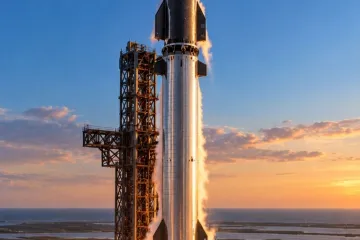
The most audacious vision for reaching Mars belongs to Elon Musk’s SpaceX. Their massive Starship is being built to ferry humans and vast quantities of cargo to the Red Planet. Under current timelines, Starship cargo flights to Mars will not begin before 2028, delivering heavy equipment and critical infrastructure before the first crew sets off.
In the long run, SpaceX envisions establishing a self-sustaining human settlement on Mars. Achieving this will require fully reusable Starships, orbital refuelling around Earth, and in-situ propellant production of methane and oxygen directly from Martian resources.
The Invisible Dangers
Among the most daunting hazards of a crewed journey is deep-space cosmic radiation. Earth’s magnetic field shields us from high-energy radiation, but in deep space that protective blanket vanishes.
Prolonged weightlessness also degrades bone density and muscle mass. Astronauts must also endure rationed food and water, profound isolation, and psychological strain—knowing that if catastrophe strikes, there is no quick return to Earth.
The Perils of Landing
Reaching Mars is only half the battle; touching down safely is just as treacherous. The Martian atmosphere is exceptionally thin compared to Earth’s, meaning giant crewed spacecraft cannot rely on parachutes alone to brake.
Landing the one-tonne Curiosity and Perseverance rovers demanded an intricate sky-crane manoeuvre—a rocket-powered descent stage that gently winched the rovers down on cables.
Future crewed vessels, weighed down by astronauts, habitats, food, and life-support systems, will be vastly heavier. Safely landing such immense tonnage on Mars remains a monumental engineering hurdle.
An Oxygen Factory
Once on Mars, astronauts must survive, which begins with a continuous supply of breathable oxygen. Fortunately, a vital experiment has already proven successful.
Perseverance carried a compact experimental apparatus named MOXIE—the Mars Oxygen In-Situ Resource Utilization Experiment. By extracting oxygen from the carbon dioxide in the Martian atmosphere, MOXIE proved that future explorers can produce a portion of their breathable air directly on site.
Future, scaled-up iterations of this technology could provide breathable air for crew quarters and liquid oxygen oxidizer for return rockets. Everything cannot be hauled from Earth; we must learn to harvest what Mars provides.
Human Footsteps on Mars
NASA maintains that by the 2030s, the necessary foundational technologies will be ready to dispatch astronauts toward Mars, though a definitive landing date has not yet been set.
Before that historic day arrives, engineers must prove that crews can remain safe during long transits, land safely on Mars, survive the harsh environment, and launch reliably back toward home.
The triumph of a human Mars mission is not merely arriving on the planet.
Humanity must land, survive, carry out science, and lift off once more to return safely to Earth. When that day comes, human civilization will open an unprecedented chapter: we will no longer be inhabitants of a single world, but voyagers of two.