The ACES Mission: ESA Tests Relativity in Space
The Flow of Time in Modern Physics
Time accompanies every heartbeat and every second of our lives. But does time advance at an identical rate everywhere in the universe? Does time run differently in space compared to the surface of Earth? To answer these questions with unprecedented precision, the European Space Agency (ESA) is launching the ACES mission—short for the Atomic Clock Ensemble in Space.
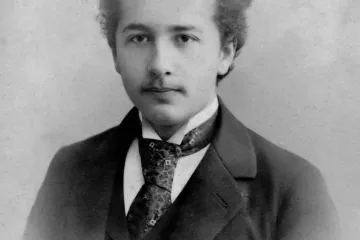
Einstein’s Relativity and the Velocity of Time
According to Albert Einstein’s general and special theories of relativity, time is not an absolute constant; its rate of flow depends on mass, velocity, and gravity. Under gravitational time dilation, clocks in weaker gravitational fields tick faster than clocks on Earth’s surface. Conversely, special relativistic motion slows down clocks aboard moving spacecraft. To verify Einstein’s predictions with record-breaking sensitivity, ACES will deploy two ultra-stable atomic clocks to the International Space Station (ISS): PHARAO and SHM.
The PHARAO and SHM Atomic Clocks
Built in France, PHARAO (Projet d’Horloge Atomique à Refroidissement d’Atomes en Orbite) is a cold-cesium atomic clock utilizing laser cooling to bring cesium atoms near absolute zero, achieving extraordinary long-term timekeeping accuracy. Complementing PHARAO is SHM (Space Hydrogen Maser), developed in Switzerland, which provides short-term frequency stability. Working together, these instruments can detect timing deviations of one second in 300 million years.
Why Conduct the Experiment in Microgravity?
Testing atomic clocks in orbit eliminates terrestrial limitations. On Earth, gravity-induced atom transit limits interrogation times in atomic fountains, while temperature variations and atmospheric seismic vibrations create noise. In the microgravity environment of the ISS, atoms remain undisturbed in free-fall, allowing significantly longer measurement times and clearer relativistic testing.
Flight Profile and Installation on the Columbus Module
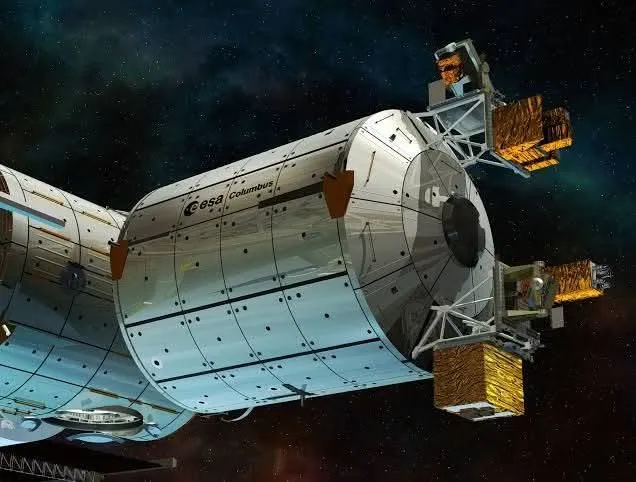
The ACES payload is scheduled for launch aboard a SpaceX Falcon 9 cargo mission to the ISS, where it will be mounted on the external platform of ESA’s Columbus laboratory module. Over its 30-month operational duration, ACES will continuously beam time signals to a network of premier atomic clocks across Europe, North America, and Asia via microwave and optical links.
Impact on Future Technology and Fundamental Physics
The insights gained from ACES extend far beyond theoretical physics. High-precision timing is essential for next-generation satellite navigation, telecommunications synchronization, and relativistic geodesy (mapping Earth’s gravitational variations). Furthermore, ACES data could place stringent limits on potential variations in fundamental physical constants and test dark matter candidate interactions.
Reimagining the Nature of Time
The ACES mission is more than a technological showcase. It is an exploration into the fundamental nature of reality, confirming that time is a dynamic, fluid dimension that bends and shifts across the cosmos.