Why Is the Milky Way's Center So Bright? New Discoveries
The Enigmatic Radiance of the Galactic Core
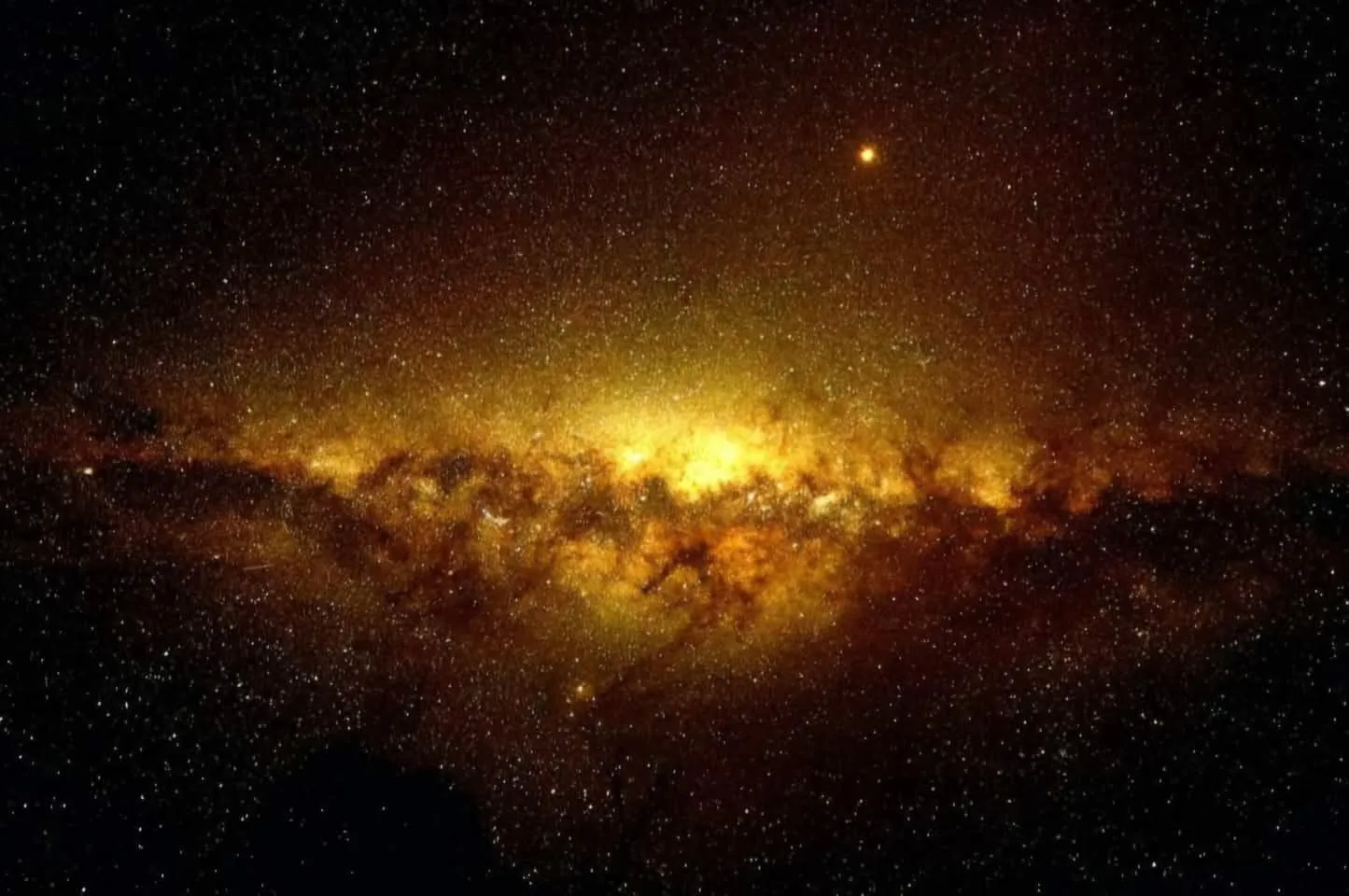
On a clear night, far from city lights, the sky reveals an ethereal river of stars—our home, the Milky Way galaxy. Looking closely toward its core, astronomers notice that this region shines far brighter than the surrounding spiral arms. But what makes the Milky Way’s center so extraordinarily luminous?
Australian Researchers Uncover New Clues
At the very heart of our galaxy lies Sagittarius A*, a supermassive black hole millions of times more massive than our Sun. While black holes are famous for swallowing all light, the regions surrounding them can blaze with ferocious energy. Recently, researchers from the Mount Stromlo Observatory in Canberra, Australia, offered a compelling explanation: the core’s intense glow is significantly driven by a remarkable class of celestial bodies known as hypervelocity stars.
The Origin of Hypervelocity Stars and Black Holes
Hypervelocity stars are vastly different from ordinary stellar neighbors. While most stars orbit peacefully around the galactic center, hypervelocity stars are catapulted through space at mind-boggling velocities by the immense gravitational forces of the central supermassive black hole. Some hurtle outward at hundreds or even thousands of kilometers per second—fast enough to completely escape the gravitational grip of the galaxy.
A Cosmic Fountain of Radiant Energy
Astrophysicists estimate that on average, roughly one hypervelocity star is ejected from the galactic core every year. As these binary star systems brush past the supermassive black hole, tidal forces tear them apart. The captured member falls inward, while the surviving star is whipped outward at extreme velocity. Heated by intense gravitational and tidal interactions, these stellar travelers radiate immense brilliance, forming a persistent fountain of radiant energy across millions of years.
New Windows into Cosmic Evolution
This discovery provides insights that extend well beyond explaining galactic illumination. Tracking these high-speed stellar runaways enables astrophysicists to probe the elusive physics of supermassive black holes, measure galactic mass distribution, and understand the dramatic lifecycle of stars in extreme cosmic environments.