Svante Pääbo and the Secrets of Ancient Neanderthal DNA
An Audacious Quest into the Depths of Prehistory
Can a fossilized bone resting forty thousand years beneath the soil surrender the genetic blueprint of an extinct creature? For decades, conventional biology insisted it was impossible: DNA breaks down rapidly over time, shredded by decay into minute, chemically damaged fragments. Yet one visionary scientist defied this consensus. Swedish geneticist Svante Pääbo conquered these formidable technical hurdles, earning the 2022 Nobel Prize in Physiology or Medicine for his extraordinary discoveries.
Overcoming the Enormous Challenges of Ancient DNA
During the 1990s, when genomic sequencing was still young and largely confined to living organisms, Pääbo dared to peer deep into antiquity. Extracting ancient DNA was akin to finding a needle in a mountain of hay. Over tens of thousands of years, endogenous DNA degrades into trace quantities, overwhelmingly contaminated by soil bacteria, fungi, and the genetic fingerprints of modern researchers who handle the specimens. Undeterred, Pääbo designed ultra-clean, pressurized cleanroom laboratories and engineered groundbreaking protocols to purify and amplify microscopic genetic traces.
Sequencing the Neanderthal Genome
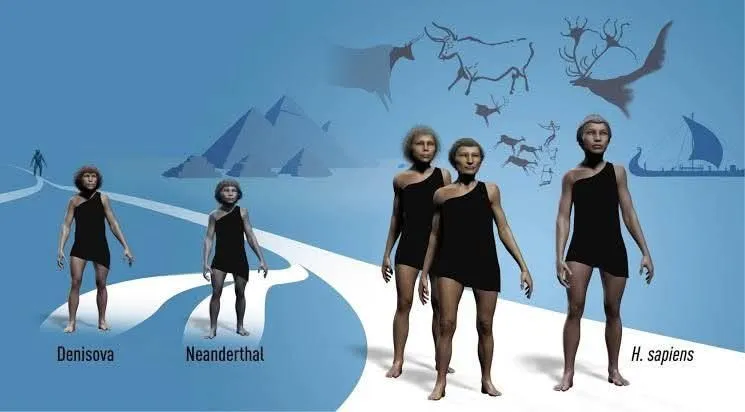
In 2010, Pääbo and his international consortium astonished the world by publishing the first complete genome sequence of a Neanderthal. This feat decisively resolved one of anthropology’s fiercest debates. Pääbo’s data proved that when modern humans (Homo sapiens) migrated out of Africa into Eurasia roughly 70,000 years ago, they encountered and interbred with Neanderthals.
The Living Legacy in Modern Genomes
Genomic comparisons revealed that non-African present-day humans carry approximately 1 to 2 percent Neanderthal DNA in their genomes. These ancient genetic remnants are far from inert: they actively shape modern human physiology, influencing immune responses, skin and hair pigmentation, and even vulnerability or resistance to infectious diseases.
Unearthing the Denisovans: A Novel Hominin Lineage
Pääbo’s triumphs did not end there. In 2010, analyzing tiny bone fragments unearthed from Denisova Cave in Siberia, his team discovered a previously unknown human lineage distinct from both modern humans and Neanderthals: the Denisovans. It was a historic milestone in evolutionary anthropology—the first time an entirely new hominin species had been identified primarily through genetic sequencing rather than gross skeletal anatomy.
Paleogenomics: A Transformative Frontier
Through these foundational achievements, Svante Pääbo birthed the flourishing discipline of paleogenomics. His work profoundly reshaped human self-understanding, showing that humanity’s family tree is not a lonely, linear ascent, but an intricate tapestry woven with archaic kin whose biological legacy lives on inside us today.