Hubble Tension: The Cosmic Expansion Mystery
Cosmic Expansion and the Hubble Constant
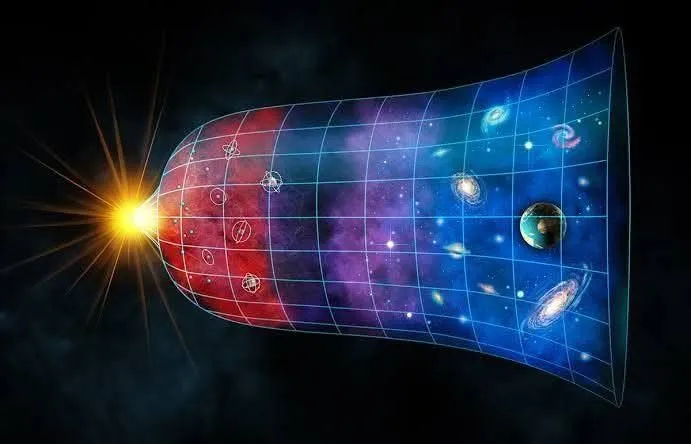
The universe is continually expanding. Galaxies and stellar clusters are moving away from each other into the cosmic expanse. Cosmologists quantify this rate of expansion using the Hubble constant ($H_0$). However, measurements of this constant yield stubborn discrepancies depending on the methodology used, triggering one of the greatest crises in modern astrophysics: the Hubble tension.
Early Universe Measurements via the CMB
The tension arises from two fundamentally different observational approaches. In the first approach, cosmologists look back 13.8 billion years to the early universe, analyzing the relic glow of the Cosmic Microwave Background (CMB) using data from the ESA Planck satellite. Fitting these primordial observations into the standard Lambda-CDM model predicts a current expansion rate of approximately 67.4 kilometers per second per megaparsec.
Local Universe Measurements and Cosmic Milemarkers
Conversely, astronomers measure cosmic expansion in the modern, local universe using “standard candles”—specifically Cepheid variable stars calibrated with Type Ia supernovae. Spearheaded by the SH0ES team led by Nobel laureate Adam Riess, local measurements consistently report a higher value: roughly 73 kilometers per second per megaparsec.
A Nine Percent Discrepancy Threatening the Standard Model
This 9 percent divergence is far too large to dismiss as random experimental noise. The statistical significance of the discrepancy has exceeded the 5-sigma threshold, the gold standard for a confirmed discovery in physics. If neither observational method is flawed, our fundamental cosmological model must be incomplete.
Hunting for New Physics and Exotic Energy
Cosmologists hypothesize that this tension signals the presence of “new physics.” Possibilities include Early Dark Energy acting before recombination, exotic non-standard neutrino interactions, or decaying dark matter. Others wonder whether our basic understanding of gravity needs refinement on cosmological scales.
Observatories on the Frontier
Advanced space observatories are actively investigating the tension. NASA’s James Webb Space Telescope (JWST) has scrutinized Cepheid calibrations, confirming that observational crowding does not explain the gap. Meanwhile, ESA’s Euclid mission and upcoming ground-based observatories like the Vera C. Rubin Observatory will map billions of galaxies to provide definitive clarity.
A New Frontier in Modern Astronomy
The Hubble tension represents more than an unsettled numerical value; it serves as a gateway to potential revolutions in cosmological physics, reminding us that the cosmos still holds fundamental secrets waiting to be decoded.