Carl Sagan: The Astronomer Who Brought Us the Cosmos
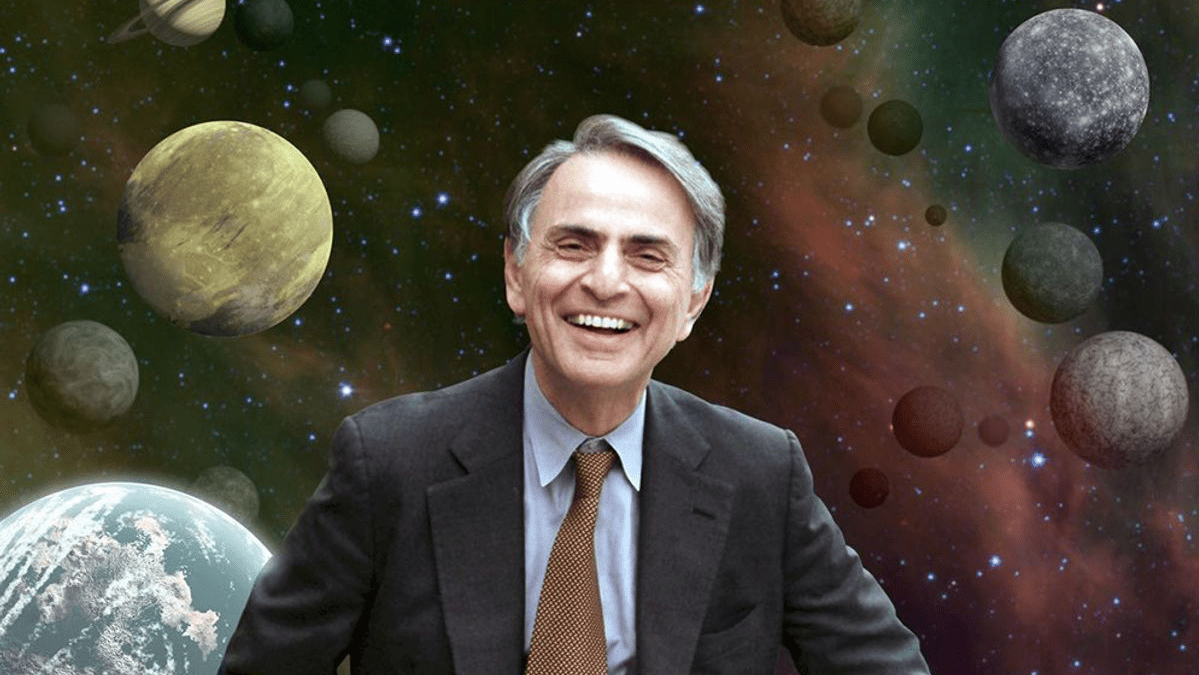
Carl Sagan (1934–1996) was that rare, transformative scientist who bridged the gap between academic laboratories and the global public. A gifted planetary scientist, prolific author, and visionary communicator, he awakened millions to the wonder of the universe.
Pioneering Planetary Science
At Cornell University, where he served as Professor of Astronomy and Director of the Laboratory for Planetary Studies, Sagan conducted foundational research across the solar system:
- Demonstrating that Venus’s extreme surface temperatures stem from a runaway greenhouse effect.
- Deciphering the dynamic seasonal dust storms sweeping the Martian landscape.
- Exploring prebiotic organic chemistry on Saturn’s moon Titan and Jupiter’s moon Europa.
- Modeling Earth’s paleoclimate and atmospheric evolution.
NASA Missions and the Voyager Golden Record
Sagan played an indispensable role in NASA’s interplanetary explorations, including the Mariner, Viking, Pioneer, and Voyager missions. He co-designed the iconic Pioneer Plaques and spearheaded the creation of the Voyager Golden Record.
Attached to both Voyager 1 and Voyager 2, this gold-plated phonograph record preserves sounds of nature, musical selections from diverse world cultures, and spoken greetings in fifty-five languages—a cultural time capsule voyaging eternally across interstellar space.
Cosmos: Inspiring Generations
In 1980, Sagan co-created and hosted the landmark television series Cosmos: A Personal Voyage. Watched by over 500 million people across sixty countries, the series demystified astrophysics, showing that the cosmos is not an intimidating void, but our evolutionary home: “We are a way for the cosmos to know itself.”
Literary Works and the Pale Blue Dot
Sagan authored over 600 academic papers and more than twenty books, including the Pulitzer Prize-winning The Dragons of Eden, the science-fiction novel Contact, and Pale Blue Dot.
In Pale Blue Dot, inspired by Voyager 1’s photograph showing Earth as a microscopic speck caught in a sunbeam, Sagan delivered an enduring moral plea against human arrogance, urging us to cherish and protect our fragile planetary sanctuary.
Reason, Skepticism, and the Search for Extraterrestrial Life
Sagan championed the search for extraterrestrial intelligence (SETI) with rigorous scientific skepticism. When asked about alien life, he famously observed:
“The universe is a pretty big place. If it’s just us, seems like an awful waste of space.”
Conclusion
Though his life ended prematurely at age sixty-two, Carl Sagan left an immortal intellectual legacy. He taught humanity to look up at the stars with courage, humility, and love, reminding us that we are all fashioned from star stuff.