Quasars: The Brightest Powerhouses in the Universe
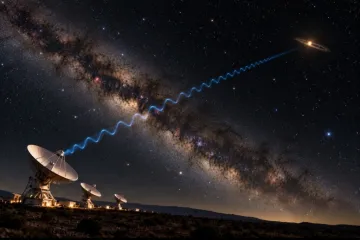
In the early 1960s, British-Australian astronomer John Bolton detected intense radio emissions from compact celestial sources that lacked discernible optical star counterparts. These puzzling objects were christened Quasi-Stellar Radio Sources—or quasars.
For more than two decades, the true nature of these cosmic beacons confounded astronomers worldwide.
Astounding Distances and Luminosity
Detailed spectroscopic observations revealed massive cosmological redshifts, proving that quasars reside billions of light-years away from Earth. To be visible across billions of light-years, a quasar must radiate hundreds of times more light than an entire galaxy of hundreds of billions of stars.
With the advent of the Hubble Space Telescope and gravitational lensing techniques, astronomers imaged host galaxies, proving that quasars inhabit the active cores of distant, young galaxies.
Quasars in the Primordial Universe
The most distant quasars discovered exist over 13 billion light-years from Earth. We observe them when the universe was barely 700 million years old, illuminating the turbulent era of cosmic dawn when first-generation galaxies were violently assembling.
Supermassive Black Holes: The Cosmic Engines
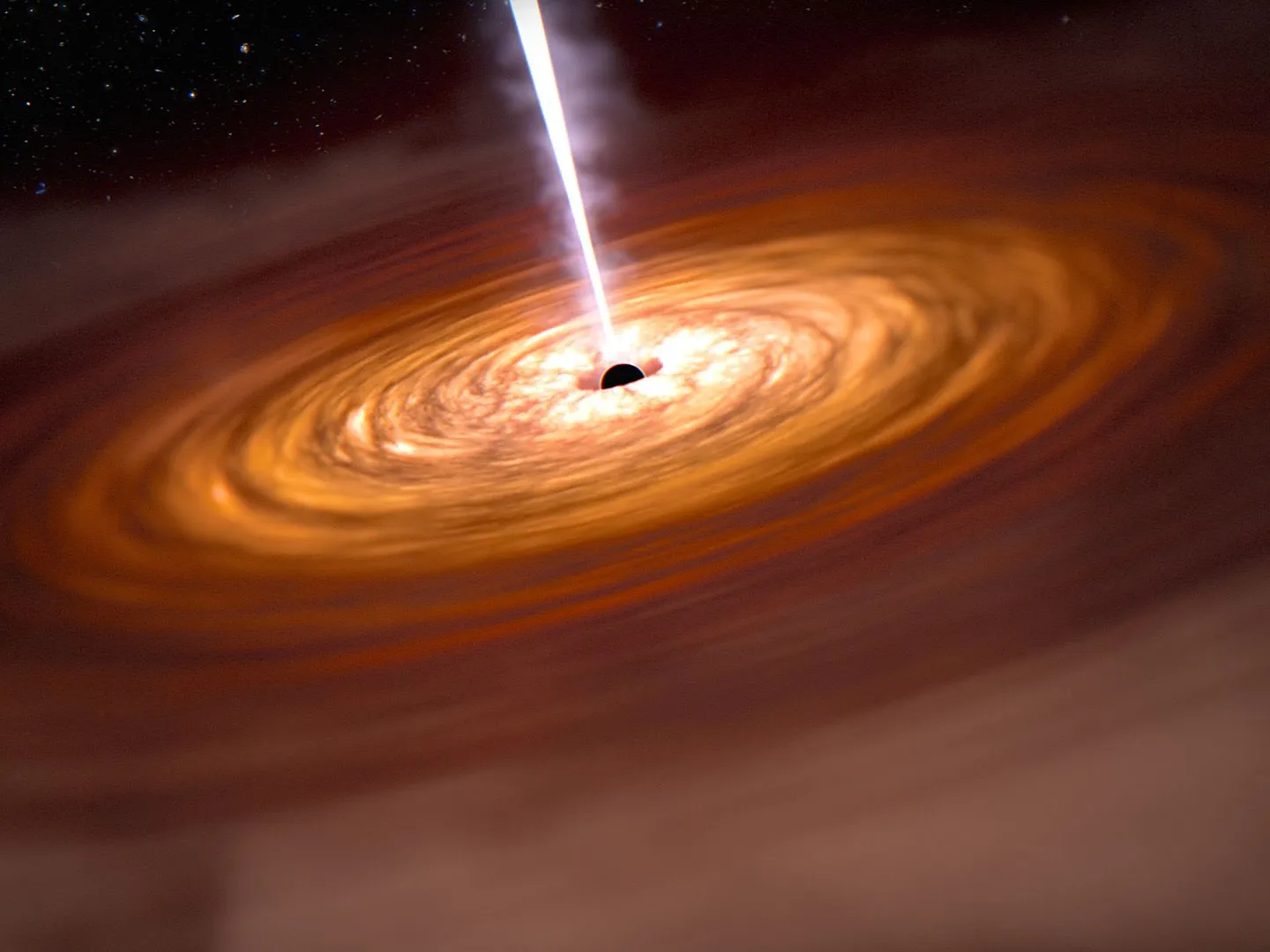
Astrophysicists established that quasars are powered by active supermassive black holes containing hundreds of millions to billions of solar masses:
- Immense gravitational pull draws in vast quantities of hydrogen gas, interstellar dust, and stellar debris.
- Infalling matter spirals into a blistering, rapidly rotating accretion disk outside the event horizon.
- Extreme friction, gravitational shear, and magnetic forces heat the plasma to millions of degrees.
- Energetic particles emit fierce broadband radiation across X-ray, ultraviolet, and radio wavelengths before crossing into the black hole.
Conclusion
Astronomers have cataloged thousands of quasars across deep space. By studying these primordial lighthouses, cosmologists decipher the turbulent conditions of the early universe and the symbiotic evolution of galaxies and black holes.