Blood Moon Science: Why Lunar Eclipses Turn the Moon Red
The Dramatic Spectacle of the Blood Moon
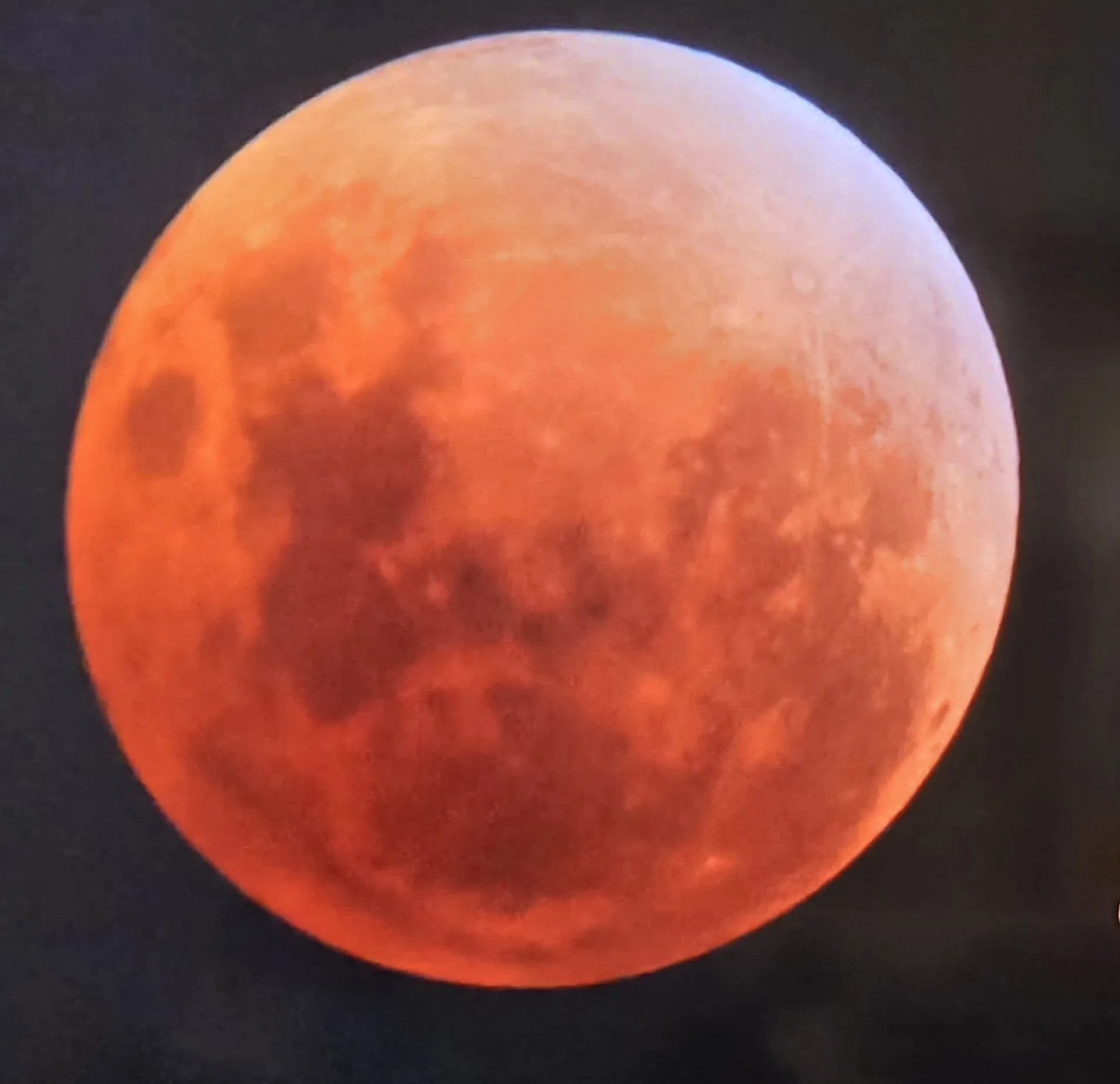
During ordinary nocturnal cycles, a Full Moon shines with silvery, reflected sunlight. But during a total lunar eclipse, our celestial companion undergoes a mesmerizing transformation: its luminous brilliance slowly wanes, giving way to an eerie, copper-crimson glow. Popularly known as a Blood Moon, this astronomical phenomenon is not an omen of misfortune, but a stunning showcase of orbital geometry and atmospheric optics.
Earth’s Shadow and Total Lunar Eclipses
A lunar eclipse unfolds when the Sun, Earth, and Moon align in a straight syzygy line. Earth passes directly between the Sun and Moon, casting a colossal conical shadow—the umbra—into space. As the Moon plunges into this shadow cone, direct solar illumination is blocked entirely.
Why Doesn’t the Eclipsed Moon Go Black?
If Earth completely blocks direct sunlight, why does the Moon not disappear into absolute darkness? The answer lies within Earth’s protective blanket of atmosphere. While our planet blocks the direct solar disk, sunlight grazes the edges of Earth’s atmospheric rim, bending toward the lunar surface.
Rayleigh Scattering and the Color of the Sky
Sunlight is composed of a polychromatic spectrum spanning short blue wavelengths to long red wavelengths. As solar rays pass through Earth’s atmosphere, gas molecules and microscopic aerosols disperse shorter wavelengths in a process called Rayleigh scattering. This selective scattering gives our daytime sky its azure color. In contrast, longer red and orange wavelengths penetrate the atmosphere with far less deflection, painting sunsets and sunrises in radiant crimson tones.
Illuminated by All of Earth’s Sunrises and Sunsets
During a total lunar eclipse, sunlight passing through Earth’s atmospheric ring experiences refraction. Short wavelengths are scattered away, leaving only filtered red and orange light to bend inward into the umbral shadow cone. In a poetic sense, the Blood Moon reflects the collective illumination of every sunrise and sunset taking place on Earth at that exact moment.
Atmospheric Conditions and Hue Variations
The precise hue of a Blood Moon varies with planetary atmospheric health. Volcanic eruptions, major wildfires, and high aerosol pollution load the stratosphere with fine particulates, absorbing more light and turning the eclipsed Moon a dark, charcoal-bronze. When the stratosphere is clear, the Moon glows in brilliant amber and ruby-red.