Beyond the Sky: The Unfolding Mystery of UAPs

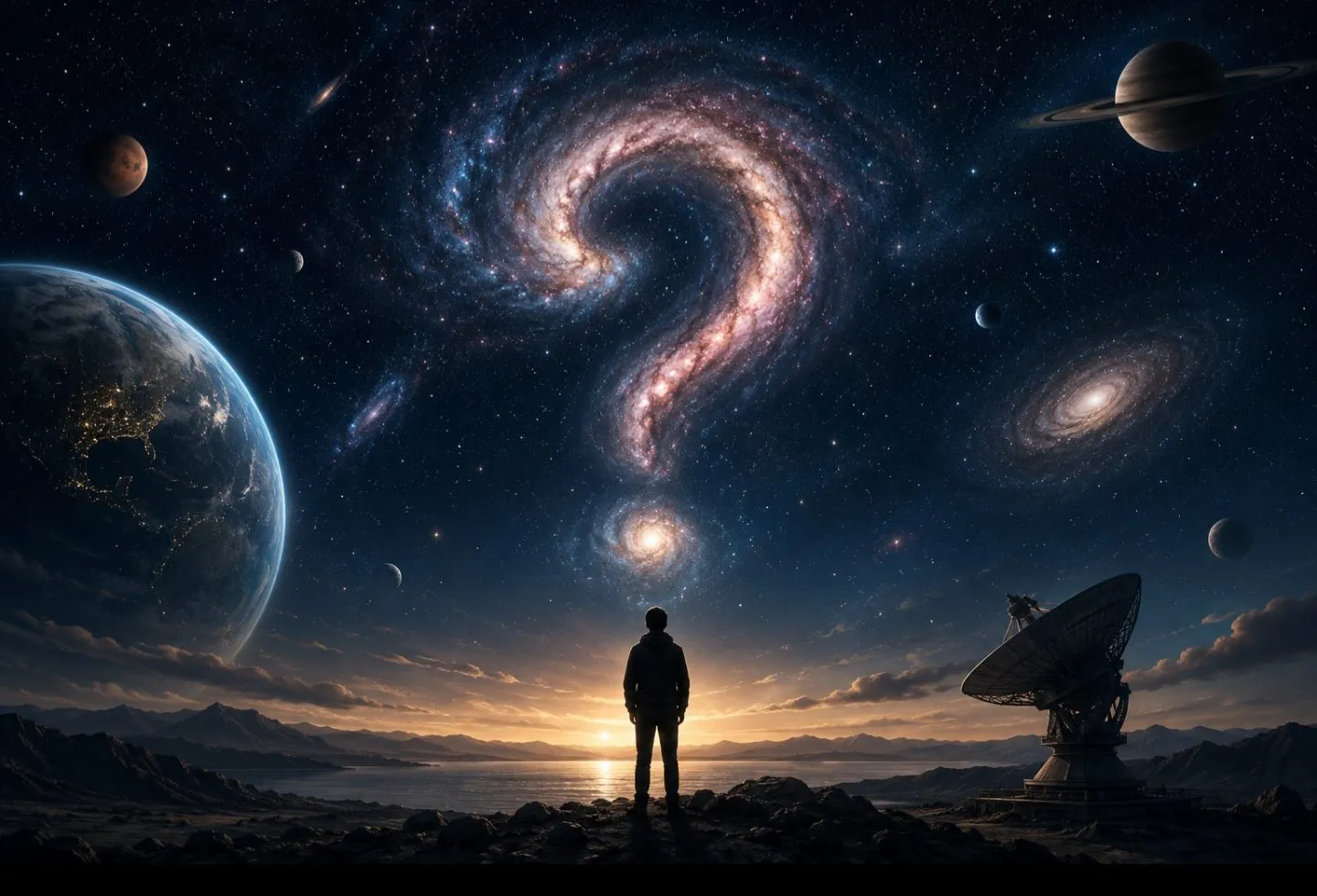
When early humans gazed up into the night sky, their awe was inseparable from curiosity. Confronted by countless glimmering stars, our ancestors wondered: What lies beyond the canopy of night? Could other worlds like Earth exist? Does life flourish out there, and if so, have visitors from afar ever set foot upon our soil?
After thousands of years, definitive empirical answers to these questions remain tantalizingly elusive.
Are We Alone in the Universe?
In seeking an answer, civilizations created countless myths, legends, and folklore. Tales of celestial visitors, luminous orbs, and peculiar sky-craft permeate virtually every ancient culture across the globe.
In the twenty-first century, however, this inquiry is no longer confined to speculative fantasy. Astronomers, physicists, computer scientists, and AI specialists are actively investigating these questions. What began as fireside wonder has transitioned into cutting-edge astrophysical research.
Who Descended from Above?
From Egyptian deities and the Sumerian Anunnaki to the gods of Mount Olympus, mythologies share a striking motif: divine entities arriving from the heavens above.
Why this universal celestial fixation?
Anthropologists note that to early humans, the sky was the ultimate realm of the unknown. The sun, moon, stars, comets, lightning, and rain all descended from above. Naturally, ancient societies viewed the sky as the dwelling place of supernatural power.
A Controversial Hypothesis
In 1968, Swiss author Erich von Däniken popularized a sensational hypothesis, proposing that ancient deities were actually technologically advanced extraterrestrial visitors.
Because our ancestors could not comprehend advanced aerospace engineering, the hypothesis argues, they revered these visitors as gods. Proponents cite ancient monuments such as the Pyramids of Giza, Stonehenge, the Nazca Lines, and Mayan temples as structures seemingly ahead of their era, alongside ancient art depicting astronaut-like figures.
Yet a fundamental scientific boundary remains: despite these romantic conjectures, mainstream archaeology and astrophysics have found zero verifiable empirical evidence substantiating extraterrestrial visitation.
The Most Famous Incidents
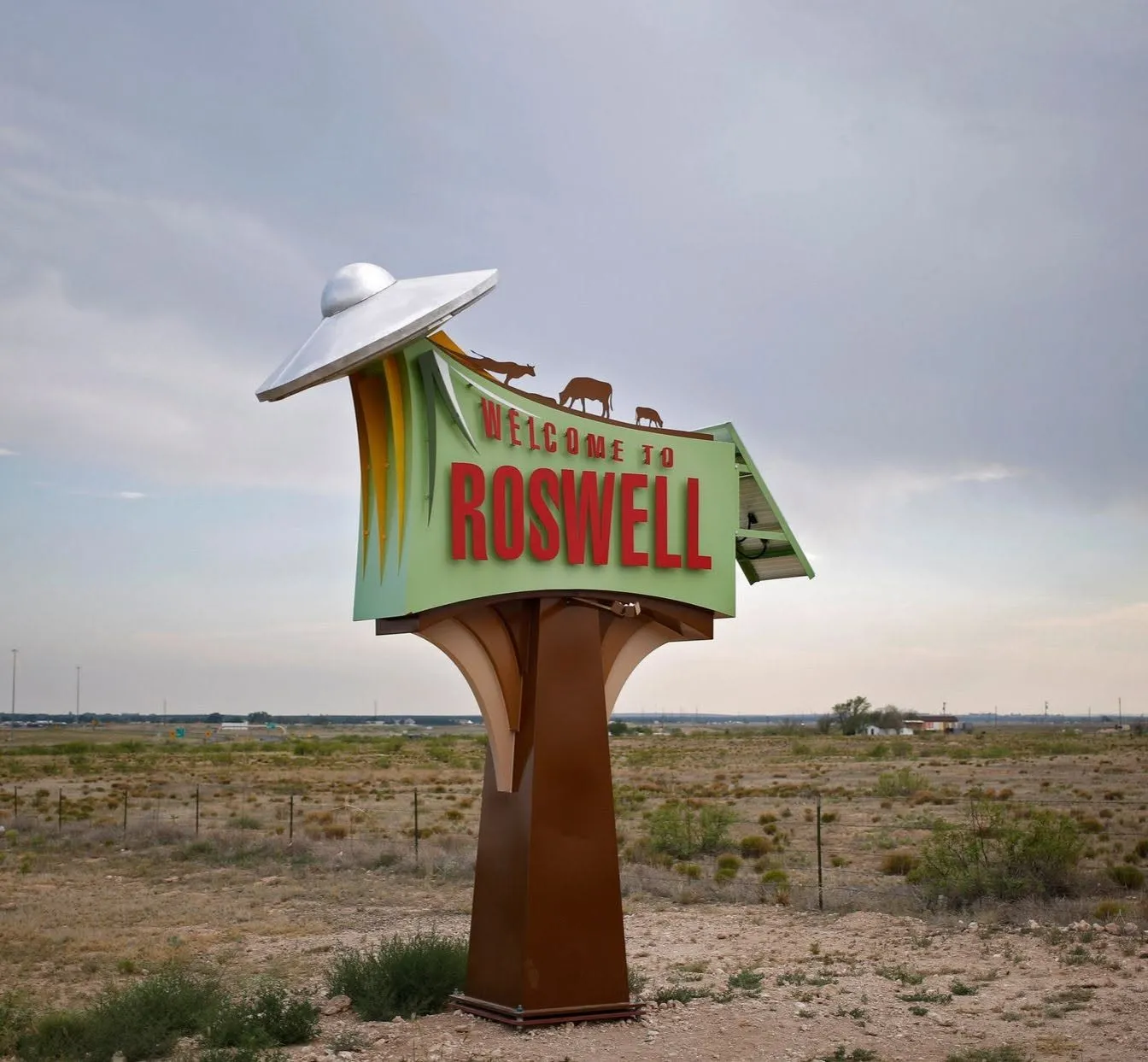
In 1947, an unusual object crashed near Roswell, New Mexico. While widespread folklore claimed a downed extraterrestrial craft, the United States military maintained it was a classified high-altitude surveillance balloon, though conflicting eyewitness accounts kept conspiracy theories burning for decades.
Decades later, in 2004, US Navy aviators encountered enigmatic aerial objects performing rapid hypersonic maneuvers that defied conventional aerodynamics. These declassified encounters remain subjects of intense military and scientific scrutiny.
UFO Versus UAP
In popular culture, the term UFO (Unidentified Flying Object) is frequently conflated with extraterrestrial spacecraft. But the terms are not synonymous. A UFO simply denotes any airborne object whose identity is unconfirmed.
Modern researchers prefer the acronym UAP, denoting Unidentified Anomalous Phenomena. This terminology encompasses unusual atmospheric and aerospace observations whose explanations remain pending further investigation.
Crucially, unexplained does not equate to extraterrestrial. Acknowledging that an observation lacks an immediate scientific explanation is merely an admission of incomplete data, not proof of visiting starships.
Applying Rigorous Science to the Mystery
Where previous generations interpreted peculiar atmospheric lights as supernatural portents, modern scientists deploy radar arrays, infrared sensors, multispectral satellites, optical telescopes, and radio astronomy to gather calibrated data.
Physicists examine kinematic characteristics: velocity, acceleration vectors, thermal emissions, radar cross-sections, and spectral signatures to establish whether observed phenomena stem from atmospheric optics, sensor artifacts, or novel physical mechanisms.
The Role of Artificial Intelligence
The investigative challenge is enormous. Thousands of commercial airliners, flocks of migratory birds, weather balloons, drones, orbital satellites, space debris, and meteorites traverse the skies daily.
Distinguishing genuinely anomalous signatures amid this immense background clutter requires artificial intelligence. Machine learning models can analyze millions of radar frames and optical video streams within seconds, swiftly categorizing aircraft, satellites, and natural artifacts.
Harvard University’s Galileo Project exemplifies this data-driven approach, employing high-resolution multispectral cameras and AI tracking algorithms to systematically survey the skies for anomalous aerial phenomena.
Science Never Ceases Questioning
Science has not resolved every atmospheric mystery, but its strength lies in tireless inquiry. Humanity once regarded lightning as divine wrath and comets as omens of doom; today, both are thoroughly explained through natural electromagnetism and orbital mechanics.
Scientists neither accept extraordinary claims credulously nor dismiss anomalous data dogmatically. They demand repeatable evidence, systematic observation, and rigorous analysis.
Looking Ahead
Perhaps we are not alone in this vast cosmic arena; or perhaps technological consciousness on Earth represents an astonishingly rare exception. As of today, humanity simply does not know.
Yet as long as humans gaze up at the night sky, our curiosity will remain unquenched, compelling us to look outward, to question, and to explore.