Farming Rice in Space: The Tiangong Experiment
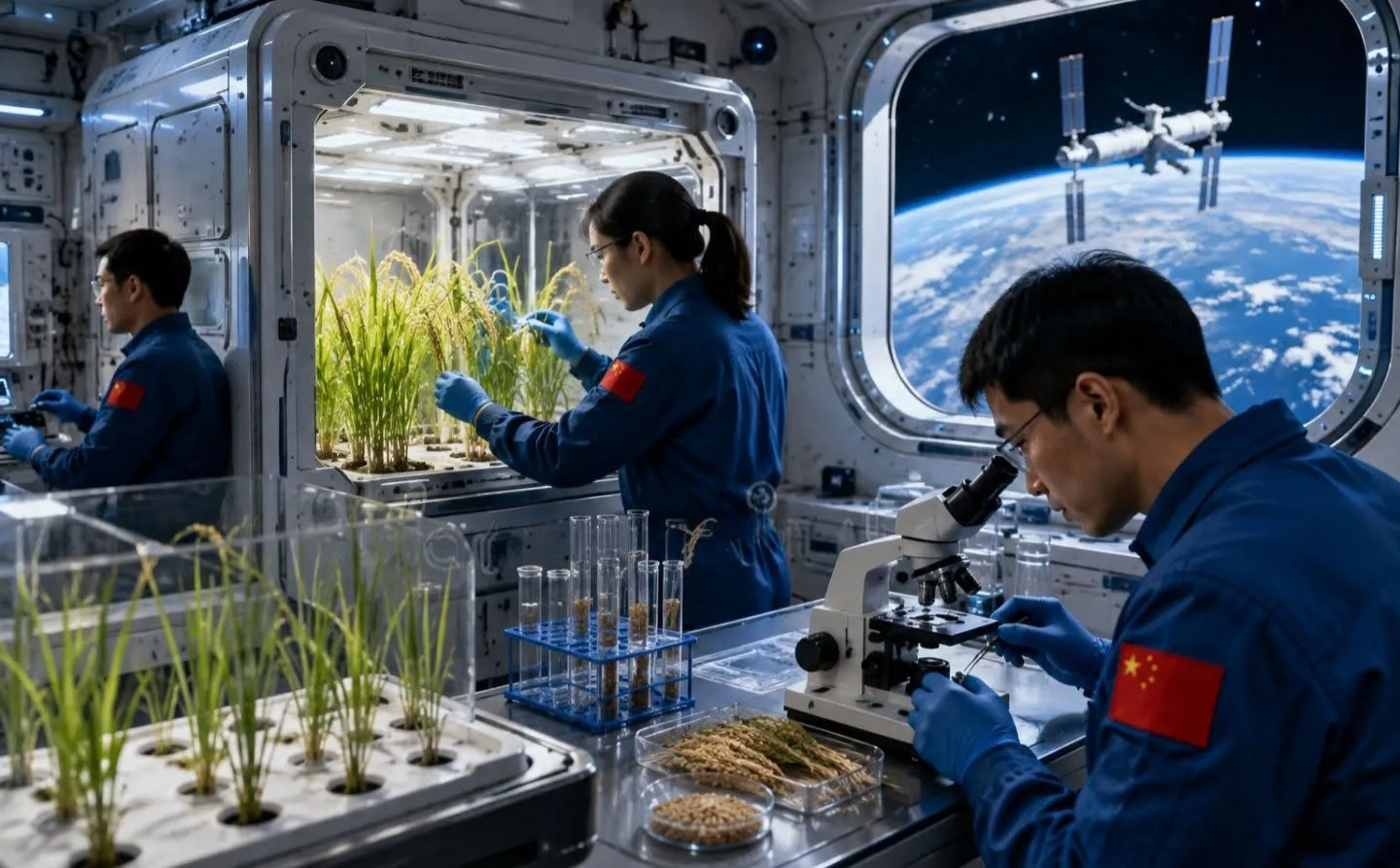
Throughout human history, cultivated rice has held monumental importance. For thousands of years, this staple cereal has sustained billions of people across the globe. Remarkably, rice research has now journeyed beyond our planet: inside China’s Tiangong space station, an unprecedented agricultural experiment is underway. The ultimate goal is not merely providing fresh rations for orbiting taikonauts, but laying the scientific groundwork for self-sustaining colonies on the Moon and Mars.
Reaching Beyond Earth’s Horizons
Humanity’s venture into the cosmos is historically brand-new. Only a few decades ago did astronauts first set foot upon lunar soil. Today, crews live in low-Earth orbit for continuous months at a time. Yet scientists envision far more ambitious milestones: establishing permanent lunar bases and, ultimately, human outposts across the Martian surface.
Transporting every kilogram of food from Earth on cargo rockets would prove exorbitantly costly and logistically precarious. Consequently, researchers are proactively developing methods for extraterrestrial food cultivation, with growing rice in space emerging as a flagship biological initiative.
Why Select Rice?
Choosing rice rests on compelling biological and nutritional factors. Rice constitutes the primary caloric foundation for over half the world’s population. It is carbohydrate-dense, can be cultivated efficiently in compact vertical spaces, and exhibits a relatively brisk vegetative life cycle.
China is also conducting orbital experiments on wheat, potatoes, cotton, and various botanical specimens. Nonetheless, owing to its paramount cultural and dietary stature, rice remains the centrepiece of space farming investigations.
The Hurdle of Microgravity
Cultivating crops in space presents profound botanical challenges. On Earth, roots anchor downward guided by gravity, a biological phenomenon termed gravitropism. In microgravity, this fundamental directional cue is virtually absent, which can disorient vegetative development.
Compounding this is intense cosmic radiation. Earth’s geomagnetic envelope shields terrestrial biology from ionizing solar and cosmic rays, an umbrella lacking in orbital environments. Scientists are scrutinizing how cosmic radiation and weightlessness influence root architecture, stem elongation, leaf morphology, and floral development.
From Seed to Harvestable Seed
The definitive milestone of this mission is monitoring the entire life cycle of rice: germinating a seed, nurturing the seedling to vegetative maturity, flowering, and achieving grain set.
The pivotal question is whether seeds harvested in space can successfully produce viable second-generation crops.
Researchers have already celebrated a major victory: space-borne seeds successfully germinated, grew to full stature, and produced mature grain. Scientists are now cultivating second-generation seedlings derived exclusively from space-harvested seeds.
Should this succeed, it will represent the first time in agricultural history that an off-world cereal crop has reproduced across consecutive generations in space.
Future Agriculture on the Moon and Mars
Space botany serves dual survival functions. In addition to nourishment, living crops consume carbon dioxide and release breathable oxygen through photosynthesis. Within future lunar and Martian habitats, closed-loop agrosystems will act simultaneously as pantries and life-support scrubbers.
Humanity once crossed uncharted oceans and conquered the skies; today, we venture into deep space. Across every frontier, familiar crops remain our constant companions.
Thousands of years ago, agrarian civilization arose upon the back of cultivated rice. Centuries from now, the foundation of interplanetary civilization may well trace its heritage to the very same grain, nurtured within the orbital chambers of the Tiangong space station.