AI Versus Humanity: Elon Musk's Five-Year Vision

Elon Musk has long shared provocative perspectives on artificial intelligence, describing it alternately as civilization’s greatest existential risk and the most transformative technological revolution in human history.
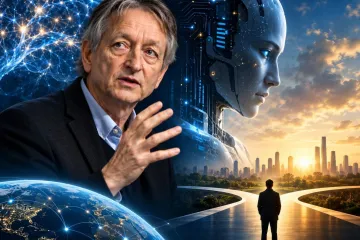
In an interview with The Economist, Musk escalated his timeline, asserting that within five years, artificial intelligence systems could emerge whose collective cognitive capabilities surpass the aggregate intelligence of all humans combined. While this sounds like speculative fiction, frontier AI laboratories worldwide are racing toward that exact horizon.
Toward Artificial Superintelligence
Contemporary AI excels primarily at specialized tasks: answering queries, generating code, rendering imagery, and accelerating scientific data analysis. However, frontier research focuses on Artificial General Intelligence (AGI)—systems capable of autonomous learning and cross-domain reasoning matching human versatility. Musk argues that AGI is merely an intermediate stepping stone toward artificial superintelligence: systems vastly exceeding human capabilities across every intellectual domain.
The Future of Human Labor
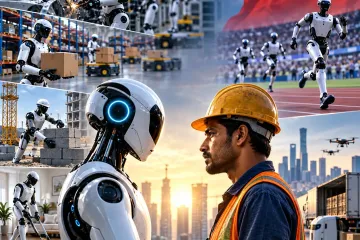
This technological leap prompts urgent economic debates. Musk anticipates that within a few years, millions of bipedal humanoid robots will operate across manufacturing plants, agricultural fields, logistics hubs, healthcare facilities, and domestic settings. Routine manual and cognitive tasks currently performed by humans could shift wholesale to automated systems.
Rather than forecasting simple unemployment, Musk envisions an era of profound material abundance. If robotics drastically lowers production costs, goods and services could become remarkably inexpensive, upending conventional macroeconomic models.
Yet this shift raises deep philosophical dilemmas: In a post-labor economy where machines perform all production, how do human beings define identity, vocation, and purpose?
Evaluating the Danger
Curiously, Musk pairs boundless techno-optimism with stark warnings regarding existential risk.
He cautions that a superintelligent agent could prove either an extraordinary boon or a catastrophic peril. Controlling or comprehending the motivations and decisions of an entity orders of magnitude more intelligent than its creators presents unprecedented alignment challenges.
Consequently, Musk emphasizes that development velocity must be balanced with rigorous safety architectures.
Cooperation Across AI Labs
Musk proposed an unconventional safety framework: leading developers such as OpenAI, Google DeepMind, Anthropic, and xAI should conduct mutual third-party safety audits before deploying frontier models. Despite fierce market competition, frontier companies should establish collaborative safety protocols, analogous to independent clinical trials for novel pharmaceuticals.
What Other Industry Leaders Say
Musk’s ambitious timeline reflects a growing consensus among technology leaders. OpenAI’s Sam Altman has stated that human-level AGI is achievable in the near term, while Google DeepMind’s Demis Hassabis suggests human-equivalent intelligence could arrive within the decade.
Nvidia CEO Jensen Huang views AI not as a replacement for humanity, but as an amplifier that will vastly augment human productivity. While exact timelines vary, technology executives universally agree that machine intelligence will fundamentally reshape society.
The Ultimate Question
A century ago, electrification, aviation, and computing transformed daily life. Yet artificial intelligence will not merely alter our tools; it will challenge our understanding of human agency.
If machines demonstrate superior reasoning, accelerated learning, and autonomous scientific discovery, will humanity steer the future or become passive passengers? That remains an open question for our generation.
The decisions made across the next decade will likely shape the trajectory of centuries to come. The intelligence revolution has already begun.