The Hidden Intelligence of Plants
Misinterpreting the Silence
When we look at a tree, our first impression is stillness. Plants do not speak, run, or gesture; they appear motionless. Consequently, humans routinely assume that plants lack awareness, sensory perception, and intelligence.
Yet nature’s design is far more subtle. Beneath their tranquil surface, plants are astonishingly active. A tree takes in environmental data, computes variables, adapts continuously, and shifts survival strategies when threatened.
Intelligence Without a Brain
Plants possess neither heads nor brains. Yet equating cognition exclusively with animal brains is a human prejudice rather than a law of nature. For animals, intelligence radiates from a centralized hub—a brain that processes sensory input and issues commands.
Plant intelligence, by contrast, operates as a decentralized, organism-wide cellular network. Individual cells perceive signals, synthesize inputs, and communicate biochemically with neighbors, allowing the plant as an integrated whole to arrive at collective decisions.
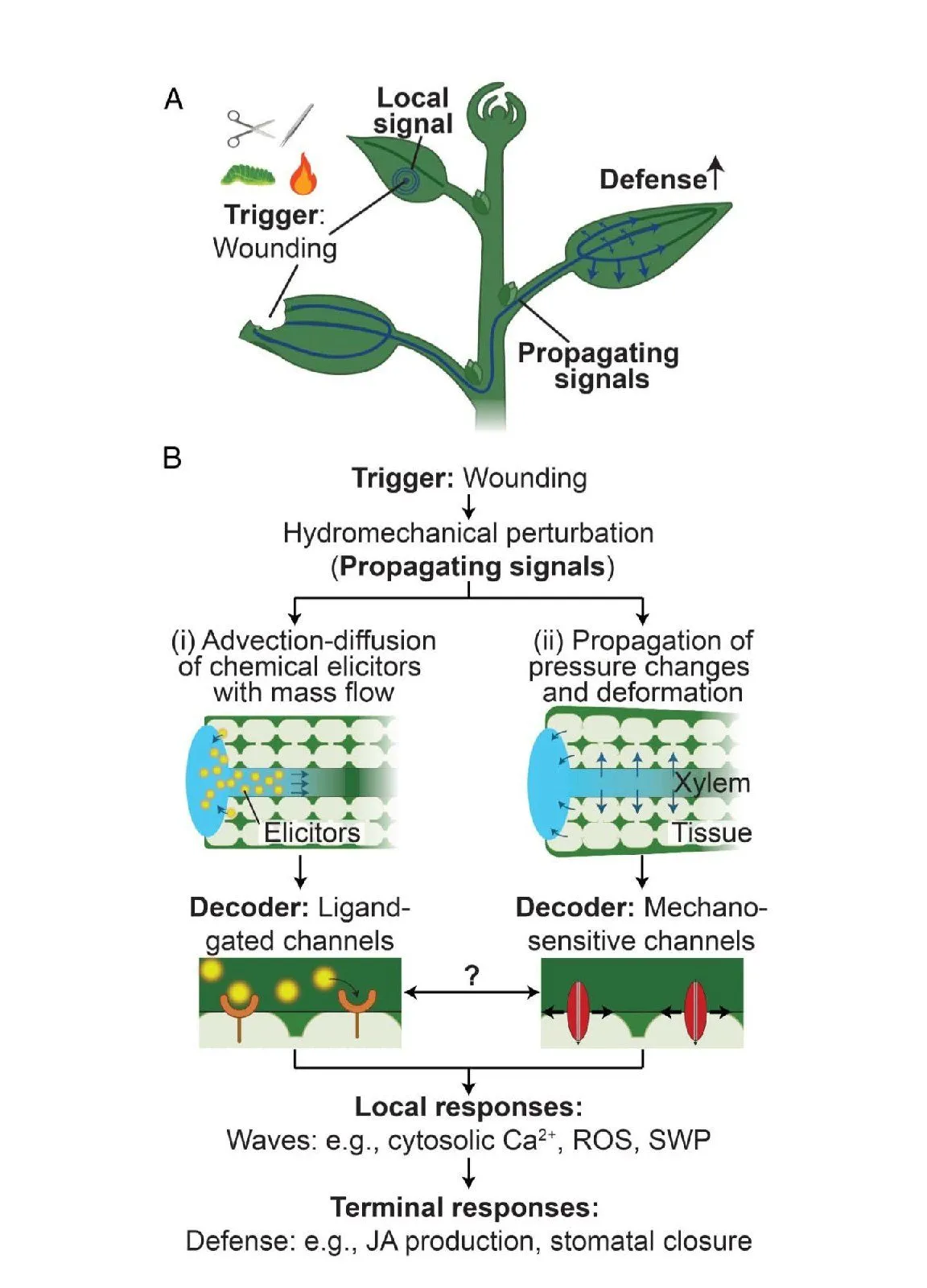
Because botanical signaling operates silently, humans easily overlook it. Animals vocalize loudly; plants communicate through volatile organic chemicals, vascular hydraulic pulses, and root exudates.
Life Beneath the Soil
Observing only what grows above ground reveals barely half of a plant’s existence. The subterranean root system actively explores the soil, foraging for water and mineral nutrients while decoding the chemistry of the earth.
Root tips navigate their environment by sensing moisture gradients, salinity, nutrient concentrations, and toxic compounds. Guided by these chemical maps, roots alter their trajectory, growing toward resources and steering clear of hazards. This represents active botanical navigation.
Gravity as a Botanical Compass
Plants also rely on Earth’s gravitational pull to navigate space. Through gravitropism, roots sense down and grow toward gravity, while stems and shoots grow in the opposite direction toward the sky. Standing rooted in place, a seedling coordinates two simultaneous navigational trajectories.
Following the Light
Plants constantly monitor sky conditions. Sunlight represents both nourishment and vital information. By measuring photoperiod, angle of incidence, and light quality across specific wavelengths, plants determine shifting seasons. Stems bend toward light through phototropism, ensuring maximum photosynthetic capture.
A Precision Biological Clock
Autumn leaf shedding and springtime blossoming are not romantic accidents; they are regulated by an internal circadian and seasonal clock. Flowering too early risks frost damage; flowering too late forfeits pollinators. Deciding precisely when to bloom is an essential computational feat for survival.
Silent Chemical Warfare
When an herbivorous caterpillar bites a leaf, plants deploy rapid biochemical defense cascades. The plant assesses the nature of the wound and synthesizes bitter alkaloids, digestive enzyme inhibitors, or toxic compounds to repel the attacker.
Remarkably, certain plants emit airborne distress signals that summon predatory wasps to attack the caterpillars. In southern Africa, acacia trees produce nectar to reward guardian ants, which fiercely defend the foliage from grazing herbivores. Other plants exude allelopathic chemicals from their roots to suppress competing weeds nearby.
Mycorrhizae: The Forest’s Underground Web
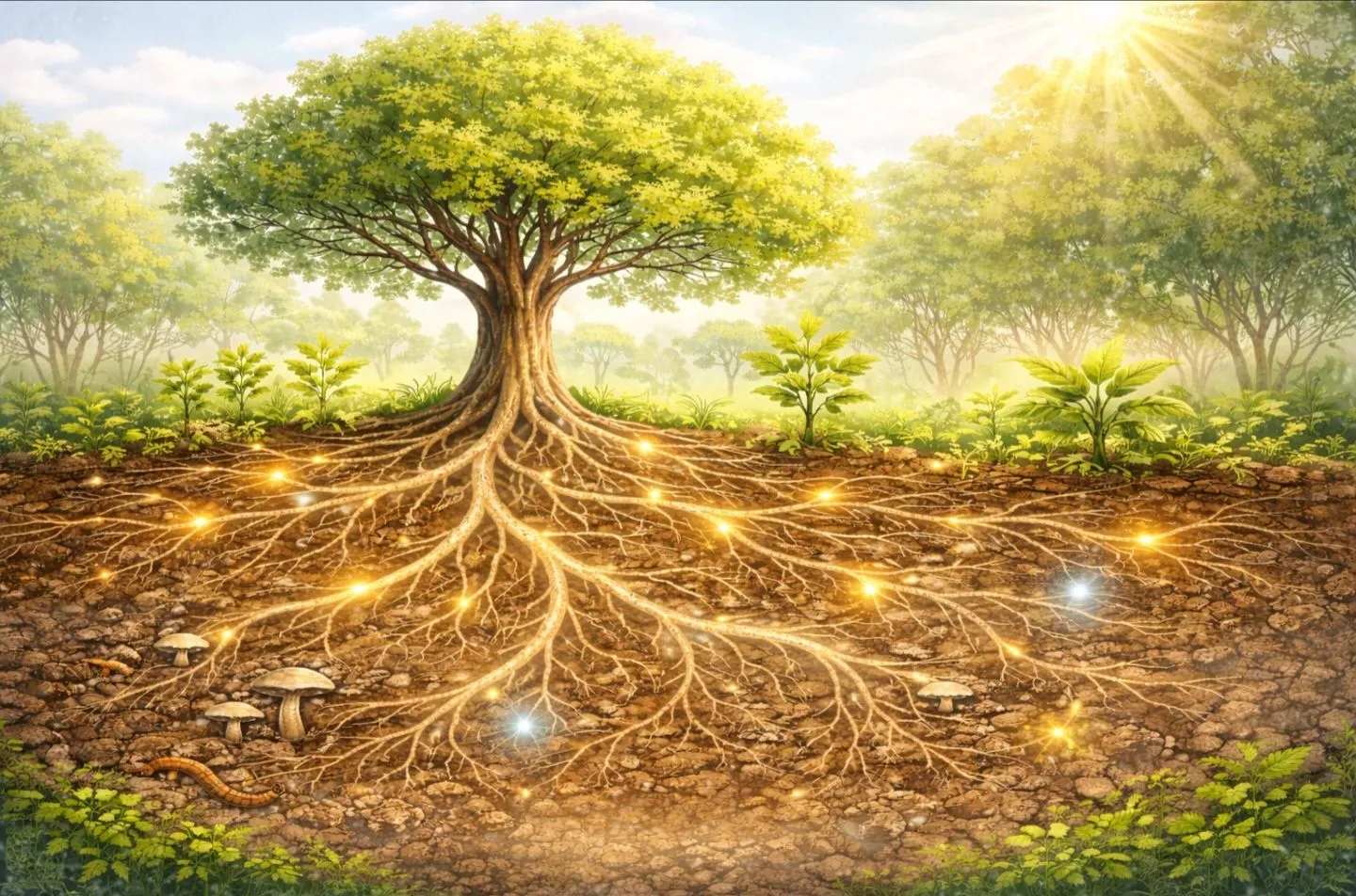
Perhaps the most extraordinary botanical discovery is subterranean communication. Below the forest floor, fungal mycelia intertwine with plant root systems to create vast mycorrhizal networks—the so-called Wood Wide Web.
Through these fungal conduits, mature canopy trees share surplus carbon and nutrients with shaded understory saplings. When a pest attacks one tree, warning biochemicals travel across the network, prompting neighboring trees to preemptively ramp up their chemical defenses.
Can Plants Learn and Remember?
Consider the sensitive plant, Mimosa pudica, which collapses its leaflets when touched. Experiments reveal that when subjected to harmless, repeated drops, the plant ceases closing its leaves, having learned that the stimulus presents no genuine danger. This functional habituation persists for weeks, encoded in epigenetic modifications, calcium signaling, and cellular polarization.
Deliberate Strategy
Plant intelligence operates across extended timescales. Trees do not react in fractions of a second; their patience is measured across seasons and decades. Facing a drought, a tree curtails leaf transpiration, closes stomata, and extends deeper taproots. It weathers storms by thickening cell walls and reinforcing mechanical tissue.
Redefining Cognition
Must intelligence require a central nervous system? If intelligence encompasses problem-solving, environmental adaptation, and inter-organism communication, plants embody it thoroughly. Plants are the oldest, most resilient multicellular survivors on Earth, generating oxygen, moderating climates, and sustaining terrestrial life.
Plants remind us that thinking is only one pathway to intelligence; staying alive and thriving across millennia is another. In nature’s vast repertoire, centralized brains are merely one evolutionary option among many.