The Roswell Mystery: Alien Craft or Military Secret?
Strange Debris in the Desert
Summer 1947. In the arid desert near Roswell, New Mexico, a local rancher stumbled upon strange debris scattered across the sand: shiny metallic foil, unusual lightweight structural beams, and tough parchment-like materials unlike anything he had encountered. He reported the discovery to the local sheriff, who notified the nearby military airfield. Within hours, army personnel cordoned off the pasture and gathered the debris.
The Flying Disc Announcement
What followed became one of the most famous mysteries in modern folklore. Within hours, the Roswell Army Air Field issued an explosive public press release announcing that the military had captured a “flying disc.” The sensational story made global headlines, giving millions their first apparent proof that humanity was not alone in the universe.
The Birth of a Conspiracy
The sensation was short-lived. Just one day later, military officials retracted the claim, asserting that the wreckage was merely an ordinary radar weather balloon.
Yet the public was unconvinced. Eyewitnesses claimed the material exhibited extraordinary metallurgical properties. Decades later, claims emerged alleging the recovery of small alien bodies from a crash site. A massive conspiracy theory took root: the United States government had concealed alien spacecraft and extraterrestrial autopsies inside top-secret hangars.
Over the ensuing decades, novels, documentaries, and cult television series like The X-Files transformed Roswell into modern American mythology.
The Official Declassification
In the 1990s, the United States Air Force released exhaustive declassified reports. The debris, they revealed, originated from Project Mogul—a top-secret Cold War reconnaissance program designed to float acoustic sensor arrays into the upper atmosphere to detect Soviet nuclear test detonations. Built with aluminum foil, neoprene, and balsa wood radar reflectors, the classified balloons matched the recovered fragments precisely.
What About the Alien Bodies?
The Air Force report explained that tales of recovered bodies likely conflated memories of 1950s high-altitude parachute tests using anthropomorphic test dummies, combined with military transport of casualties from aircraft accidents. Over decades of retellings, folklore, and popular media, scattered recollections blurred into alien myth.
Roswell’s Alien Economy
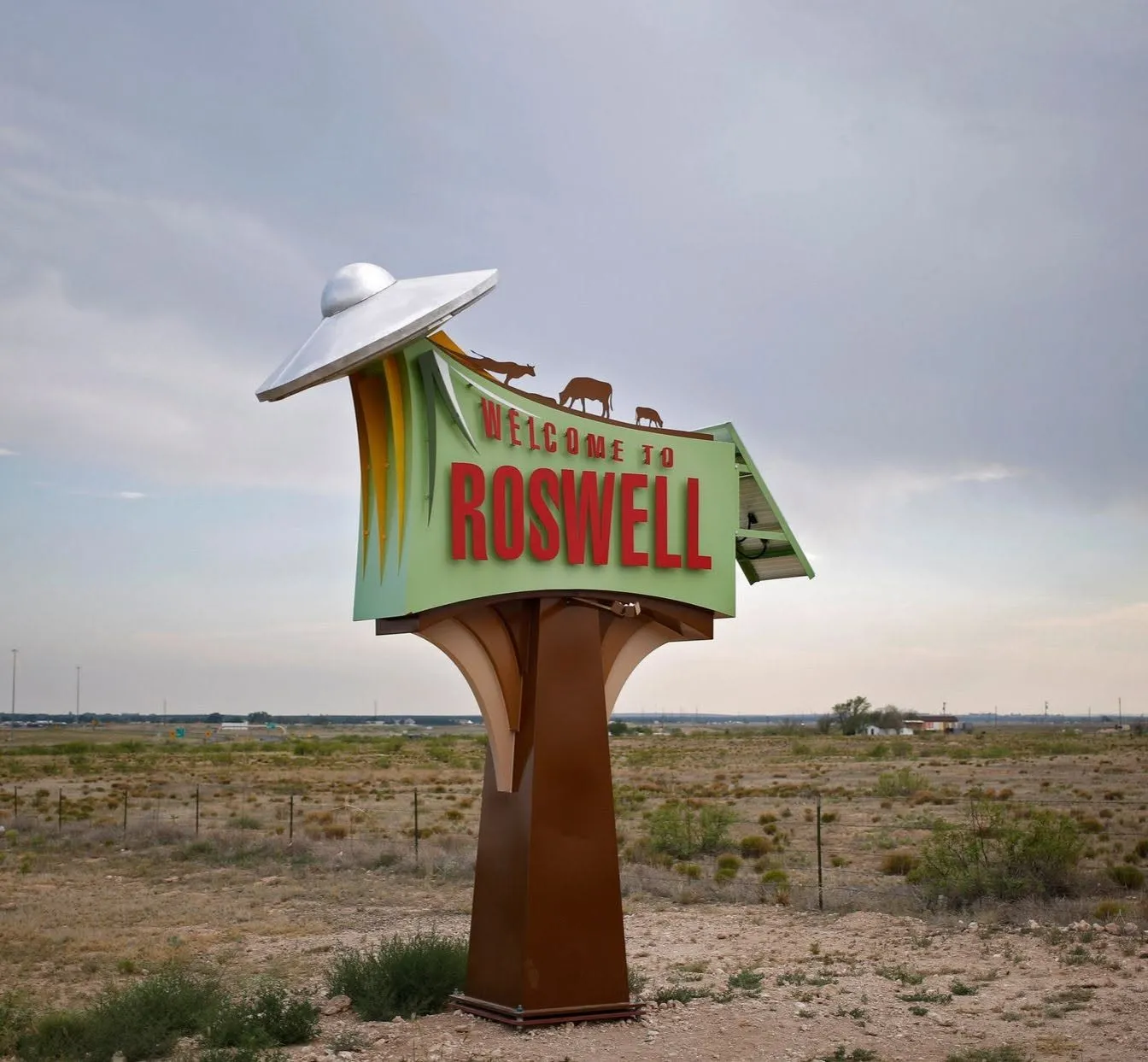
Ironically, this extraterrestrial folklore spawned a thriving tourism industry in Roswell today. Green alien statues line city streets; local gift shops sell extraterrestrial apparel, coffee mugs, and novelty cuisine; and street lamps mimic flying saucers. Roswell hosts the famous International UFO Museum and Research Center alongside an annual UFO Festival that draws thousands of global tourists. Whether extraterrestrial visitors landed or not, aliens are very real contributors to Roswell’s local economy.
Are We Alone?
Humanity’s fascination with mysteries is enduring. Gazing up into the night sky, we continue to wonder whether intelligent life shares this cosmic expanse.
Perhaps that is the enduring power of the Roswell mystery: it is not merely a tale of Cold War balloon wreckage, but an enduring reflection of human curiosity, imagination, and our quest to discover our place in the universe.