Signs of Ancient Life on Mars: Perseverance Discovery
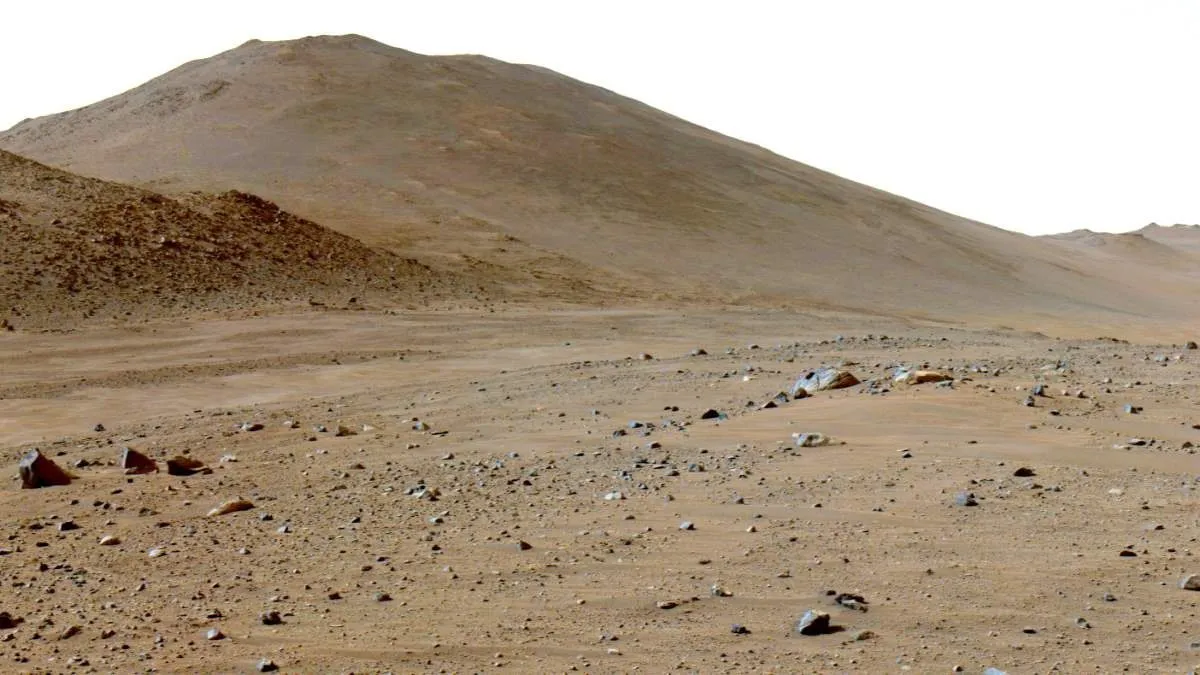
Human fascination with Mars, our enigmatic ‘Red Planet’, knows no bounds. Billions of years ago, did life ever flourish across its ancient rivers and lakes? In quest of an answer, NASA deployed its most sophisticated robotic explorer, the Perseverance rover, which touched down on Martian soil in 2021. Recently, Perseverance made a discovery that has ignited profound excitement across the global scientific community.
Hunting for Ancient Microbial Traces in Jezero Crater
Perseverance has been methodically exploring Jezero Crater—a vast, ancient basin that held a deep, vibrant lake billions of years ago. The rover recently reached an ancient river inlet that once drained into this lake, known as Neretva Vallis. Planetary scientists estimate that roughly three billion years ago, torrential waters surged through this channel, depositing layers of fine sediment. Within this ancient riverbed, Perseverance encountered intriguing sedimentary rocks that bear striking resemblances to microbially generated rocks found on Earth.
What Lies Within These Martian Rocks?
Utilizing its suite of onboard analytical instruments—including laser-induced breakdown spectroscopy, infrared sensors, and X-ray spectrometers—scientists conducted detailed chemical and mineralogical analyses of 126 rock targets and eight abraded surfaces. The results were recently published in the prestigious journal Nature Communications.
The investigations revealed that at least thirty-two samples contained exceptionally high concentrations of nickel. In certain rock patches, nickel accounted for as much as 1.1 percent of the total rock mass—the highest nickel concentration ever directly measured on the surface of Mars. Alongside this abundance of nickel, instruments detected distinctive iron sulfides and sulfate minerals.
Striking Parallels to Terrestrial Biology
It is precisely this geochemical signature that has captured the attention of astrobiologists. On Earth, rock formations enriched in nickel and iron sulfides are frequently produced through the activity of anaerobic microbes. When terrestrial bacteria break down sulfur and iron minerals, they leave behind characteristic mineral precipitates and isotopic fingerprints.
Scientists note that the chemical composition and fine-scale textures of these Martian rocks bear an unmistakable resemblance to terrestrial biogenic minerals. Consequently, researchers have formally classified this discovery as a potential “biosignature”—a compelling sign that could indicate past biological activity.
Scientific Caution: Biogenic Origin or Abiotic Chemistry?
Despite the excitement, planetary scientists emphasize rigorous caution. While microbes produce such mineral assemblages on Earth, identical chemical signatures can also arise through purely non-biological chemical processes. For instance, the hydrothermal process of serpentinization—where water reacts with ultramafic rocks to produce hydrogen gas—can synthesize similar nickel- and sulfide-rich minerals in the absence of life.
Nonetheless, whether biological or abiotic, this discovery provides unprecedented insight into the geochemical environment of ancient Mars and significantly sharpens the search for extraterrestrial biosignatures.
The Crucial Next Step: Mars Sample Return
Definitively answering whether these formations represent ancient biology or abiotic chemistry requires analytical capabilities far beyond the miniaturized instruments carried by a robotic rover. Determining isotopic ratios, organic molecular structures, and sub-micron cellular traces demands advanced synchrotron facilities and electron microscopes in terrestrial laboratories.
Anticipating this need, Perseverance has already cored and hermetically sealed pristine rock samples from Sapphire Canyon in Neretva Vallis. NASA and the European Space Agency (ESA) are actively refining plans for the Mars Sample Return mission, whose primary goal is to retrieve these sealed Martian capsules and bring them safely back to Earth. Only when these ancient stones are placed beneath terrestrial instruments will humanity finally answer the timeless question: was Mars once a living world?