Artemis 2 Mission: Humanity's Daring Return to the Moon
Decades ago, the legendary Apollo program carried humans to the Moon. More than fifty years of silence followed across deep space. Today, that half-century quiet is finally shattered by a bold new chapter: the Artemis 2 mission. This is no ordinary spaceflight; it is a critical proving run—a grand dress rehearsal designed to test human endurance, cutting-edge spacecraft systems, and navigational precision before astronauts attempt to walk on the lunar surface once again.
Kennedy Space Center and the Orion Spacecraft
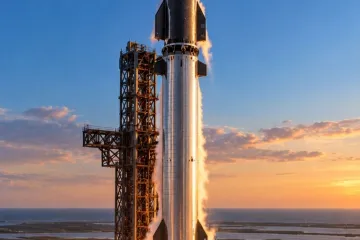
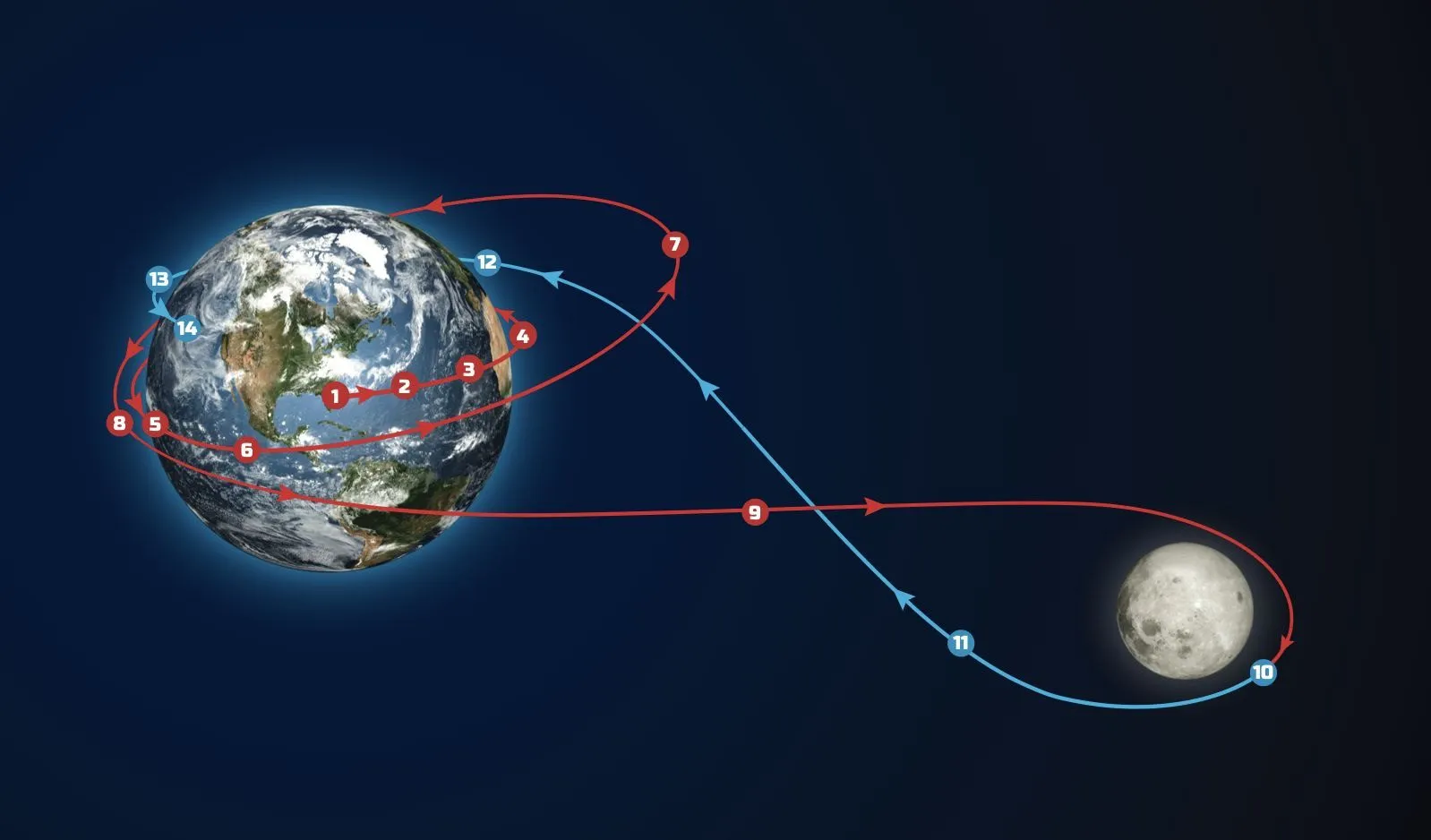
The journey begins from a sacred shore of aerospace history: NASA’s Kennedy Space Center in Florida, where Apollo’s towering rockets once shook the ground. From the same launchpads, the thunderous fury of the Space Launch System (SLS) will ignite the sky. Towering on plumes of blinding fire, the SLS will carry the Orion spacecraft into the heavens. Within minutes, the rocket overcomes the heavy gravitational grip of Earth and separates from the spacecraft, leaving Orion to embark on its true voyage. Yet Orion does not sprint directly toward the Moon immediately. It first enters an expansive high Earth orbit, performing comprehensive checkouts before firing its engines in a decisive translunar injection burn—the final propulsive push toward the lunar frontier.
A Five-Day Silent Voyage Through Deep Space
This translunar burn is the defining moment that frees Orion from Earth’s orbital embrace, embarking the crew on a five to six-day silent coast through deep space. Outside the capsule windows, the blue jewel of Earth recedes into a delicate marble while the cratered sphere of the Moon grows ever larger. Orion will make a sweeping flyby of the Moon without landing. The primary objective is to evaluate the flight path, environmental controls, and operational systems under real deep-space conditions. Here, lunar gravity acts as a benevolent celestial guide: drawing Orion in, curving its trajectory around the far side, and slingshotting it back toward Earth along a free-return trajectory.
Aboard the spacecraft, four astronauts will push every subsystem, communication link, and safety protocol to its limits. For the first time in more than fifty years, humans will witness the majestic topography of the Moon up close, turning Orion into humanity’s most advanced deep-space laboratory.
The Fiery Crucible of Atmospheric Reentry
The most demanding test awaits the crew on their journey home. Plunging into Earth’s upper atmosphere at roughly 40,000 kilometers per hour, Orion will compress the atmospheric gases ahead into an incandescent envelope of ionized plasma reaching thousands of degrees Celsius. Its advanced ablative heat shield will absorb and deflect the blistering thermal fury. As velocity bleeds away, a succession of drogue and main parachutes will deploy, gently lowering the capsule into the Pacific Ocean where recovery forces await.
Spanning ten rigorous days, the Artemis 2 mission may sound straightforward, but beneath its graceful trajectory lie years of planning and the dedicated labor of tens of thousands of scientists and engineers. Its ultimate ambitions stretch far past a simple lunar flyby: if Artemis 2 succeeds, it paves the way for humanity to set foot on the lunar soil once more, establishing the stepping stone for our eventual voyage to Mars.