Why We Die: Inside the Science of Aging
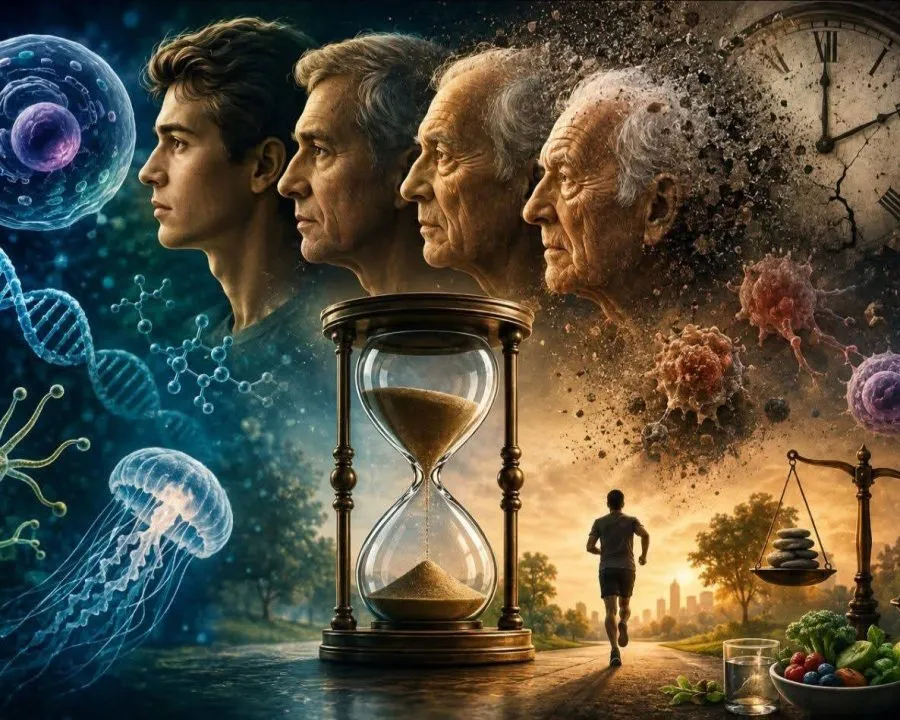
Human beings grow old. Over the decades, our biological machinery wears down, our organs lose resilience, and eventually, life ceases. It is the universal order of nature. Yet an age-old question endures: could modern science ever halt or reverse this decline?
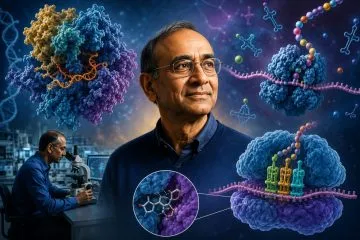
Humanity has chased the fountain of youth for millennia, but today the search has shifted from myth to molecular biology laboratories. In his acclaimed book Why We Die: The New Science of Aging and the Quest for Immortality, Nobel laureate Venki Ramakrishnan examines the frontiers of longevity through the lens of genetics, cellular mechanics, and evolutionary biology.
Is Death Written into Our Genes?
A central thesis of the Why We Die Venki Ramakrishnan book is that humans are not genetically programmed to die. There is no biological countdown clock engineered into our genome designed to trigger an off-switch at a predetermined hour.
Instead, the problem is an accumulation of entropy. Every second of our lives, countless biochemical reactions take place in our tissues. Cells divide, DNA duplicates, ribosomes synthesize proteins, and worn-out molecules are recycled. This bustling internal machinery is never completely flawless. Over decades, tiny cellular errors and molecular lesions accumulate.
DNA sustains strand breaks, proteins misfold, mitochondrial efficiency wanes, cellular waste disposal pathways degrade, and immune surveillance softens. In youth, robust repair mechanisms easily keep pace with damage. As the decades roll by, however, the rate of molecular wear outpaces our repair capacity. What we call aging is largely the cumulative tally of this uncorrected cellular wear and tear.
Does Every Organism Age?
Nature presents fascinating evolutionary exceptions. The freshwater cnidarian Hydra exhibits no discernible increase in mortality with advancing age, continually rejuvenating its tissues via stem cell renewal.
Similarly, the immortal jellyfish (Turritopsis dohrnii) can revert its adult medusa stage back into an immature polyp state when exposed to physical stress, earning it the label of biologically immortal.
This does not mean these creatures cannot die – predators, pathogens, or starvation easily kill them. However, they lack the inevitable, systematic physical deterioration that characterizes human aging. These exceptions demonstrate that senescence is not an absolute, immutable law of biology.
The Biological Limits of Cells
Human somatic cells cannot divide indefinitely. In the 1960s, microbiologist Leonard Hayflick discovered that normal human cells in culture undergo a finite number of divisions before arresting permanently – a threshold known as the Hayflick Limit.
This boundary is closely tied to telomeres: protective nucleotide caps at the ends of linear chromosomes that prevent genomic unraveling, much like the plastic aglets on shoelaces. With every cellular division, its telomeres shorten slightly. When telomeres become critically eroded, cells enter senescence, ceasing division while secreting inflammatory signals. Yet telomere erosion is only one factor among a symphony of interconnected aging hallmarks.
What Evolution Truly Aims For
Why didn’t evolution make our bodies immortal? The answer lies in natural selection. Evolution does not prioritize keeping individual bodies alive forever. Natural selection cares primarily about one thing: ensuring an organism survives long enough to successfully reproduce and pass its genes to the next generation.
Organisms have a limited energy budget that must be partitioned among somatic growth, immune defense, reproduction, and maintenance. Investing immense metabolic resources into maintaining an immortal body yields minimal evolutionary payoff when accidental death from predators, famine, or cold is always possible. Once reproductive years pass, natural selection’s evolutionary pressure drops sharply, leaving late-life cellular repair under-funded.
Can We Slow the Aging Process?
In animal models, researchers have uncovered several interventions that extend lifespan. The oldest and most reliable is caloric restriction: reducing calorie intake without malnutrition, which activates cellular cleanup pathways and extends healthy lifespan in worms, flies, and rodents.
Another prominent compound is rapamycin, an immunosuppressant that inhibits mTOR, the central nutrient-sensing kinase that directs cells to grow. By down-regulating mTOR, cells shift resources from proliferation toward autophagy and repair. Similarly, the diabetes drug metformin is under active investigation for its longevity properties. Yet Ramakrishnan urges caution: extending the lifespan of inbred laboratory rodents is radically different from extending the life of complex, free-living humans.
The Lucrative Longevity Business
Alongside genuine biogerontology, a multi-billion-dollar commercial longevity industry has emerged. Silicon Valley venture capitalists and biotech startups are pouring fortunes into cellular reprogramming, senolytics, and epigenetic rejuvenation. Ramakrishnan remains deeply skeptical of commercial anti-aging hype, highlighting the vast chasm between verified laboratory findings and overpromised marketplace therapies.
Moreover, profound ethical dilemmas arise: if expensive longevity therapies ever succeed, who will access them? If life extension remains an exclusive luxury for billionaires, unequal access to longevity could become the most severe social divide in human history.
Extending Healthspan Rather Than Chasing Immortality
The core philosophy of the book is clear: science should focus on extending healthspan – the period of life lived in vigor, mental clarity, and independence – rather than chasing physical immortality. While human life expectancy doubled over the past century, maximum human lifespan remains capped near 122 years. The genuine goal is not simply adding years to life, but adding vitality to those years.
Learning to Understand Death
Why We Die is not an elixir of immortality. It is a masterclass in biological reality, explaining why our bodies wear out and where science can realistically intervene.
For now, the most powerful and evidence-backed longevity prescriptions remain refreshingly simple: wholesome nutrition in moderation, regular daily exercise, and restorative sleep. Even in an era of multi-billion-dollar longevity startups, no pill has ever surpassed those enduring foundations.