Venera-D Venus Mission: Russia's Quest for the Scorched Twin
The Golden Age of Venusian Exploration
During the heroic era of Soviet planetary exploration, the Venera program stood as a monumental milestone. In an infernal environment where surface atmospheric pressures crush titanium and temperatures melt lead, Soviet probes achieved historic firsts. In the 1970s and 1980s, Venera landers touched down successfully on the scorching plains of Venus, transmitting humanity’s first color panoramas of our planetary neighbor.
While planetary science at Roscosmos has endured decades of funding constraints, Russia is now preparing to revive its planetary legacy with a flagship project to return to the morning star.
The Venera-D Mission Architecture
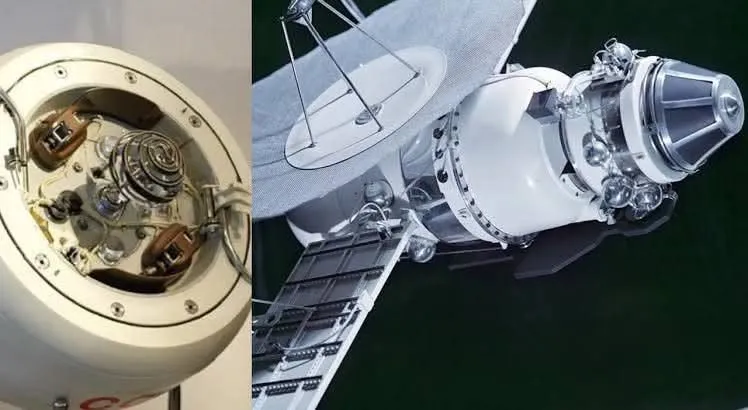
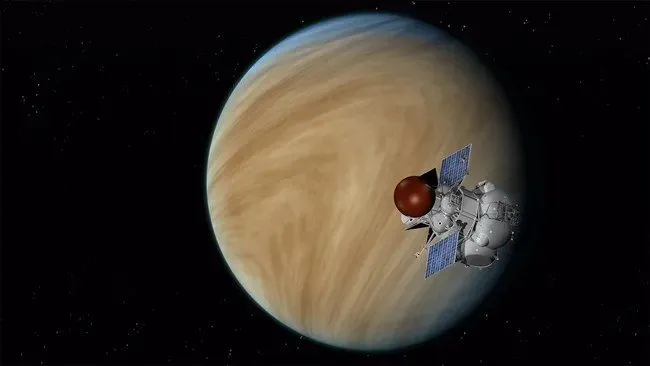
Russia’s prospective flagship is the Venera-D mission, targeted for launch in the mid-2030s. The designation ‘D’ derives from the Russian word Dolgovechnaya—meaning ‘long-lasting’—embodying the mission’s core technological ambition. Previous landers survived in the hellish Venusian environment for barely two hours before overheating. Venera-D aims to deliver a hardened surface station capable of operating on the surface for multiple days or weeks.
The mission architecture comprises:
- An orbiter dedicated to atmospheric chemistry and radar surface mapping
- A hardened surface lander to conduct direct mineralogical and geochemical analyses
- Potential atmospheric platforms, such as long-duration balloons or drones drifting in the temperate upper cloud layers
Surviving the Venusian Furnace
The surface of Venus is an unforgiving crucible, with ambient temperatures exceeding 460 degrees Celsius and atmospheric pressures ninety times greater than Earth’s sea level. Conventional silicon electronics fail in minutes under such heat. To endure, engineers are designing three protective pillars:
- Silicon Carbide Electronics: Replacing traditional silicon semiconductors with wide-bandgap silicon carbide (SiC) microcircuits capable of operating reliably at ambient temperatures up to 500 degrees Celsius without active cooling.
- Phase-Change Thermal Insulation: Enclosing sensitive instruments inside multi-layered vacuum dewar vessels packed with phase-change materials that absorb latent heat to keep internal components within operational temperature thresholds.
- High-Strength Titanium Pressure Hull: A spherical titanium pressure vessel designed to withstand the crushing ninety-atmosphere carbon dioxide environment without buckling.
Why Study Venus?
Planetary scientists describe Venus as Earth’s ‘evil twin.’ Born with similar masses, diameters, and elemental compositions, the two planets embarked on radically divergent evolutionary paths. Venus represents the catastrophic end-state of a runaway greenhouse effect, where oceans boiled away and carbon dioxide choked the atmosphere. Understanding what transformed Venus from a potentially habitable world into a furnace holds crucial lessons for planetary habitability and Earth’s climatic future.
Geopolitical Headwinds and Global Competition
Launching Venera-D faces significant challenges. Roscosmos has navigated budgetary restrictions and supply-chain pressures, and changing geopolitical relationships have limited international collaboration with Western agencies. Consequently, Russian engineers are reorienting toward indigenous hardware and potential partnerships with emerging spacefaring nations.
Meanwhile, a global renaissance in Venus exploration is underway. NASA is developing VERITAS and DAVINCI, while the European Space Agency is preparing EnVision. As the world turns its gaze back to our sister planet, Russia’s quest to reclaim its historic title as explorer of the morning star promises to unlock profound secrets about our solar system’s origins.