The Return of Cosmos 482: A Soviet Satellite Falling to Earth After 53 Years
The Unplanned Return of Cosmos 482 After 53 Years
A forgotten relic of the Cold War space race has returned to global headlines. An abandoned Soviet satellite, Cosmos 482, is plunging back toward Earth after spending fifty-three years adrift in orbit. Orbital dynamics experts calculate that the spacecraft will re-enter Earth’s atmosphere during mid-May 2025, potentially shedding debris across the planet’s surface.
A Failed Mission to Venus Trapped in Earth Orbit
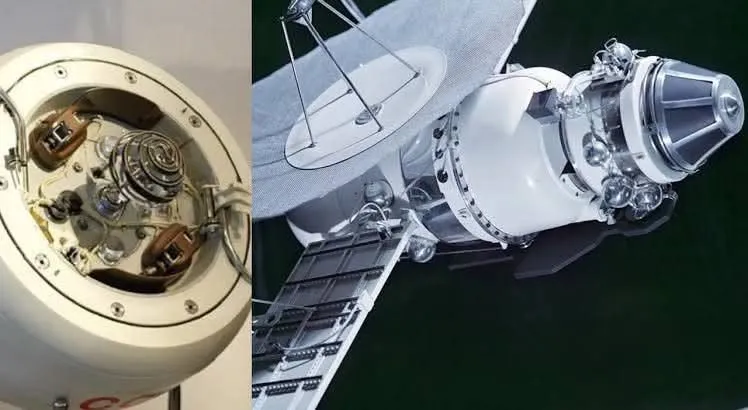
Launched in March 1972, Cosmos 482 was intended as an interplanetary probe to land on Venus, serving as the twin sister to the successful Venera 8 mission. However, a catastrophic timer malfunction caused the rocket’s upper stage booster to shut down prematurely. Stranded in an eccentric elliptical parking orbit around Earth, the spacecraft eventually fragmented, leaving behind its rugged, spherical lander capsule.
Engineered to Survive Planetary Descent
Weighing nearly 500 kilograms with a diameter of about one meter, the surviving lander capsule presents a unique re-entry hazard. Soviet aerospace engineers constructed the probe with dense thermal shielding and robust titanium pressure hulls designed to endure the crushing atmospheric pressure and 475-degree heat of Venus. Because of this extreme structural reinforcement, analysts anticipate the core descent module will largely survive the searing frictional heat of Earth’s atmosphere, striking the surface at roughly 240 kilometers per hour like a dense metallic meteorite.
Re-Entry Trajectory and International Space Law
Because Earth’s surface is over seventy percent ocean and vast areas of land remain sparsely inhabited, the statistical likelihood of an open-ocean impact is very high. Nonetheless, under the 1972 UN Space Liability Convention, the Russian Federation—as the legal successor state to the Soviet Union—retains strict liability for any material damage or personal injury caused by the descent module.
The Growing Menace of Space Debris
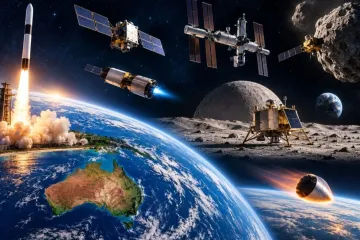
The saga of Cosmos 482 is a stark reminder of humanity’s escalating orbital clutter problem. Today, more than 14,000 satellites orbit our planet, nearly 3,000 of which are defunct derelicts. Millions of pieces of orbital debris hurtle around Earth at orbital velocities, threatening operational missions and creating collision risks. Ensuring orbital sustainability through proactive debris mitigation, controlled de-orbiting systems, and active space debris removal is one of the most critical imperatives for the future of space exploration.