Returning to Venus: Space Missions
In the race to explore the cosmos, humanity often prioritizes the Moon and Mars. Yet decades ago, the Soviet Union directed its ambitions toward a far more terrifying destination: Venus. Venus is an Earth-sized world where surface temperatures can melt lead, atmospheric pressure is ninety times that of Earth, and skies are shrouded in dense sulfuric acid clouds. Rain there evaporates under extreme heat long before touching ground. Descending onto Venus is akin to plunging into an inferno. Even so, the Soviets persisted.
The Historic Venera Missions of the Soviet Union
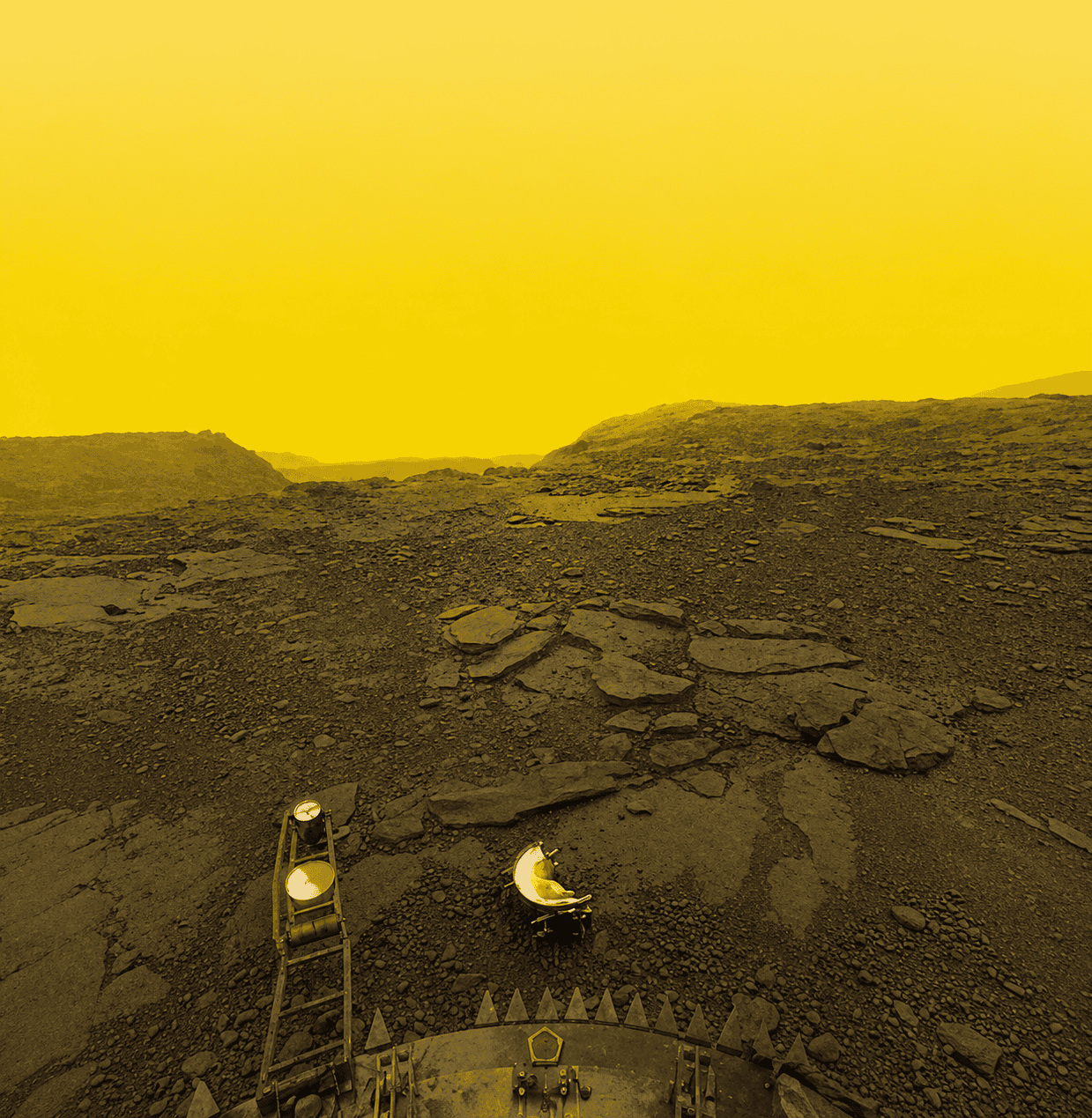
From the 1960s through the 1980s, the Soviets launched roughly thirty spacecraft toward Venus. Many failed, and some were lost en route. But the Venera program made history. In 1970, Venera 7 touched down on the Venusian surface and transmitted telemetry back to Earth—humanity’s first successful landing of a manufactured probe on another planet. Later, Venera 9, Venera 10, and Venera 13 followed. They did not merely touch down; they transmitted imagery of the terrain. Venera 13 returned the first color photographs in history: a scorched volcanic wasteland under sickly yellowish skies, looking less like a neighboring planet and more like hell itself. Remarkably, these machines survived in that searing pressure cooker for only minutes to hours. Yet in those brief moments, they confirmed that Venus is a dead, blistering, suffocating world with no trace of life.
NASA’s New Quest for Venus
Yet the story of Venus is far from over. After a protracted hiatus, humanity is turning its gaze once again toward this enigmatic planet. NASA is developing two ambitious missions: DAVINCI and VERITAS. DAVINCI will plunge through the dense Venusian atmosphere to investigate chemical composition, noble gases, past water abundance, and potential ancient habitability. Meanwhile, VERITAS will orbit the planet, using cutting-edge radar to create high-resolution global topographical maps, hunting for active volcanism and tectonic shifts.
The European Space Agency’s EnVision Mission
Around the same timeframe, the European Space Agency’s EnVision mission will concurrently analyze the crust, interior structure, and atmosphere of Venus. Should these missions succeed, we may finally learn how our planet’s near-twin transformed from a potentially hospitable world into a runaway greenhouse furnace.
As NASA and Europe chart their return to Venus, the pioneering Soviet Venera missions are seen in a fresh light. In the history of exploring Venus, Soviet achievements remain unmatched. Mars may one day become a home for humanity, but Venus remains space exploration’s most brutal and unforgiving test. Passing that test will never be easy.