Humanoid Robots Fine Motor Struggles: Moravec Paradox
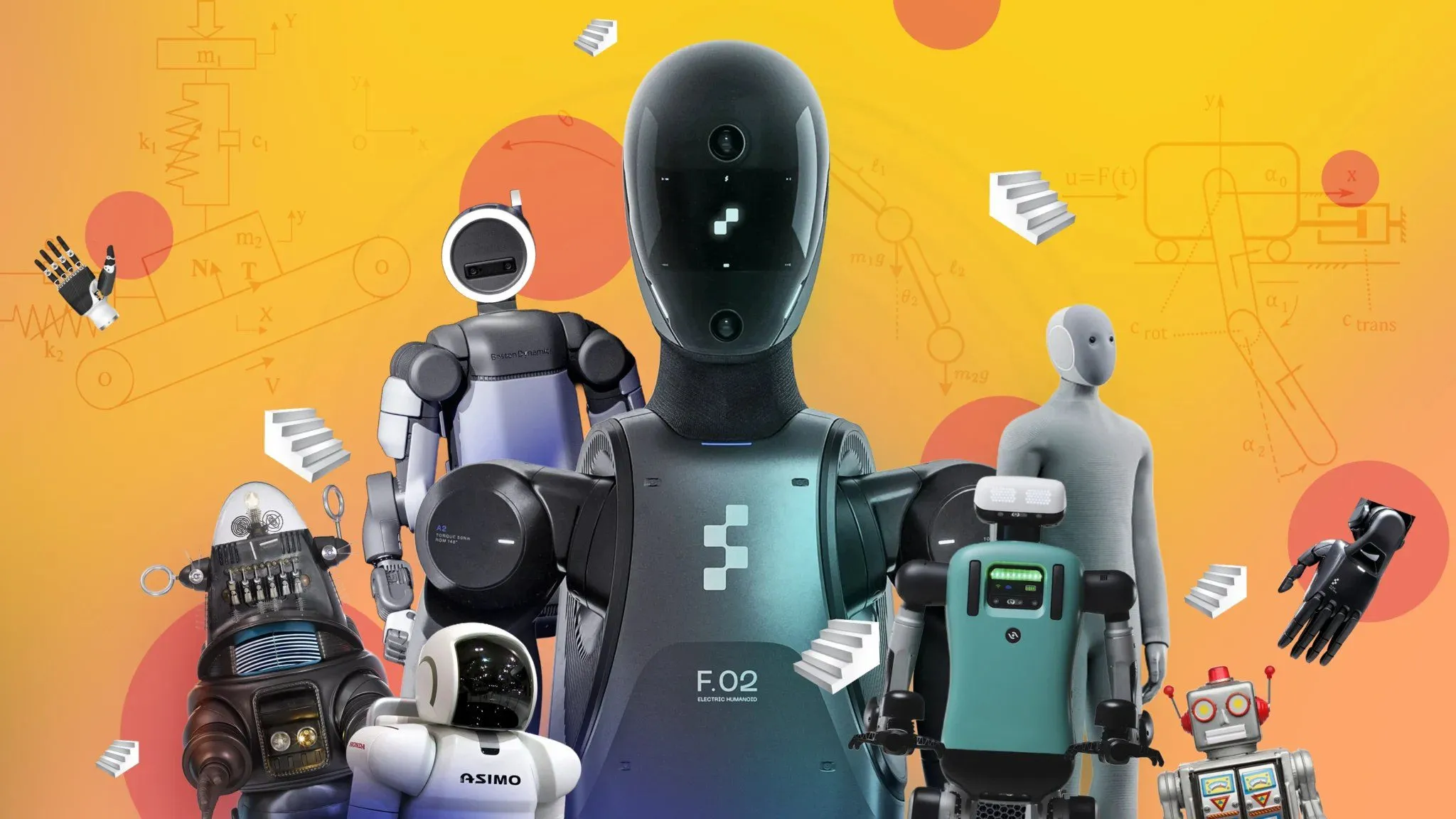
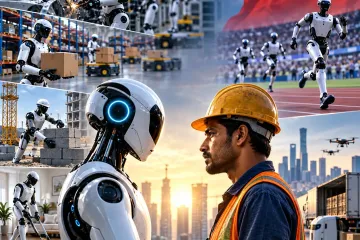
Across social media and technological showcases, humanoid robots dazzle audiences: walking gracefully, sprinting across rough terrain, navigating obstacles, and executing gravity-defying backflips. Watching Boston Dynamics’ Atlas perform gymnastics can easily convince an observer that robotics has solved the physical mastery of the human body. Yet ask that very same multi-million-dollar machine to button a cotton shirt, thread a needle, or untangle a pair of earphones, and the machine stumbles helplessly.
A recent in-depth investigation by Quanta Magazine probed this curious contrast: why do state-of-the-art humanoid robots excel at dynamic acrobatics yet struggle profoundly with delicate, everyday fine motor tasks?
Moravec’s Paradox: The Easy Is Hard, the Hard Is Easy
In the 1980s, pioneering roboticist Hans Moravec formulated an enduring insight known as Moravec’s Paradox. He observed that it is comparatively straightforward to program computers to perform intellectual tasks that challenge adult humans—such as mastering chess or calculating complex differential equations—yet extraordinarily difficult to endow them with the physical and perceptual skills of a one-year-old child, such as walking, recognizing faces, or manipulating an egg without crushing it.
Running or jumping involves well-defined mathematical dynamics, rigid body kinematics, and powerful actuators. In contrast, picking up an irregularly shaped soft object or wiping a pair of eyeglasses demands millions of real-time physical micro-adjustments governed by sensory feedback.
The Hardware Dilemma: Rigid Motors vs. Compliant Flesh
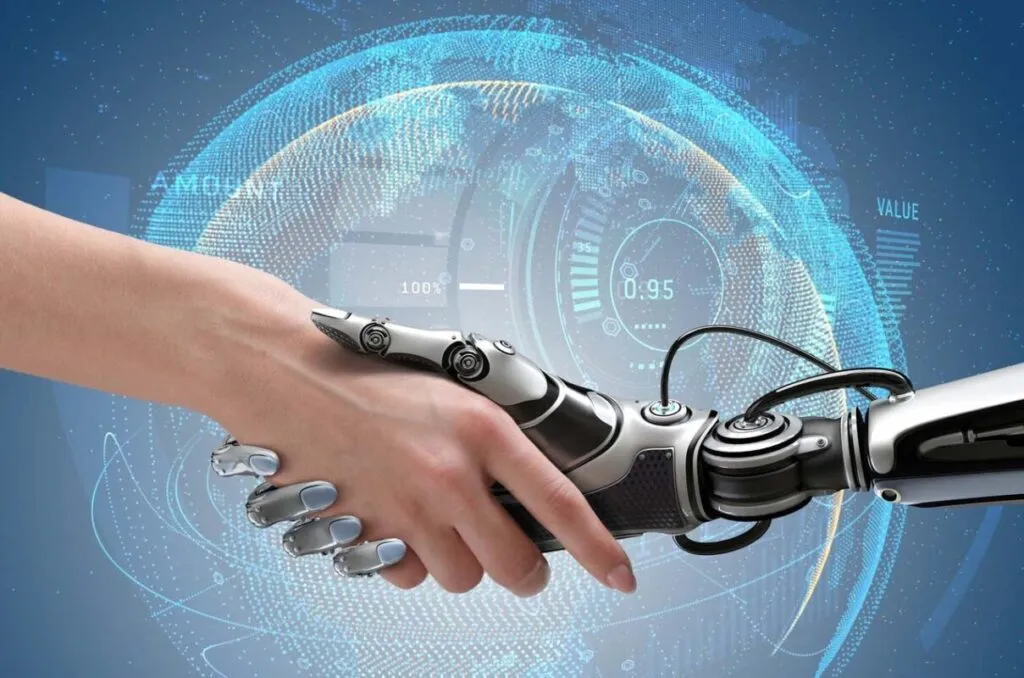
The human hand is a masterpiece of evolutionary biomechanics. Packed with complex muscle groups, flexible ligaments, and responsive tendons, human hands are naturally “compliant”—they yield slightly upon contact with external surfaces, dampening shock and contouring to object shapes effortlessly.
Robotic hands, by contrast, are typically assembled from rigid metals, composite plastics, and gear trains powered by brushless electric motors. This intrinsic rigidity makes delicate contact perilous: a fractional error in torque calculation can shatter a delicate ceramic mug or fail to generate enough friction, causing the object to slip away.
Sensory Blindness and the Occlusion Problem
Most robots perceive their environment using head-mounted stereo cameras and LiDAR. Yet when a robot reaches forward to grasp a small tool, its own mechanical arm inevitably obstructs its visual sensors: a classic computer vision hurdle known as occlusion.
Consider retrieving a keychain from your deep pocket in pitch darkness. You do not need to see your fingers; your fingertips are embedded with thousands of mechanoreceptors providing continuous tactile data on texture, friction, pressure, and temperature. Replicating this tactile acuity in robotics is notoriously difficult. Running delicate electrical wiring through flexible mechanical fingers often leads to mechanical fatigue and failure. To overcome this, researchers are developing optical-tactile sensors like GelSight: soft elastomeric gel pads on fingertips with miniature internal cameras that visually track how the gel deforms upon contact, inferring contact force and slip in real time.
The Sim-to-Real Gap and Non-Rigid Physics
Robotics researchers train artificial intelligence policies using physics simulators in virtual environments, where deep reinforcement learning models iterate through millions of trial-and-error attempts in hours. However, while simulators model gravity and rigid-body mechanics accurately, they struggle to model complex frictional contact dynamics, soft material deformations, and micro-slipping—the “Sim-to-Real” gap. A policy that folds a cloth napkin flawlessly in simulation often fails completely in the real world when confronted with unpredictable fabric friction.
Teleoperation and Imitation Learning
To bridge this gap, roboticists are embracing teleoperation. Human operators wearing VR headsets and haptic gloves remotely perform tasks through the robot—brewing coffee, cracking eggs, or peeling fruit. High-frequency sensor and video feeds capture every nuance of human dexterity, feeding massive datasets into imitation learning models.
End-to-End Neural Robotics
Traditional robotic architectures broke tasks into rigid modular pipelines: object detection, pose estimation, trajectory planning, and actuator control. Today, cutting-edge vision-language-action (VLA) models use end-to-end deep learning: processing raw camera pixels directly into joint motor commands. Much like large language models learned grammar by absorbing trillions of text tokens, physical AI systems are learning manipulation physics from vast corpuses of physical demonstrations.
Humanoid robots will soon dominate industrial warehouses and construction sites, hauling heavy pallets and performing repetitive gross motor work. Yet for domestic chores like buttoning clothing, tying shoelaces, or caring for elderly patients, humanity’s robotic counterparts still have immense learning ahead. Designing these machines has underscored a humbling scientific lesson: the human hand is one of nature’s greatest engineering masterpieces.