The Next 25 Years: 10 Shifts Transforming Our Planet

Standing on the Cusp of a New Era
Reflecting twenty-five years into the past, mobile phones were crude voice transmitters, broadband internet was an emerging luxury, and artificial intelligence was largely confined to academic laboratories. Today, pocket supercomputers integrate high-definition optics, real-time satellite geolocation, global commerce, and generative neural networks. As the pace of technological development compounds exponentially, what will human civilization look like over the next 25 years? While no forecast is absolute, emerging scientific trajectories point toward ten defining global shifts.
1. Artificial Intelligence: From Assistants to Thought Partners
AI will evolve far beyond predictive text and prompt generation. Over the next quarter-century, artificial intelligence will mature into autonomous “co-thinkers” integrated across education, law, medicine, and scientific discovery. Machine learning will design novel therapeutic molecules, optimize urban transit flows, and manage municipal power grids invisibly in real time, making algorithms the pervasive nervous system of modern governance.
2. The Proliferation of Robotics and Humanoids
Robotic systems are rapidly exiting factory cages to operate within domestic and civic spaces. Autonomous delivery drones, agile construction robots, robotic healthcare aids, and disaster-response humanoids will become everyday sights, taking over hazardous, repetitive labor and reshaping global labor markets.
3. Genomic and Personalized Medicine
Healthcare will shift decisively from reactive treatment to proactive prevention. Liquid biopsies and genomic risk profiling will detect malignant tumors years before clinical symptoms manifest. Precision gene-editing platforms (CRISPR, prime editing) will provide one-time curative therapies for hereditary monogenic diseases, while senolytics and cellular reprogramming extend healthy human longevity.
4. Brain-Computer Interfaces (BCI)
Direct neural interfaces will mature from pioneering clinical trials into mainstream assistive technology. Individuals with spinal cord trauma will regain motor mobility using thought-controlled neuro-prosthetics, while high-bandwidth neural bridges prompt profound societal debates regarding cognitive privacy and neurological cybersecurity.
5. The Clean Energy and Fusion Revolution
Decarbonizing civilization will drive unprecedented advancements in per-kilowatt renewable generation. High-density solid-state batteries and smart microgrids will dominate vehicular transport, while pilot commercial magnetic-confinement fusion reactors edge toward continuous net-positive clean energy generation.
6. Autonomous Mobility and Smart Cities
Self-driving electric fleets will revolutionize urban transit, slashing traffic congestion and eliminating vehicle parking footprints. Urban centers will transform into integrated, sensor-driven ecosystems that adjust signal timings, reduce acoustic pollution, and lower municipal emissions autonomously.
7. Precision Agriculture and Cellular Food
Confronting global climate stress and arable land degradation, food production will pivot toward vertical hydroponic farming, drought-tolerant bioengineered crops, and precision fermentation. Cultivated meat and microbial protein sources will relieve environmental pressure on freshwater reservoirs and deforestation hotspots.
8. Advanced Nanomaterials and Room-Temperature Physics
Breakthroughs in graphene, transition metal dichalcogenides, and self-healing smart polymers will unlock ultra-lightweight structural composites and zero-resistance electrical transmission, powering next-generation quantum processors and aerospace architectures.
9. The Expansion into Cislunar and Martian Space
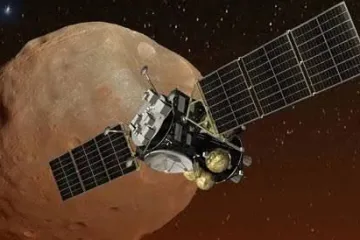
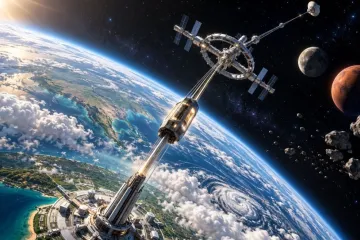
Human space exploration will transition from brief orbital missions to permanent interplanetary infrastructure. Permanent scientific bases under the Artemis program will occupy lunar polar craters, robotic infrastructure will prepare landing corridors on Mars, and asteroid prospecting will establish the foundations of space resource utilization.
10. Algorithmic Governance and Ethical Frontiers
The ultimate challenge of the upcoming quarter-century will not be purely technological, but philosophical: ensuring that runaway algorithmic systems remain aligned with human dignity, democratic fairness, and ecological preservation. The collective choices made during this pivotal transition will define the destiny of our species for generations to come.