Svalbard Global Seed Vault: Guarding Crop Heritage
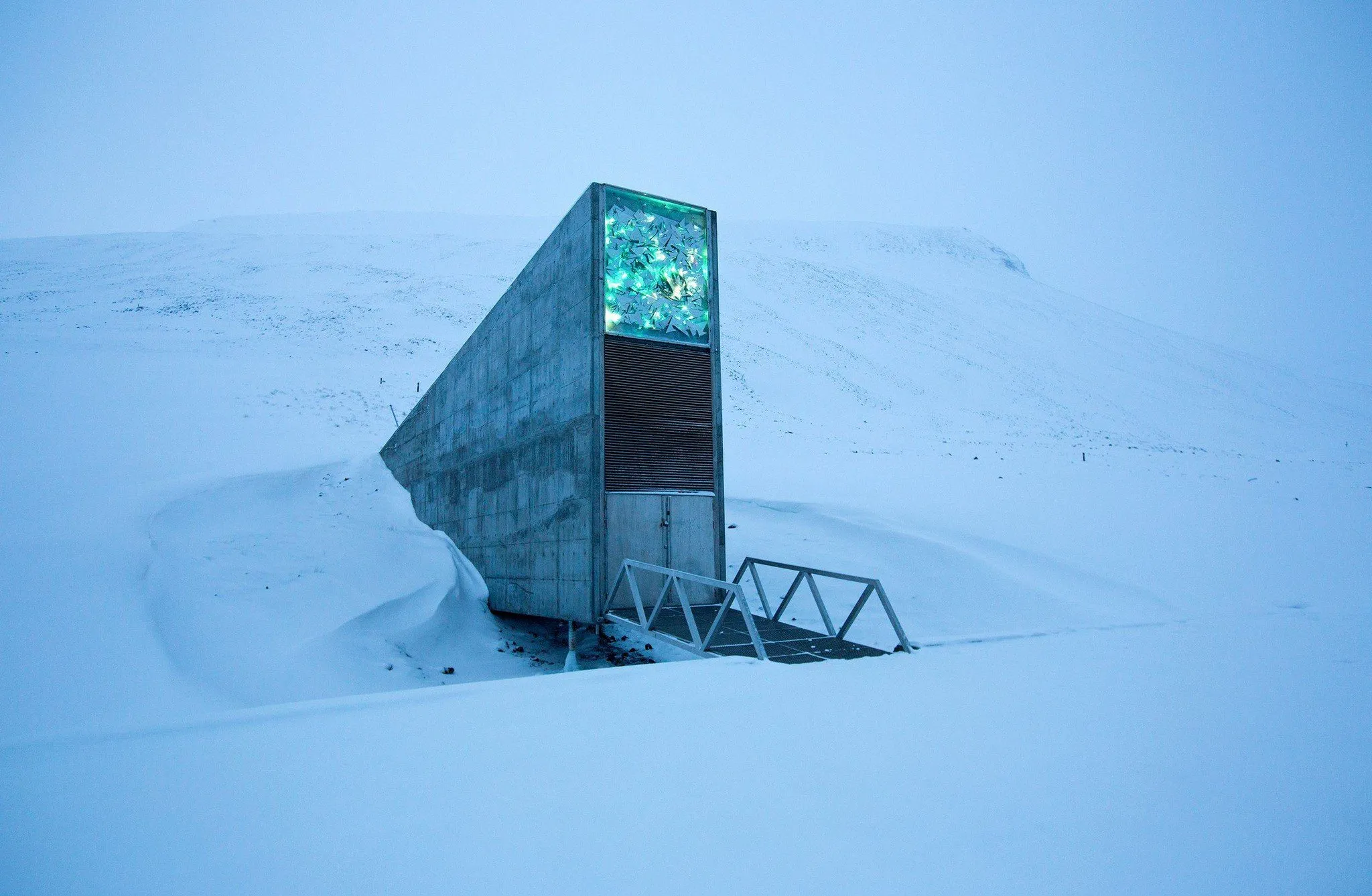
On a remote, ice-cloaked archipelago near the North Pole lies one of humanity’s most crucial security strongholds: the Svalbard Global Seed Vault. Nestled within the frozen landscape of the Norwegian Arctic, this quiet facility safeguards the foundation of global food security.
Often dubbed the “Doomsday Vault,” it is not born of apocalyptic dread, but of proactive foresight. The vault preserves duplicate seeds for humanity’s essential crops: rice, wheat, corn, potatoes, barley, beans, and countless fruits and vegetables. The facility currently stores more than 1.2 million distinct seed samples, representing over 5,000 plant species and hundreds of thousands of local farmer varieties. It stands as a living, frozen archive of world agricultural biodiversity.
A Truly Global Partnership
This is not the endeavor of a single nation. To date, more than 100 countries along with dozens of national genebanks, universities, and agricultural research institutes have deposited duplicate seed collections here. The vault is operated through a tripartite partnership between the Norwegian Ministry of Agriculture and Food, the Global Crop Diversity Trust (Crop Trust), and the Nordic Genetic Resource Center (NordGen). Crucially, ownership of the deposited seeds remains strictly with the depositing institution or country. The vault functions solely as a secure custodian.
The Cost of Securing Humanity’s Future
The construction of the vault cost approximately 9 million US dollars, funded entirely by the Government of Norway, while ongoing operational and maintenance expenses are supported internationally. Compared to the value of human civilization’s food supply, it is a remarkably modest investment for an ultimate safety net.
Why Locate in the Arctic?
The vault was deliberately built on the island of Spitsbergen in Norway’s Svalbard archipelago. Here, arctic temperatures remain frigid year-round, enveloped by deep permafrost. Even if mechanical power were to fail entirely, the surrounding permafrost provides natural refrigeration to keep the collections frozen. The facility is carved 100 to 120 meters into the solid rock of a sandstone mountain, high above sea level to safeguard against sea-level rise or glacial melting. Deep within the mountain, the storage vaults are maintained at a constant minus 18 degrees Celsius, allowing many seed varieties to remain viable for centuries.
How the Safety Net Works
The vault functions like a secure safe-deposit box. Genebanks worldwide retain their primary working collections locally while sending backup duplicates to Svalbard. If a national genebank is crippled by war, civil unrest, natural disasters, or climate disruption, the depositing nation can withdraw its duplicates from Svalbard to restore its agricultural heritage.
A Lifeline Proven in Crisis
This safeguard is far from hypothetical; its vital role has already been proven in the real world. During the Syrian civil war, the International Center for Agricultural Research in the Dry Areas (ICARDA) was forced to abandon its headquarters and seed bank in Aleppo. ICARDA drew upon its deposits in Svalbard to regenerate its collections in Lebanon and Morocco, successfully preserving drought-resistant crop varieties for the Middle East.
A Silent Assurance for Generations to Come
Every day, billions of people eat without realizing how fragile our food supply truly is. A single blight, war, or climate shift can erase centuries of crop breeding forever. Deep within an Arctic mountain, sealed inside protective foil packets, these tiny seeds provide an indispensable guarantee. They are not merely seeds; they are the living possibilities of tomorrow. In a world of rapid changes, Svalbard ensures that the vital heritage of our food will never be lost.