Apollo vs Artemis: How Lunar Trajectories Evolved

When humanity first ventured toward the Moon, the journey was a bold, direct charge: a rapid, powerful sprint through the void. The colossal Saturn V rocket propelled the Apollo spacecraft straight out of Earth orbit onto a trajectory where sheer speed was the paramount objective. On July 16, 1969, within hours of launch, Apollo 11 was injected onto a translunar path. Just 76 hours later—roughly three days—the astronauts were orbiting the Moon. Traveling at average velocities between 5,000 and 5,500 kilometers per hour, the route was direct and urgent, driven by a clear imperative: reach the Moon as swiftly as possible and make history.
Limited Technology and Boundless Audacity
In that era, computing power was modest, but human audacity was limitless. Safety was paramount, yet the sophisticated multi-tiered verification systems and iterative checkout protocols of today did not yet exist. The entire Apollo architecture reflected a philosophy of direct arrival. In NASA’s modern Artemis program, that philosophy has matured. Artemis commands formidable power and speed, but places deliberate emphasis on extensive systems verification and layered risk mitigation. Rather than firing Orion directly toward the Moon immediately after launch, the mission first places the spacecraft into a highly elliptical High Earth Orbit that reaches out roughly 46,000 miles. For nearly a full day, mission controllers put Orion’s propulsion, communications, and environmental control systems through rigorous testing. Only when all systems pass inspection does the translunar injection burn propel the ship toward the Moon. Consequently, transit to lunar vicinity takes approximately five days—about 120 hours. Far from a reduction in rocket performance, this longer timeline reflects a larger, carefully staged trajectory designed to prioritize human safety.
Contrasting Apollo and Artemis Orbital Architectures
The contrast between Apollo and Artemis is not merely one of flight time; it is a fundamental shift in orbital architecture. Apollo chose the direct, high-speed dash; Artemis chose a measured, modular, and resilient pathway. Both programs share the foundational principle of the free-return trajectory—an orbital path that loops around the Moon and naturally returns the spacecraft toward Earth under gravity if propulsion fails. Artemis builds upon this proven concept with modern navigational precision. While Apollo’s sprint was a triumphant dash to plant flags and leave footprints, Artemis represents a durable, reusable strategy designed for long-term presence.
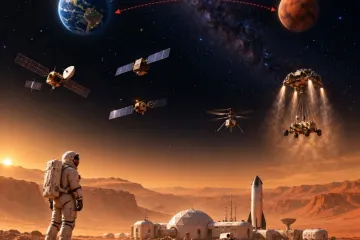
This philosophical evolution is the heart of modern space exploration. Apollo was a fierce sprint to touch the Moon; Artemis turns that race into a lasting bridge. The goal is no longer just to get there quickly, but to return reliably, sustain human presence, and lay the foundations for humanity’s eventual voyage to Mars.