Hybrid Rice in Bangladesh: Food and Seed Security
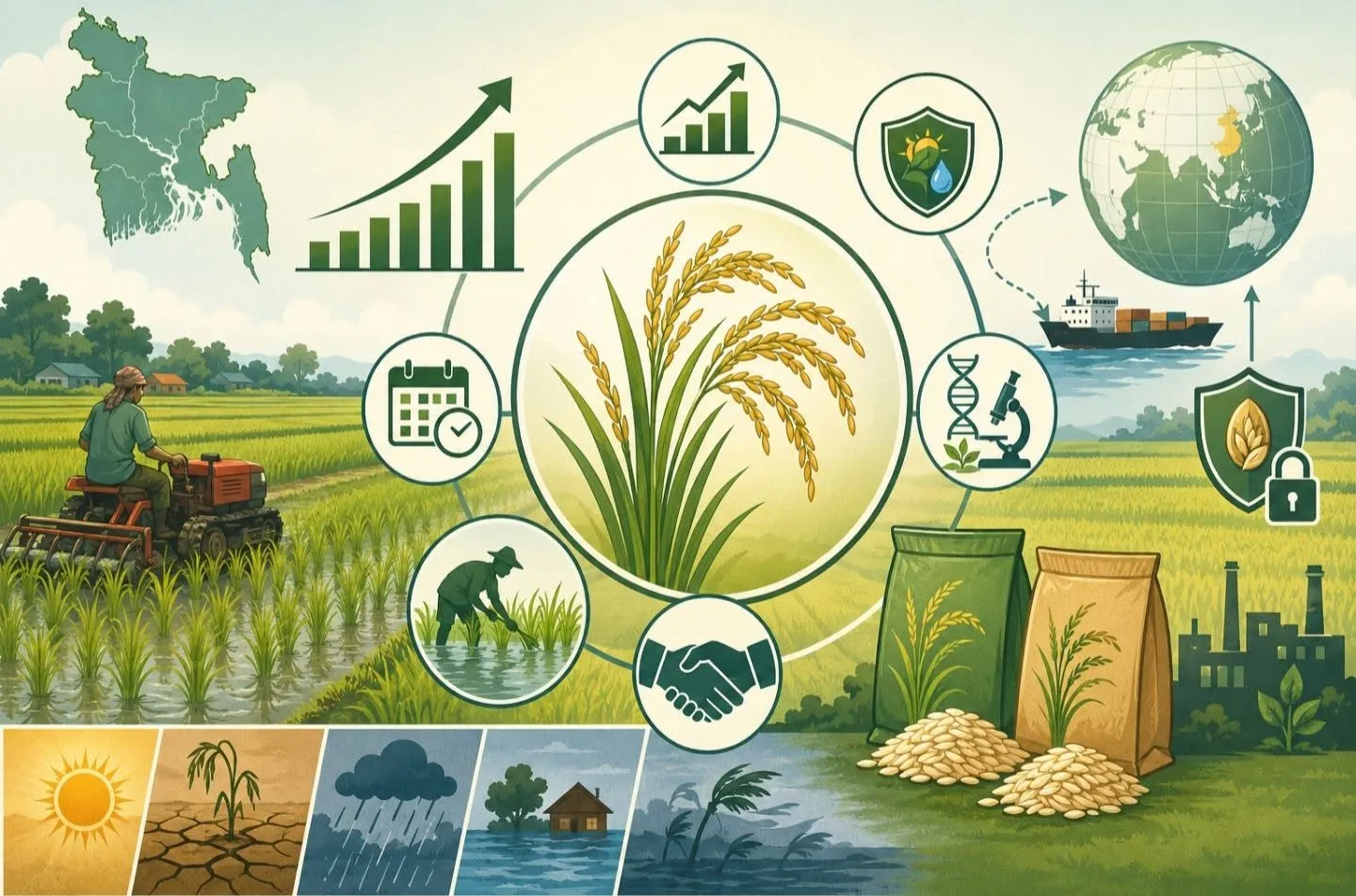
In Bangladesh, hybrid rice cultivation has moved far beyond experimental plots; it is rapidly establishing itself in mainstream agriculture. Over the past four years, this shift has grown increasingly pronounced. According to recent data from the Department of Agricultural Extension and the Bangladesh Rice Research Institute (BRRI), hybrid rice is now cultivated across 1.4 to 1.5 million hectares during the Boro season, accounting for roughly 28 to 30 percent of total Boro acreage. A decade ago that share stood at barely a quarter; today it continues to climb.
The Boro Season and the Demand for Hybrid Rice
The Boro season remains the cornerstone of rice production in Bangladesh, supplying roughly 55 percent of the nation’s total rice harvest. Yet Boro farming is also becoming costlier each year. Facing mounting input expenses, farmers naturally gravitate toward varieties that produce greater harvests in shorter cycles. On average, hybrid rice yields 15 to 20 percent more than inbred high-yielding varieties (HYVs). In fields where water, fertilizer, and agronomic management are carefully optimized, that yield gap widens even further.
Inbred Versus Hybrid Rice: The Key Distinctions
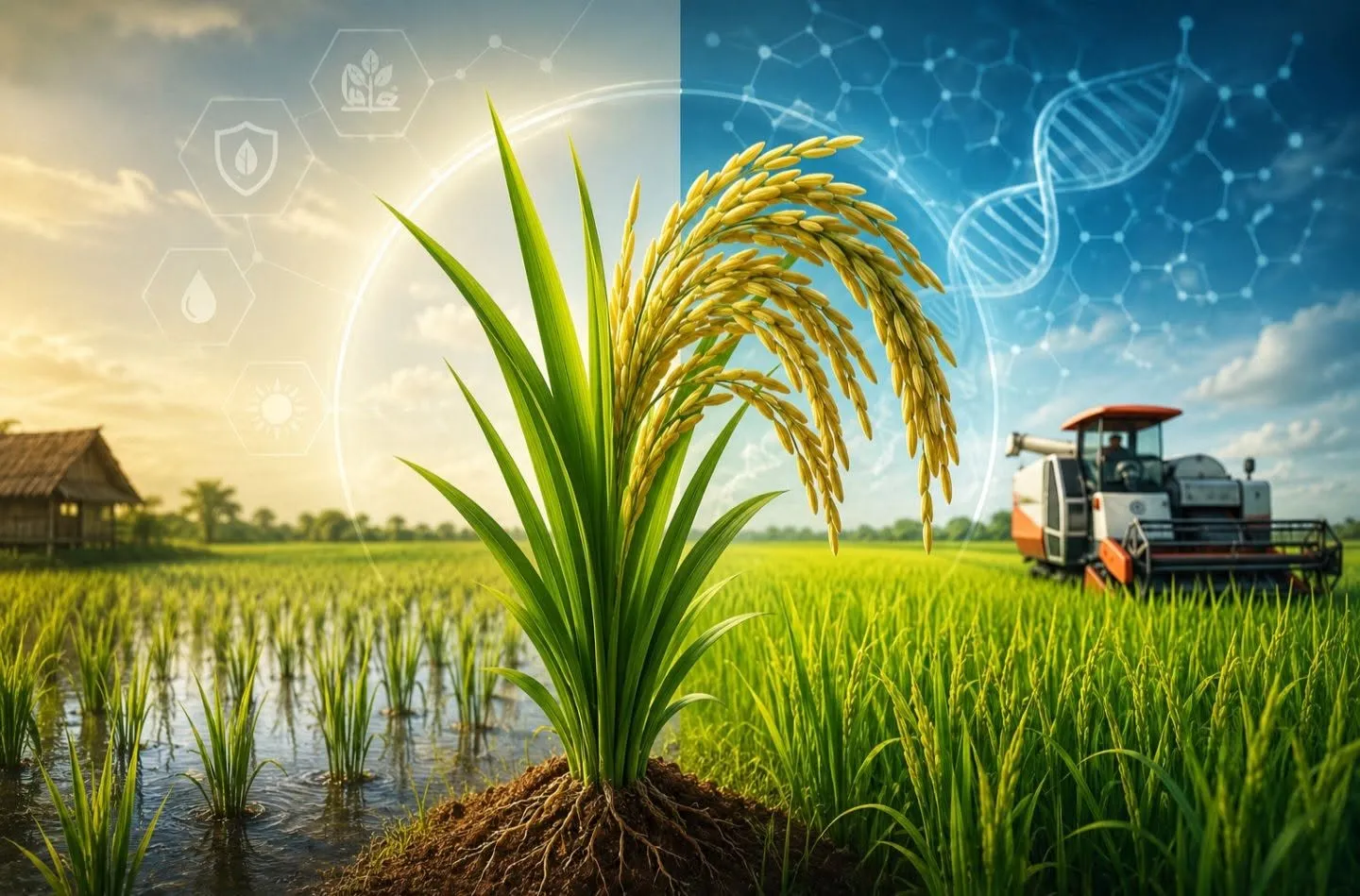
It is essential to clarify the genetic difference. Most conventional BRRI varieties grown in Bangladesh are inbred lines. They are developed to breed true, meaning farmers can harvest their grain, save seed, and replant it next season with consistent results, preserving farmer independence. Hybrids operate on an entirely different economic model. They represent the first generation (F1) of a cross between two distinct parental lines. This F1 generation exhibits heterosis, or hybrid vigor, outperforming both parents in vigor and yield. But when saved seeds are sown the following season, meiotic gene segregation degrades performance, forcing growers to repurchase commercial seed every single year.
The Seed Market and Domestic Research
This biological reality underpins the commercial seed market. Currently, nearly three hundred hybrid rice cultivars are approved in Bangladesh, the vast majority built on germplasm from China, India, and other foreign suppliers. Although national institutions—chiefly BRRI—have released promising domestic hybrids, imported genetics continue to dominate market shelves.
Climate Change and New Agronomic Challenges
A further variable has altered this calculus: climate change. What was once discussed as a future risk is now daily reality. Unpredictable rains, protracted dry spells, flash floods, heat stress, and coastal salinity are reshaping agro-ecological zones. Under these erratic conditions, high yield potential alone is inadequate; crops require stress tolerance. This reality has brought renewed scientific focus to inbred breeding.
Modern Inbred Breeding and Global Perspectives
BRRI has successfully developed inbred cultivars tolerant to salinity, drought, submergence, and zinc deficiency. Using precision genome editing, marker-assisted selection, and modern breeding technologies, scientists are closing the yield gap between inbreds and hybrids. Major rice-producing nations worldwide are pursuing both avenues simultaneously: advanced hybrids alongside resilient inbreds. China remains the global leader in hybrid rice, sourcing nearly half of its harvest from hybrids, yet it is also investing heavily in super-inbred cultivars.
Food Security Versus Seed Sovereignty
For Bangladesh, the fundamental question extends beyond food security to seed security. Relying wholly on imported hybrid seed exposes the national food supply to sudden global logistics shocks or trade restrictions. Fostering domestic hybrid seed production, developing parental lines, and curating native germplasm have become urgent national priorities.
Hybrid rice is vital for Bangladesh, but it cannot be our only strategy. We must invest concurrently in robust inbred breeding. In an era of climatic volatility, stable, dependable yields are our greatest asset. Lasting food security requires seed sovereignty, and seed sovereignty demands mastery over our own agricultural biotechnology.