Roman Space Telescope: A New Era in Astronomy or Budget Shattered?
The Evolution of Space Observatories
In the chronicle of astrophysics, certain space observatories do more than showcase engineering triumph; they completely reshape how humanity beholds the cosmos. Flagships like Hubble, Euclid, and the James Webb Space Telescope have progressively expanded our cosmic horizons, serving as indispensable sentinels gazing across deep time.
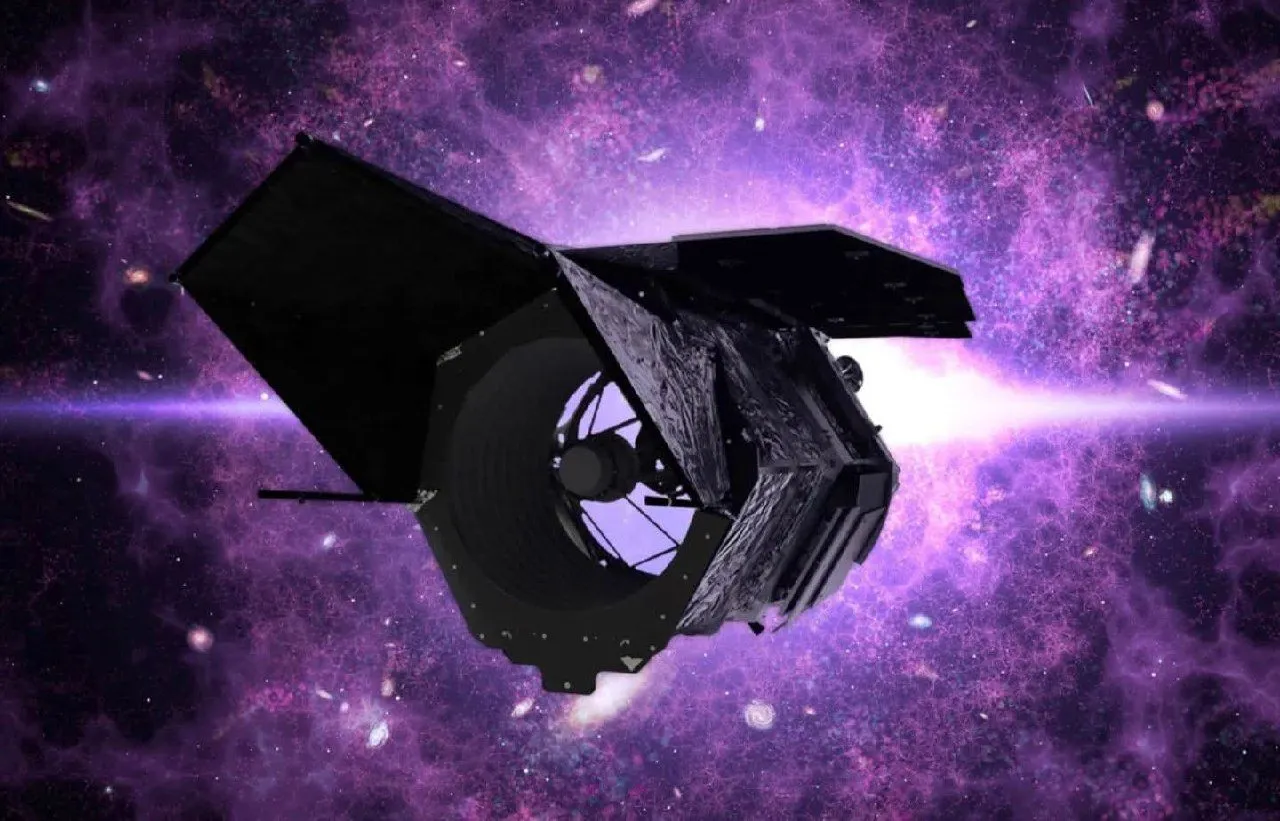
NASA’s Nancy Grace Roman Space Telescope
Poised to join this illustrious pantheon is NASA’s next-generation flagship: the Nancy Grace Roman Space Telescope. Astronomers around the globe have awaited this revolutionary wide-field observatory with eager anticipation.
Two Hundred Times the Panoramic View of Hubble
Often hailed as “Two Hundred Hubbles in One,” the Roman Space Telescope operates in the near-infrared spectrum like Hubble, but possesses a panoramic field of view roughly two hundred times larger. Rather than capturing narrow keyhole snapshots of celestial targets, Roman will capture vast swaths of the cosmos with crisp Hubble-grade resolution in a single exposure.
Core Scientific Objectives of the Roman Mission
Hardware assembly of the Roman Space Telescope is nearly complete. While NASA originally targeted a 2027 launch, assembly and testing progressed so smoothly that the spacecraft could be flight-ready by late 2026. Roman’s scientific ambitions are breathtaking: mapping the accelerating expansion driven by dark energy, charting billions of galaxies across cosmic time, and pioneering high-contrast starlight-suppression coronagraph technology to image alien exoplanets directly.
Global Coordination in Wide-Field Cosmology
Roman will not work in isolation. Operating alongside the European Space Agency’s Euclid mission and the ground-based Vera C. Rubin Observatory in Chile, Roman forms the definitive cosmological triumvirate. Together, these three observatories will provide astronomers with the most comprehensive multi-wavelength survey of cosmic structure, dark matter clustering, and dark energy ever conceived.
Budget Turmoil and the Threat of Cancellation
Yet on the brink of flight readiness, an alarming political cloud has gathered over the mission. Leaked drafts of federal budget proposals suggested that funding for the Roman Space Telescope could be drastically slashed or terminated entirely, accompanied by unprecedented cuts across NASA’s Science Mission Directorate. If enacted, such cancellations would deliver a devastating blow to astrophysics worldwide.
Scientific Outcry and America’s Leadership at Risk
The proposed cuts ignited intense outrage and anxiety across the global astronomical community. Canceling Roman after decades of development and billions in public investment would not only squander irreplaceable scientific infrastructure, but severely compromise international partnerships with Europe, Japan, and Canada, while surrendering American leadership in space science.
The Vital Need for Long-Term Scientific Commitment
Fortunately, the United States Congress has repeatedly stepped forward in prior budget cycles to defend flagship missions from shortsighted reductions. Astronomers remain hopeful that lawmakers will protect Roman’s vital mission. Fundamental scientific breakthroughs require steady, visionary commitment that rises above shifting political winds.