Our Vast Universe: Scale, Expansion, and Ultimate Fate

Galactic Abundance and Our Milky Way
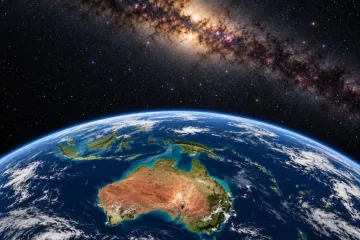
Recent cosmological estimates suggest that our observable cosmos contains anywhere from 200 billion to 2 trillion galaxies. Within this cosmic ocean drifts our home galaxy, the Milky Way, harboring between 100 and 400 billion stars. Orbiting an ordinary yellow dwarf star in an outer spiral arm, planet Earth is a modest biological sanctuary in an unfathomably vast universe.
The Scale of the Observable Universe
Through precise astronomical observations, astrophysicists have determined that the edge of the observable universe lies approximately 46.5 billion light-years in every direction from Earth. This establishes a total diameter of roughly 93 billion light-years for the observable cosmos. Traversing this expanse at the speed of light would take 93 billion years—a distance that defies conventional human intuition.
The Cosmic Microwave Background and the Big Bang
Our cosmic timeline began approximately 13.8 billion years ago in the Big Bang. The primordial glow from this event cooled into the Cosmic Microwave Background (CMB) radiation that permeates all of space today. First discovered serendipitously in 1964 by Arno Penzias and Robert Wilson, this relic radiation was once responsible for a portion of the static hiss seen on untuned analog televisions.
Mapping the Cosmic Horizon
Space missions such as NASA’s WMAP and ESA’s Planck satellite have generated high-precision thermal maps of the CMB. Combining these measurements with cosmological redshift observations, the Hubble constant, Type Ia supernovae standard candles, and Baryon Acoustic Oscillations (BAO), astrophysicists verified the 93-billion-light-year diameter of the observable cosmos.
The Paradox of Age versus Distance
A natural question arises: if the universe is only 13.8 billion years old, how can the observable horizon extend 46.5 billion light-years away? The answer lies in the physics of space itself. While Einstein’s special relativity dictates that matter and information cannot travel through space faster than the speed of light, space itself is not subject to this cosmic speed limit. During the epoch of cosmic inflation immediately following the Big Bang, spacetime expanded exponentially faster than light, propelling distant regions far beyond their initial positions.
Dark Energy and Runaway Acceleration
Today, space continues to expand at an accelerating rate driven by an enigmatic repulsive force known as dark energy. Cosmologists estimate dark energy accounts for roughly 68 percent of the total mass-energy budget of the cosmos. Because the expansion of space accelerates with distance, galaxies beyond approximately 18 billion light-years are already receding from us faster than light. Approximately 94 percent of all galaxies in our observable universe are already permanently unreachable, their light doomed never to reach our descendants.
The Ultimate Fate of the Universe
How will this cosmic drama conclude? Cosmologists contemplate three primary scenarios based on the nature of dark energy and cosmic expansion:
1. The Big Freeze (Heat Death)
If expansion continues indefinitely, star formation will gradually cease as interstellar gas reservoirs are depleted. Stellar remnants will burn out, black holes will slowly evaporate via Hawking radiation, and the cosmos will reach maximum thermodynamic entropy—a cold, quiescent state known as Heat Death.
2. The Big Crunch
If dark energy diminishes and gravitational attraction eventually halts cosmic expansion, the universe would reverse course, collapsing back into a super-dense singularity in a “Big Crunch.” Contemporary observational evidence indicates this outcome is highly improbable.
3. The Big Rip
If dark energy behaves as phantom energy with increasing negative pressure, the acceleration could tear apart galaxy clusters, solar systems, planets, atoms, and finally spacetime itself in a catastrophic Big Rip.
An Ongoing Voyage of Cosmic Discovery
Spanning 93 billion light-years and encompassing trillions of cosmic islands, our universe remains a limitless reservoir of wonder. Deciphering its deepest secrets requires sustained astrophysical exploration and humility before the grand architecture of nature.