Mars Mission Highlights: UAE, China, and NASA Reach Mars
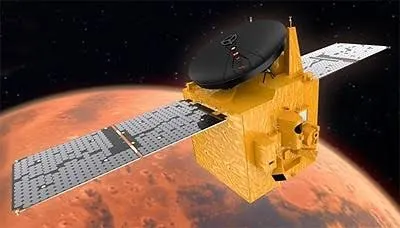
The UAE’s Al-Amal Hope Probe
February 2021 proved to be one of the most historic months in the annals of interplanetary exploration, marked by the arrival of three separate spacecraft from three different nations at Mars. On February 9, the United Arab Emirates successfully inserted its Al-Amal (Hope) probe into Martian orbit. Operating as an orbital meteorological observatory, Hope studies the dynamics of the Martian atmosphere, tracking weather patterns and atmospheric escape mechanisms from high above the planet.
NASA’s Perseverance Rover and Ingenuity Helicopter
A few days later, on February 18, NASA achieved a sensational landing as the Perseverance rover touched down in Jezero Crater. Percy carries a cutting-edge astrobiology laboratory designed to inspect Martian regolith for signs of ancient microbial life and collect pristine core samples for future retrieval. Nestled underneath the rover was the Ingenuity helicopter—a 1.8-kilogram robotic rotorcraft designed to test powered aerodynamic flight within Mars’s thin atmosphere.
China’s All-in-One Tianwen-1 Mission
Joining this interplanetary armada, China’s National Space Administration (CNSA) inserted its ambitious Tianwen-1 spacecraft into orbit. Unlike typical single-purpose missions, Tianwen-1 combined an orbiter, a lander, and the solar-powered Zhurong rover into a single architecture. After orbiting Mars to survey landing sites, the lander touched down safely on Utopia Planitia, making China only the second nation to operate a rover on the Martian surface.
A Diversifying Global Space Race
With Tianwen-1’s triumph, China firmly cemented its status as a major space power alongside the United States. Planetary exploration is no longer the exclusive purview of the original space superpowers. Nations across Asia and the Middle East are establishing sophisticated aerospace programs, driving international scientific progress.
SpaceX and the Starship Vision
In the private aerospace sector, SpaceX founder Elon Musk continues aggressive development of Starship—a fully reusable heavy-lift launch system engineered to drastically reduce orbital transit costs. Despite high-profile prototype testing challenges, SpaceX’s iterative engineering approach is paving the way for multi-planetary logistics.
The Horizon of Human Settlement
A growing constellation of spacefaring nations—including the United States, China, the European Union, India, Japan, the UAE, and the United Kingdom—is investing heavily in deep-space capabilities. Supported by private commercial launch providers, these concerted efforts indicate that human missions to Mars may become reality within decades, opening a new chapter in the saga of human civilization.