Louis de Broglie: Pioneer of Wave-Particle Duality
The Birth of Wave-Particle Duality
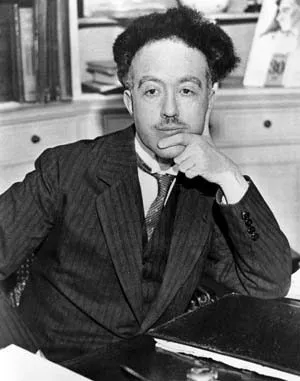
Celebrated French physicist Prince Louis de Broglie was born on August 15, 1892, and became one of the foundational architects of modern quantum mechanics. In his revolutionary 1924 doctoral thesis, de Broglie proposed an audacious hypothesis: if electromagnetic waves can behave as discrete particles (photons), then material particles like electrons must also possess intrinsic wavelike properties. He postulated that every moving particle is accompanied by a pilot wave, whose wavelength is inversely proportional to the particle’s momentum. This foundational concept—known as wave-particle duality—radically transformed physics and unlocked the wave equations of quantum theory.
Experimental Proof, the Nobel Prize, and Founding CERN
In 1927, electron diffraction experiments conducted by Clinton Davisson, Lester Germer, and George Paget Thomson experimentally verified de Broglie’s wave hypothesis. In recognition of this monumental insight, Louis de Broglie was awarded the 1929 Nobel Prize in Physics. Beyond his theoretical triumphs, de Broglie was an ardent champion of international scientific collaboration. During the post-war 1950s, his tireless advocacy was instrumental in establishing CERN (the European Organization for Nuclear Research), uniting European scientists to construct the world’s leading particle physics laboratories. De Broglie passed away in 1987, leaving behind an enduring legacy in the foundations of physics.