Why Does the Moon Change Shape? The Science of Lunar Phases
Orbital Motion of the Earth and Moon
Just as Earth orbits the Sun, our Moon orbits Earth. Earth is a planet of the solar system, while the Moon is Earth’s only natural satellite. The Moon produces no light of its own. When sunlight strikes the lunar surface, the illuminated portion reflects back toward Earth, enabling us to see our nocturnal companion.
A Common Misconception About Lunar Shapes
Why does the Moon’s illuminated appearance change continuously from night to night? Many people believe that Earth’s shadow falls across the Moon to produce these changes. This is a complete misconception.
The Orbital Geometry Behind Lunar Phases
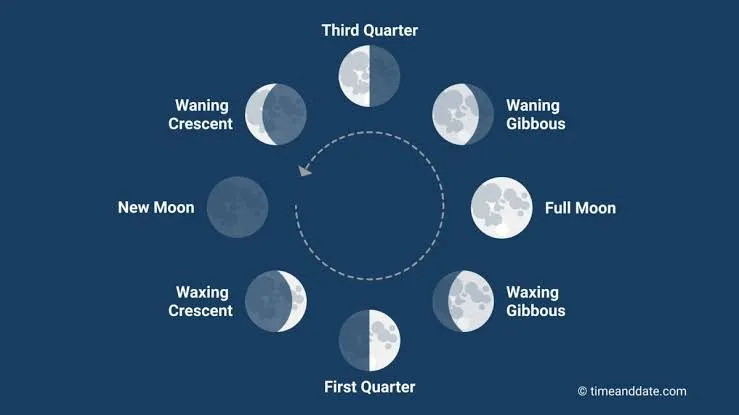
The true cause lies in celestial orbital geometry. As the Moon orbits Earth roughly every 29.5 days, the angle between the Sun, Earth, and Moon shifts constantly. When the Moon is positioned opposite the Sun relative to Earth, its entire sunlit hemisphere faces us, presenting a dazzling Full Moon. In subsequent days, this orbital angle decreases, causing the illuminated portion visible from Earth to steadily shrink during the waning cycle. Roughly two weeks later, the Moon passes between Earth and the Sun. Its illuminated face points directly away from us, rendering the Moon completely invisible from our vantage point—an astronomical event known as the New Moon. Following the New Moon, the sunlit sliver gradually expands through the waxing cycle until returning to full illumination.
How Lunar Eclipses Really Occur
Occasionally during a Full Moon, the Sun, Earth, and Moon align in a straight syzygy line. Only then does Earth’s physical shadow fall across the Moon, producing a true lunar eclipse. Eclipses do not happen every month because the Moon’s orbital plane is tilted by approximately 5 degrees relative to Earth’s orbital plane (the ecliptic). Eclipses can only occur when the Moon crosses the orbital plane at the nodes during full illumination.