Conquering the Moon: Neil Armstrong and the Historic Apollo 11 Mission
An Unforgettable Milestone for Humanity
July 20, 1969. An indelible date etched into human history. On that historic day, human footprints touched the surface of the Moon for the very first time. It was not merely a triumph of engineering and technology, but an immortal symbol of human imagination, courage, and relentless curiosity.
The Cold War and the Space Race
The world was then gripped by the geopolitical tensions of the Cold War. The United States and the Soviet Union were locked in a fiercely competitive race for supremacy in space. The Soviets had launched Sputnik, the first artificial satellite, and sent Yuri Gagarin as the first human into orbit. In response, America set its sights on an audacious prize: landing a human on the Moon. In 1961, President John F. Kennedy declared before Congress that before the decade was out, America would land a man on the Moon and return him safely to the Earth.
The Epic Journey of the Apollo 11 Mission
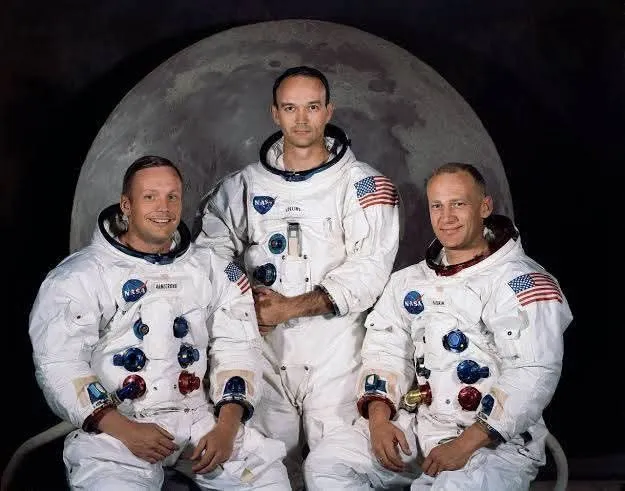
That audacious dream became reality in July 1969 with Apollo 11. On the morning of July 16, the colossal Saturn V rocket roared into the sky from Kennedy Space Center in Florida. Aboard were three intrepid astronauts—Neil Armstrong, Buzz Aldrin, and Michael Collins. Four days later, on the evening of July 20, hundreds of millions of people around the globe sat spellbound before their television screens, holding their breath for a moment they would never forget. I was a nine-year-old boy in 1969, and the wonder of that momentous day remains vivid in my memory.
Humanity’s First Footsteps on Lunar Soil
“Houston, Tranquility Base here. The Eagle has landed.” Those historic words sent shivers through the hearts of explorers everywhere. The Lunar Module, named Eagle, had safely touched down on the lunar surface. Moments later, Commander Neil Armstrong descended the ladder into the silent, dusty lunar landscape and uttered his immortal words: “That’s one small step for a man, one giant leap for mankind.”
Armstrong’s Timeless Declaration
Those words resonated with immense power across the globe, echoing through the annals of history.
Scientific Exploration and Sample Collection
Buzz Aldrin soon joined Armstrong on the lunar surface. For over two hours, they walked upon the pristine Moon, conducted scientific experiments, planted the flag, took photographs, and collected lunar soil and rock samples. Meanwhile, in the Command Module Columbia high above, Michael Collins orbited the Moon alone in silent vigil, waiting to rendezvous and bring his crewmates back home.
A Triumph of Science, Precision, and Courage
The entire mission was a breathtaking orchestration of ingenuity, mathematical calculation, and nerves of steel. At the time, there was no internet and computers had a fraction of the power of modern smartphones. Yet human grit, scientific prowess, and audacity conquered what had seemed impossible. Stepping onto the Moon blew open a new cosmic frontier. Five subsequent Apollo missions successfully landed astronauts on the Moon, returning invaluable scientific discoveries.
The Lasting Legacy of Cosmic Conquest
July 20, 1969, stands as an enduring beacon of human achievement. On that day, humanity crossed the cradle of Earth and touched another celestial body. In celebrating that historic victory, we salute the heroes and visionaries of Apollo 11 who proved that our dreams can carry us to the stars.