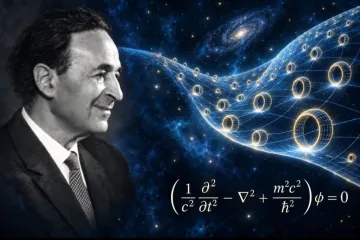
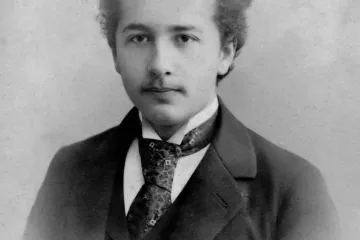
Einstein and Gravity: General Relativity and a New Vision of the Universe
Special Relativity and Young Einstein’s Vision
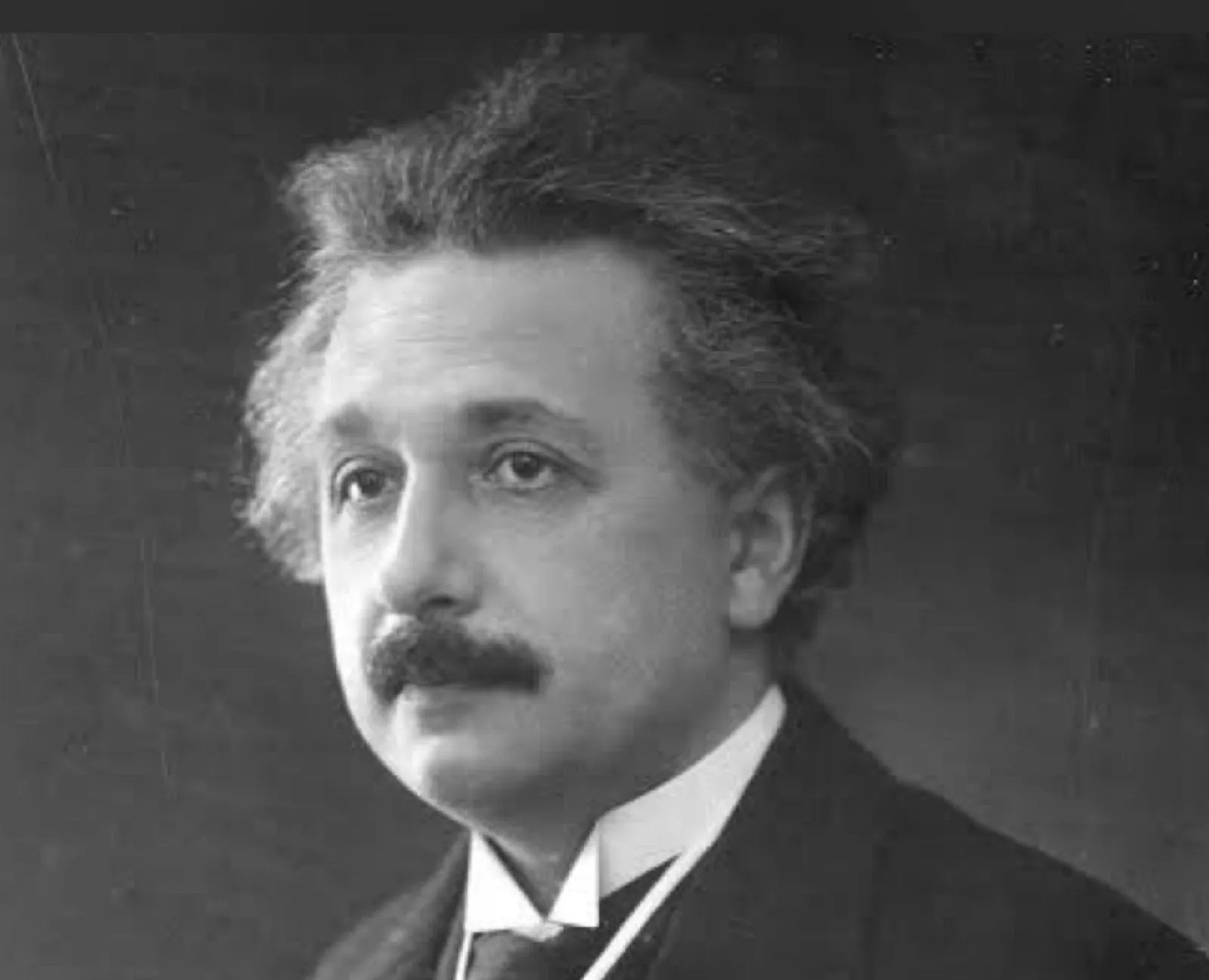
When Albert Einstein published his theory of Special Relativity in 1905, he was an obscure twenty-six-year-old clerk working in the Swiss patent office in Bern. Yet his intellectual insight was extraordinary. Special Relativity revealed that space and time are not independent absolutes, but interwoven into a dynamic fabric called spacetime, and that the speed of light in a vacuum is universally constant for all inertial observers. This revolutionary framework shook the foundations of classical physics. However, it had one fundamental limitation: it applied only to inertial reference frames—situations where observers move at constant velocity without acceleration or gravitational fields.
Newton’s Limitations and the Mystery of Gravity
In the real universe, matter is constantly accelerating, and above all, how does gravity actually operate? Einstein recognized that while Isaac Newton’s law of universal gravitation was remarkably successful in predicting planetary motions, it failed to explain nature’s fundamental mechanism. Newton envisioned gravity as an invisible, instantaneous attraction across empty space. But according to Special Relativity, nothing in the universe can travel faster than light. How could gravity act instantaneously across vast distances? This profound contradiction spurred Einstein on a decade-long intellectual quest.
The Equivalence Principle: Einstein’s “Happiest Thought”
In 1907, a profound revelation struck him, which he later called the happiest thought of his life. He realized that an observer in free-fall in a sealed room would experience no weight at all; they would feel as though floating in zero gravity. Conversely, an observer in an elevator accelerating upward in deep space would feel identical downward pressure as if standing on Earth’s surface. In other words, gravitational forces and inertial acceleration are physically indistinguishable. This insight became known as the Equivalence Principle, the foundational cornerstone of General Relativity.
The Curvature of Spacetime and Geometrical Gravity
Guided by this intuition, Einstein formulated a radical concept: gravity is not a conventional force pulling from afar. Instead, mass and energy warp the very fabric of spacetime around them, and objects simply travel along the straightest possible paths (geodesics) through this curved spacetime. Picture a heavy bowling ball resting on a stretched rubber sheet; smaller marbles placed nearby naturally roll toward the depression created by the heavy ball. In our cosmos, it is not a rubber sheet, but four-dimensional spacetime itself that curves under the influence of mass.
Mathematical Formulation and the Field Equations
Translating this poetic vision into rigorous physics demanded tremendous mathematical machinery. Einstein enlisted the collaboration of his mathematician friend Marcel Grossmann, mastering non-Euclidean Riemannian geometry and tensor calculus. Through grueling years of calculation, Einstein formulated a set of ten coupled non-linear equations that encapsulated his theory: matter tells spacetime how to curve, and curved spacetime tells matter how to move.
A Landmark Presentation at the Prussian Academy
In November 1915, Einstein presented his definitive papers to the Prussian Academy of Sciences in Berlin, unveiling what became world-renowned as the Einstein Field Equations. His theory established that gravitation is fundamentally a geometric property of spacetime.
Eddington’s Solar Eclipse Expedition and Triumphant Proof
For any scientific theory to triumph, it must pass empirical testing against nature. The outbreak of World War I delayed international verification. Finally, in May 1919, British astrophysicist Sir Arthur Eddington led an expedition to observe a total solar eclipse off the coast of West Africa. He measured whether starlight passing near the edge of the darkened Sun deflected due to the Sun’s gravitational curvature. The starlight deflected precisely as Einstein had predicted four years earlier. When the findings were announced, global headlines proclaimed: “Revolution in Science: New Theory of the Universe.”
A New Paradigm for Spacetime and the Universe
From the insights of Special Relativity to the magnificent architecture of General Relativity, Albert Einstein dismantled classical mechanics and gifted humanity an entirely new cosmic vision. His equations predicted black holes, gravitational lensing, gravitational waves, and the expansion of the universe—monumental discoveries that continue to guide modern astrophysics today.