Unveiling the Universe's Missing Baryonic Matter: A Cosmic Mystery Solved
The Observable Universe and Ordinary Matter
Everything directly visible in the cosmos—stars, nebulae, planets, moons, asteroids, and comets—is composed of ordinary matter, known in physics as baryonic matter. Yet for decades, a puzzling paradox confounded cosmologists: nearly half of this ordinary matter predicted by Big Bang nucleosynthesis was completely unaccounted for in galaxy surveys, giving rise to the mystery of the “missing baryonic matter.”
The Critical Role of Fast Radio Bursts (FRBs)
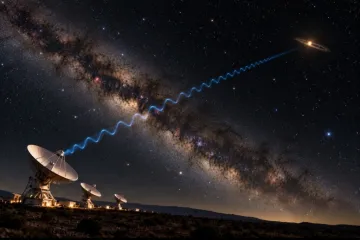
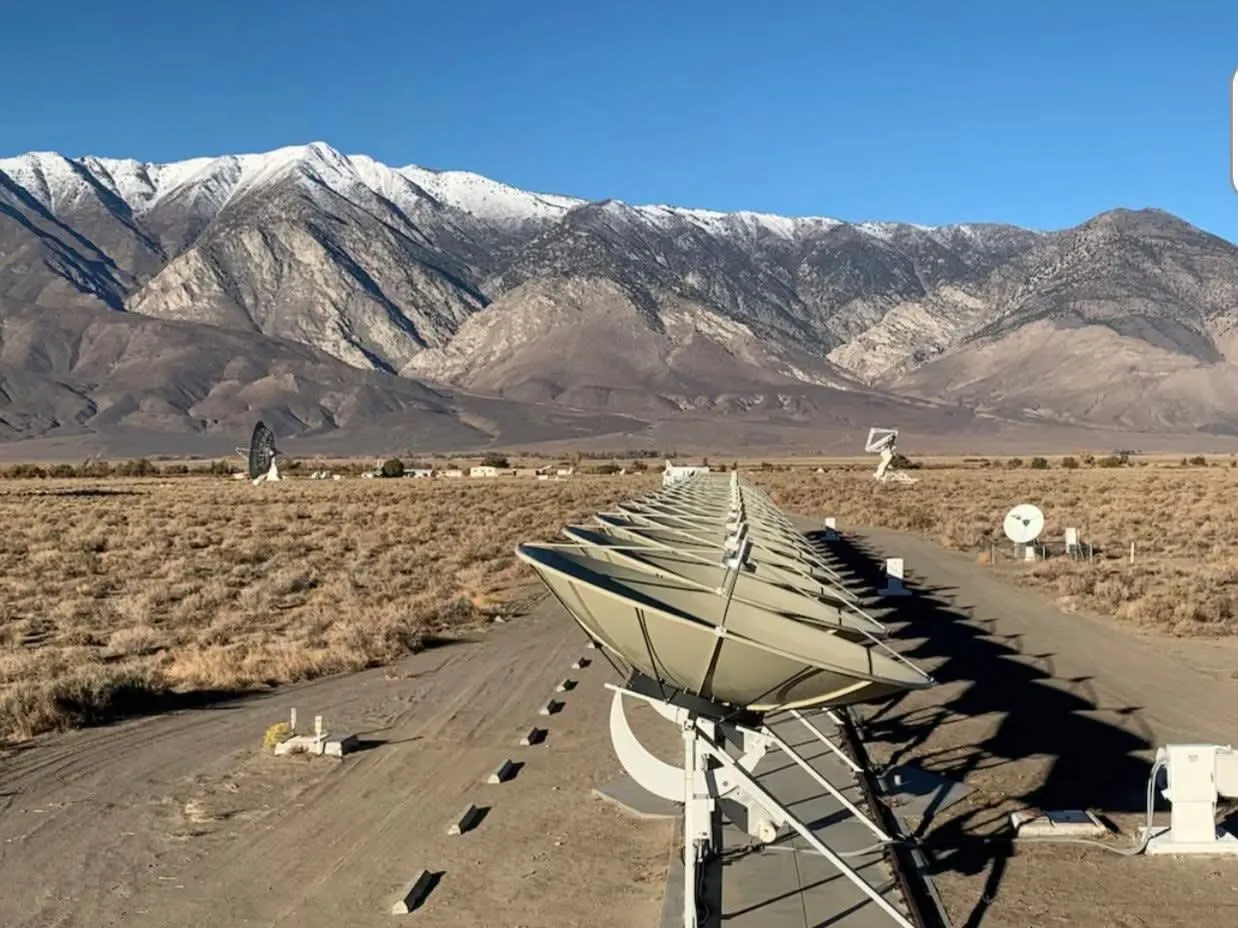
This matter was never purely theoretical; cosmological equations clearly required its presence, yet conventional optical and X-ray telescopes could not detect it. Recently, astrophysicists cracked the case using Fast Radio Bursts (FRBs)—millisecond-duration pulses of intense radio waves originating billions of light-years away, resembling cosmic flashes of lightning across deep space.
The Intergalactic Medium and Hidden Matter
As these high-energy radio bursts traverse cosmic distances to reach Earth, they pass through diffuse clouds of gas and ionized dust. The charged electrons within this diffuse plasma subtly slow down lower-frequency radio waves relative to higher frequencies—a measurable phenomenon known as dispersion. By analyzing this dispersion pattern, astronomers can precisely weigh the quantity of matter residing along the line of sight. Intergalactic space is far from empty; extremely rarefied plasma permeates the space between galaxies, invisible to traditional imaging.
Cosmic Distribution and Statistical Breakdown
A landmark study led by Caltech researchers revealed where all the ordinary baryonic matter actually resides: roughly 76% is scattered as tenuous gas throughout the intergalactic medium, approximately 15% is held in circumstellar and circumgalactic halos, and only 9% is locked within galaxies as stars and cold interstellar clouds.
Cosmic Explosions and Ejection of Matter
How did so much ordinary matter end up outside galaxies? Astrophysicists explain that violent cosmic events played a decisive role. Cataclysmic supernova explosions and powerful relativistic jets powered by supermassive black holes act as cosmic leaf-blowers, expelling immense reserves of gas far beyond galactic gravitational boundaries into the deep intergalactic void.
Scientific Impact and Confidence in Standard Cosmology
This confirmation represents a major milestone. Cosmologists can now verify that the expected total quantity of baryonic matter generated in the early universe is fully accounted for. It was never truly missing; our detection methods simply lacked the requisite sensitivity until radio astronomy caught up.
New Vistas for Dark Matter Research
With ordinary matter conclusively mapped, astrophysicists can investigate dark matter with greater precision. Because the gravitational effects of ordinary baryonic gas are now accurately calibrated, isolating dark matter’s distinct gravitational influence on cosmic structures becomes significantly clearer.
Cosmic Mysteries and the Path Forward
The universe remains a treasure trove of mysteries. By turning fleeting millisecond radio signals into astronomical tape measures, science continues to illuminate the hidden structure of the cosmos.