Hayli Gubbi Volcano: Eruption After 12,000 Years of Silence
Breaking 12,000 Years of Inactivity
The Afar Triangle in northeastern Ethiopia is one of the most geologically active rift zones on Earth. While the region regularly experiences minor tremors and volcanic activity, the Hayli Gubbi volcano remained completely quiescent for twelve millennia. That long-dormant shield volcano shattered its silence at dawn, heralding a dramatic awakening.
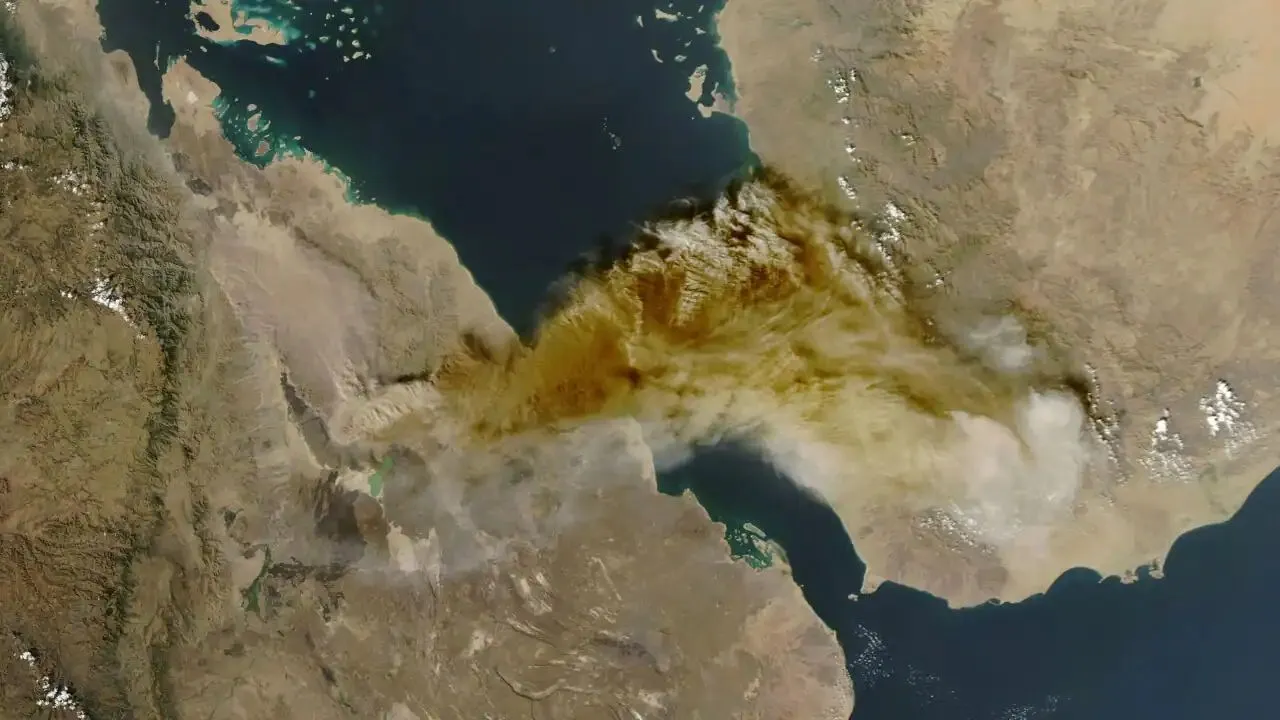
Just before sunrise, an enormous explosive roar tore through the mountain. Local communities described the blast as resembling the detonation of a massive bomb. Within moments, billowing plumes of black smoke blackened the morning sky, blanketing the surrounding desert in volcanic ash. Satellite observations revealed that the eruption column surged approximately 14 kilometers into the stratosphere, underscoring the explosive intensity of the event.
The Afar Depression and Tectonic Plate Dynamics
The Afar Depression lies at the junction of the East African Rift System, where the African tectonic plate is actively splitting apart. This deep crustal divergence fuels continuous magma movement beneath the surface.
Why a volcano dormant for 12,000 years suddenly awakened is of paramount interest to volcanologists and geophysicists. Even during long periods of apparent quiescence, magma chambers deep underground can slowly accumulate immense pressure. Once that pressure exceeds the mechanical strength of overlying rock, it breaches the surface explosively. Such an unexpected eruption indicates major sub-crustal magma migration, providing vital data to understand the long-term geological evolution of the East African Rift.
Impact on Local Communities
The explosive eruption blanketed surrounding settlements and pastoral grazing lands with thick layers of grey ash. Local Afar communities depend heavily on pastoral livestock herding. Ash deposits that contaminate water sources and smother grasslands pose a direct threat to the survival of livestock and the livelihoods of indigenous pastoralists.
Regional Disruption and Global Aviation Warnings
The atmospheric repercussions of the Hayli Gubbi volcano blast quickly transcended national borders. High-altitude wind currents carried the sulfurous ash cloud across the Red Sea into the airspace of the Arabian Peninsula, Pakistan, and northwestern India.
International aviation authorities promptly issued safety advisories, as microscopic volcanic ash particles melt inside jet turbine engines, risking catastrophic engine failure. Several international flights were diverted or cancelled, demonstrating how localized geologic events can swiftly impact global air travel networks.
Geological Monitoring and Future Outlook
Geologists caution that the volcanic episode may not be fully resolved. Once awakened, long-dormant volcanic systems often experience recurring tremors, secondary venting, and ash emissions over following weeks or months.
Scientific monitoring stations have intensified surveillance across the Afar rift zone, tracking seismic tremor patterns, subterranean magma displacement, and the chemical composition of plume emissions to anticipate further hazards.
Conclusion
The reawakening of the Hayli Gubbi volcano serves as a powerful reminder that our planet’s crust is never truly static. Even landforms quiet for thousands of years hold immense geothermal forces beneath their surface, continually reshaping the living face of Earth.