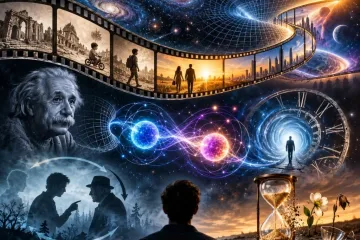
Einstein and Tagore: When Science Met Philosophy
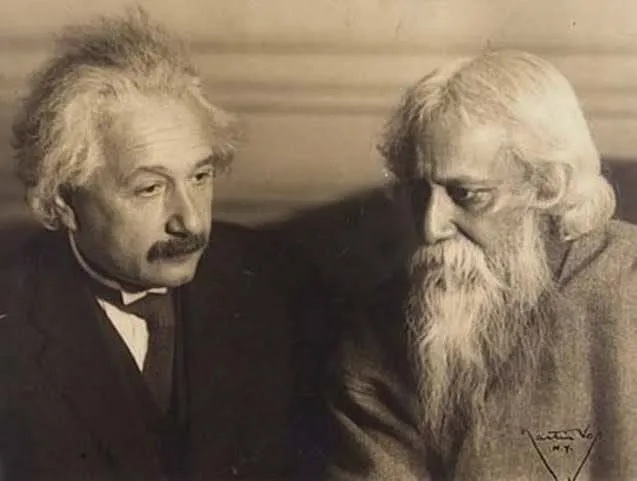
The Meeting of Two Intellectual Giants
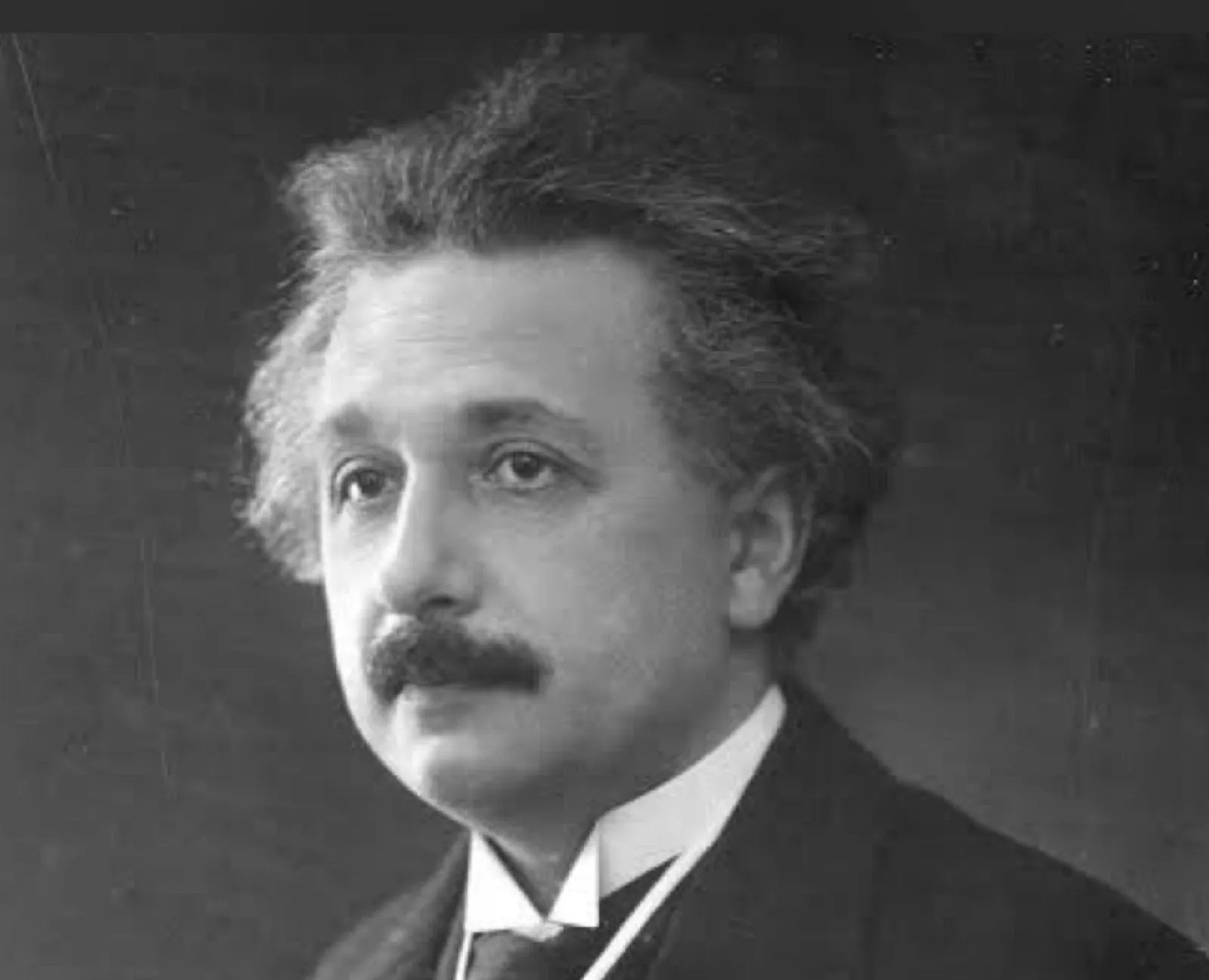
On one side of the study sat the world’s most celebrated physicist, Albert Einstein—his iconic mane of white hair unruly, his eyes reflecting intense, analytical focus. Across from him sat the Nobel laureate poet-philosopher from Bengal, Rabindranath Tagore—tall, dignified, with flowing silver robes and beard, exuding meditative serenity.
The Setting of a Historic Encounter
It was July 14, 1930, at Einstein’s residence in Caputh, near Berlin. This was far more than a polite visit between two cultural icons; it was a profound intellectual symposium where Western scientific realism confronted Eastern philosophical humanism.
The Nature of Cosmic Reality
Einstein posed the core question that had preoccupied thinkers for millennia: Is the universe an independent reality existing outside human perception, or is reality inseparable from human consciousness?
Tagore’s Vision of Humanized Truth
Tagore’s response was poetic yet metaphysically rigorous. He maintained that what we call “truth” is intrinsically interwoven with humanity. The universe we experience exists in relation to human consciousness; without human perception, the concept of a meaningful cosmos ceases to exist. Humanity, Tagore argued, is the living focal point through which the universe acquires meaning and beauty.
Einstein’s Scientific Realism
Einstein shifted in his chair, defending the bedrock conviction of modern physics. He countered that the physical universe must possess an objective reality completely independent of humankind. Even if humanity ceased to exist tomorrow, he insisted, the Moon would continue to orbit Earth and the fundamental laws of nature would proceed unaffected.
The Boundaries of Human Comprehension
Tagore did not dismiss objective physics, but nuanced his stance: everything we measure, express, or label as “truth” is necessarily formulated through human faculties, sensory apparatus, and linguistic symbols. If there exists a truth beyond all human relation, it remains fundamentally inaccessible and meaningless to our existential experience.
The Interplay of Physics and Metaphysics
Throughout their discourse, one spoke the language of deterministic laws and mathematical realism, while the other articulated the luminous depths of philosophical idealism.
A Divergence of Cosmic Perspectives
Einstein observed: “Then I am more religious than you!” implying that his faith in an observer-independent reality was almost an act of faith.
Humanity as the Mirror of Nature
Tagore smiled gently, observing that seeking truth through human consciousness is entirely natural, because the world we understand is inherently perceived through the lens of human awareness.
The Quest for Ultimate Truth
At the heart of their dialogue lay an enduring epistemological riddle: Is scientific knowledge an exact representation of external reality, or is it a conceptual map constructed by human minds? Can pure truth ever be decoupled from the consciousness observing it?
Complementary Definitions of Truth
For Einstein, truth represented an objective, universal order governed by geometric harmony, decipherable through empirical observation and mathematical physics. For Tagore, truth was harmony realized through human empathy, artistic beauty, and spiritual integration.
Harmony Beyond Pure Logic
Despite their differing philosophies, both thinkers converged on essential values. Both passionately rejected dogmatic materialism, believing that intellectual inquiry requires imagination, ethical responsibility, and an aesthetic appreciation for nature’s grandeur.
The Mutual Illumination of Science and Art
Einstein recognized that science cannot answer every dimension of the human spirit, while Tagore affirmed that scientific discovery expands our appreciation of the wondrous cosmos.
Resonance for the Modern Era
Nearly a century later, the Caputh conversation remains extraordinarily relevant. In our age of quantum entanglement, observer effects in quantum mechanics, and artificial intelligence, humanity continually confronts the interplay between consciousness, observation, and physical law.
The Endless Joy of the Quest
Revisiting their dialogue reminds us that true inquiry is never about rigid dogmatism, but the exhilarating pursuit of understanding the universe and our place within it.
Where Physics Meets the Spirit
Einstein famously remarked that “God does not play dice with the universe,” while Tagore wrote that “the human mind is the seat of the divine.” In their encounter, the rigorous mathematics of science was forever illuminated by the timeless light of philosophical inquiry.