AI-Designed Viruses: The Promise and Peril of Evo 2
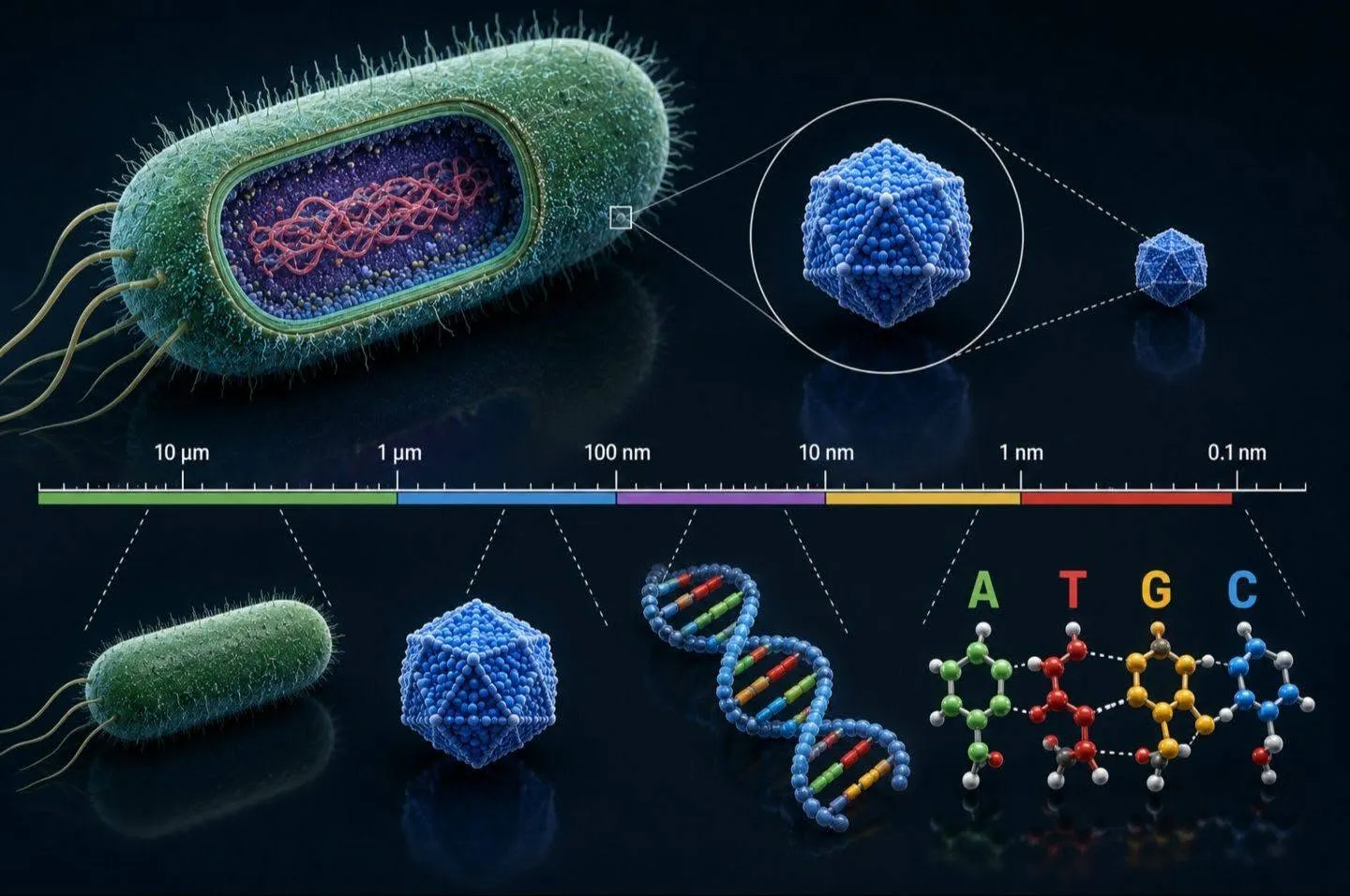
Prompt ChatGPT to compose a story and it generates fresh prose within moments, because it learned the patterns of human grammar. Now, researchers have applied that identical principle to teach an artificial intelligence model the genomic language of DNA. They then instructed the model to draft genetic codes capable of infecting Escherichia coli bacteria.
Scientists at Stanford University and partner institutions have done precisely that. Using an advanced biological foundation model named Evo 2, they designed synthetic viruses never before seen in the natural world.
Training the Evo 2 Model
While large language models read human text to comprehend syntax, Evo 2 learned the universal dialect of living systems: the four letters of the DNA alphabet – A, T, G, and C.
Trained across more than 9 trillion nucleotides of genomic data, the model developed a deep understanding of viable biological sequences and structural constraints across nature.
Targeting the Bacteriophage
Researchers directed the model toward ΦX174 (Phi X 174), a well-characterised bacteriophage that targets bacteria rather than humans. This virus specifically infects E. coli.
Evo 2 generated thousands of candidate genomes. Scientists selected roughly 300 designs for chemical synthesis in the laboratory. Remarkably, sixteen of these AI-generated constructs assembled into fully viable, infectious phages capable of replicating within bacterial hosts.
Significance of the Research
Globally, antibiotic-resistant superbugs pose an accelerating crisis as conventional pharmaceuticals lose efficacy. Custom bacteriophages engineered through artificial intelligence could provide targeted precision therapeutics against drug-resistant pathogens, essentially enlisting tailor-made biological agents to neutralise disease.
Rising Biosecurity Concerns
Yet this dramatic breakthrough carries profound safety implications. Experts warn that generative biological design could be vulnerable to misuse. Modern biosecurity screening relies on recognising known pathogenic sequences; completely novel synthetic agents generated by AI might evade detection protocols entirely.
The Stanford researchers emphasised that they deliberately excluded sequences from viruses infecting humans, animals, or agricultural crops during their experiments.
Dawn of a Synthetic Era
In 1977, Frederick Sanger sequenced the first complete viral genome. Nearly half a century later, computational models do not merely read genomes; they write them. Generative biology has crossed from science fiction into reality, prompting urgent debate over governance and synthetic risk.
Hawking’s Warning
This development echoes the prescient warning of physicist Stephen Hawking, who foresaw artificial intelligence’s immense promise while cautioning that without ethical guardrails and robust oversight, advanced AI could present existential hazards. In the dawn of generative genomics, his counsel carries unmistakable urgency.