The RecD Gene: An Ingenious Experiment
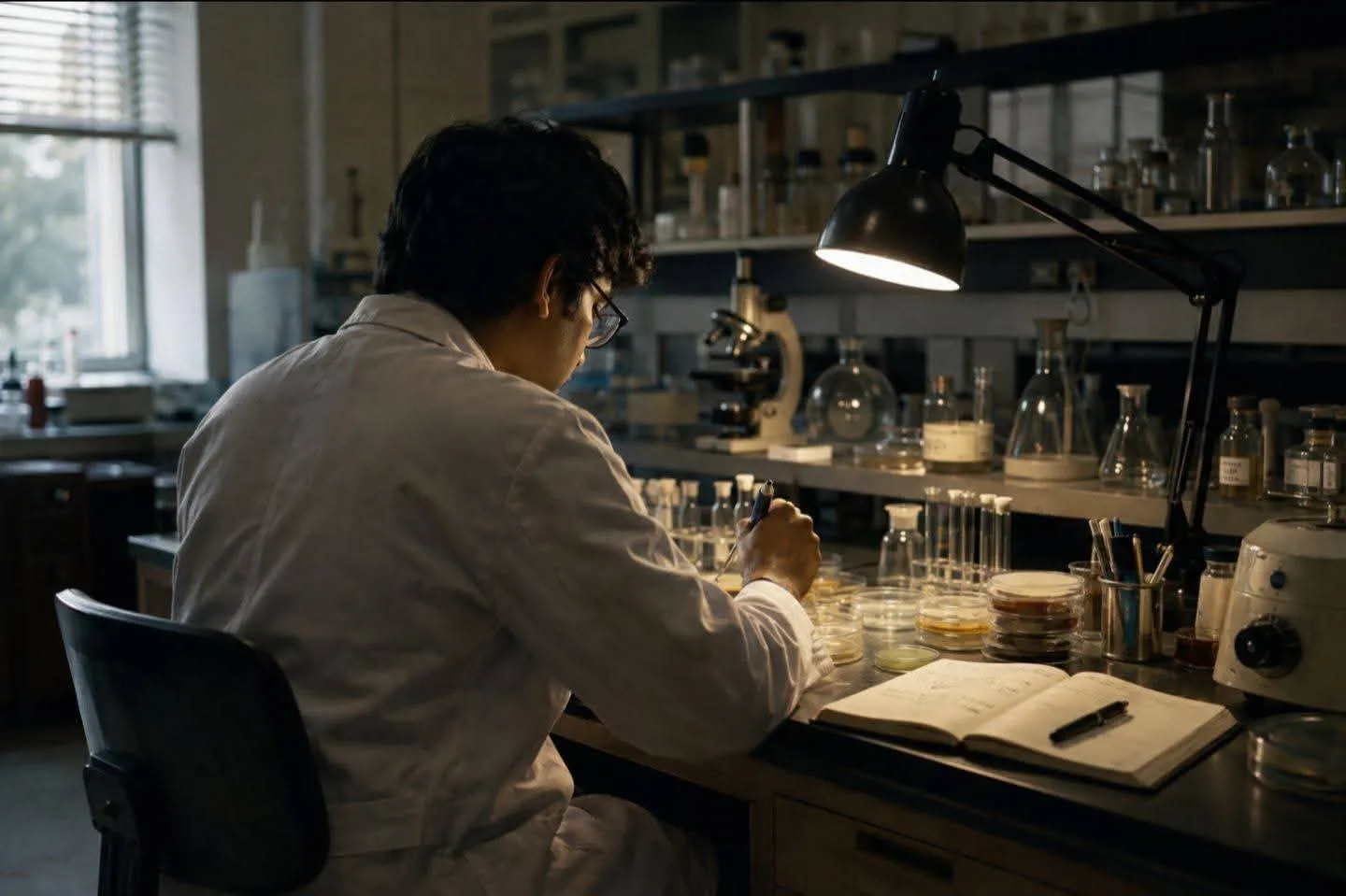
The year was 1982. In a genetics laboratory at the University of Oregon, a young Bangladeshi doctoral candidate was hard at work. His name was Abdul M. Chaudhury, known to us today as Dr Abed Chaudhury. Having studied chemistry in Bangladesh, he grew fascinated by molecular biology upon moving to the United States and immersed himself in frontline genetic research.
One afternoon, his doctoral adviser presented him with an intractable conundrum in molecular biology. It was a daunting challenge, one that established scholars had struggled to crack for years.
The Puzzle of DNA Repair
DNA is frequently called the blueprint of life. Yet this blueprint does not remain pristine; cellular genomes suffer continuous environmental and metabolic damage. To survive, living cells employ sophisticated molecular machines dedicated to DNA repair.
In Escherichia coli bacteria, scientists knew that two protein subunits, RecB and RecC, joined together to form a multi-functional enzyme known as Exonuclease V. This enzyme plays an indispensable role in repairing double-strand breaks and guiding homologous recombination.
However, an enigmatic discrepancy emerged. Geneticists had assumed RecB and RecC were the sole components of the complex. Yet biochemical anomalies suggested the picture was incomplete; an unidentified element remained elusive. To uncover it, young Abed Chaudhury devised an unconventional experimental approach.
Walking the Inverted Path
Standard laboratory protocol required spreading a lawn of bacteria across a petri dish before applying droplets of bacteriophages, specialised viruses that infect bacteria. By observing how phages lysed the bacterial lawn, researchers identified distinct mutant colonies.
Abed Chaudhury did the exact opposite. He coated the agar with bacteriophages first, and then introduced the bacterial cultures on top. His peers were stunned, and several cautioned that such an unorthodox procedure would yield nothing. Recalling the moment decades later, Dr Chaudhury noted that the inspiration struck him much like the sudden arrival of a line of poetry.
Finding the Unusual Mutants
The inverted design acted as a powerful selection sieve. The viral background eliminated ordinary wild-type cells, allowing rare mutants with altered repair profiles to stand out prominently. Within days, Chaudhury screened thousands of bacterial candidates and identified several peculiar mutants.
These novel strains exhibited startling characteristics: they lacked standard Exonuclease V nuclease degradation, yet their capacity for homologous recombination and DNA repair remained remarkably intact. This proved beyond doubt that an undiscovered genetic component was operating within the repair complex.
Unveiling a Brand-New Gene
Rigorous biochemical mapping confirmed the existence of this mystery gene, christened recD. The gene codes for the RecD polypeptide, a 58-kilodalton protein that serves as the crucial third subunit of Exonuclease V, completing the RecBCD holoenzyme.
In August 1986, Proceedings of the National Academy of Sciences, known as PNAS, published the breakthrough paper by Chaudhury and his team, formally announcing the discovery of the gene.
A Modest Setup, a Monumental Result
Remarkably, this major breakthrough required no elaborate hardware, only original scientific intuition. Dr Chaudhury observed that the assay was simple enough to conduct in a high school lab. Yet that simple conceptual shift resolved a long-standing impasse that had puzzled international molecular biologists for years.
Acclaim from Nobel Laureates
Word of the discovery resonated throughout the international scientific community. Renowned molecular geneticist Frank Stahl wrote to congratulate Chaudhury. Nobel laureate Hamilton O. Smith, a founding pioneer of restriction enzymes, sent a warm personal letter praising the elegance of the work.
Following a second paper in PNAS, Chaudhury received an invitation to the storied Cold Spring Harbor Laboratory in New York. There, he discussed the mechanics of homologous recombination directly with James D. Watson, co-discoverer of the DNA double helix. For a young scientist, it was an exhilarating recognition.
Advice for Young Scientists
Reflecting on decades of frontline scientific inquiry, Dr Abed Chaudhury offers enduring counsel to the next generation of researchers: “Do not follow in the footsteps of others; forge your own path. Find questions whose answers no one yet knows, and dedicate yourself to uncovering them.”
He remains convinced that countless discoveries still await across nature. All that is required is curiosity, creative imagination, and the courage to think beyond orthodoxy.
Closing Thoughts
Behind landmark advances in science often lie small, courageous moments. The discovery of the RecD gene was one such turning point: a young researcher dared to walk in reverse, and that very boldness led him straight to a cornerstone of molecular genetics.