Double Nobel Laureates: Scientists Who Won the Nobel Prize Twice
A Rare Distinction in the Annals of Science
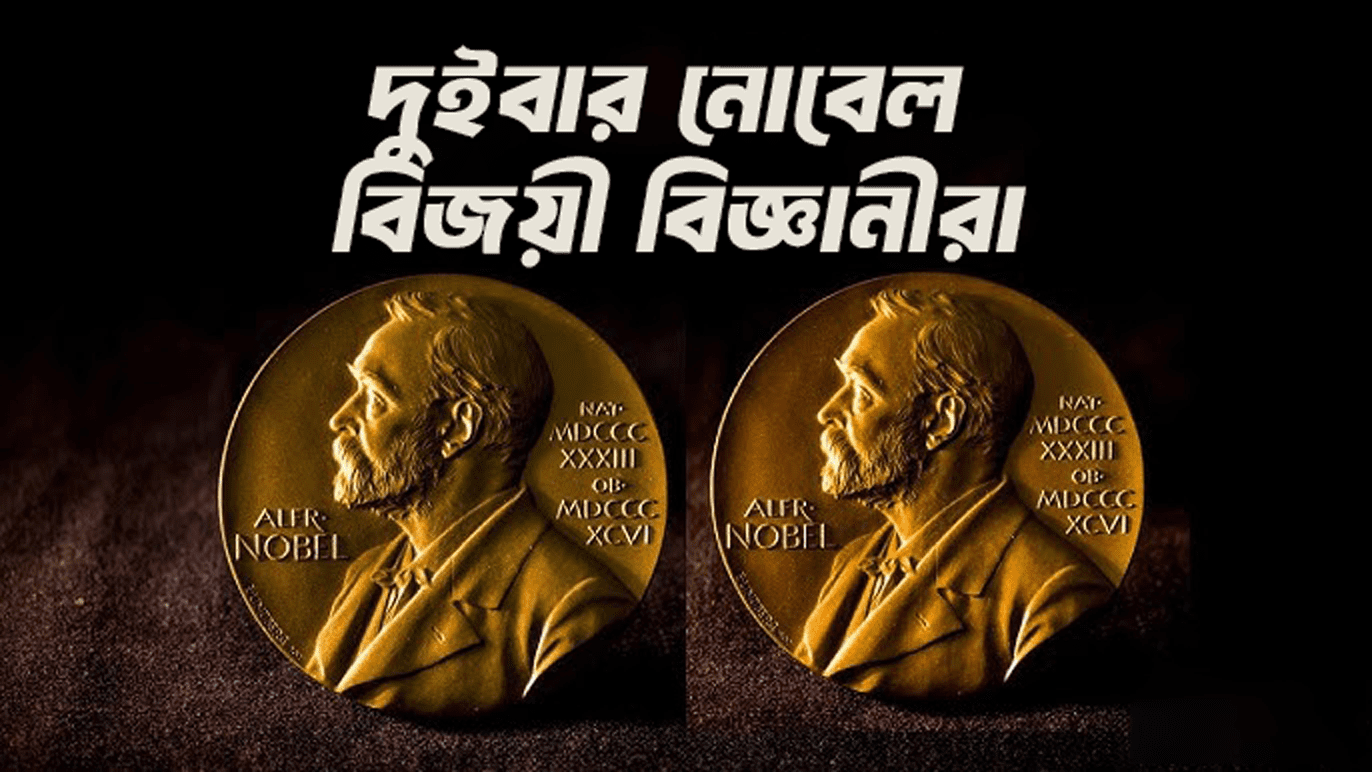
Every October, the global academic community turns its eyes toward Stockholm and Oslo as the Nobel Committees announce the year’s laureates in physics, chemistry, physiology or medicine, literature, peace, and economic sciences. Winning a single Nobel Prize cements a researcher’s place in history. Yet across more than a century of awards, only five remarkable individuals have won the Nobel Prize twice.
1. Marie Curie (1867–1934)
Born Maria Skłodowska in Warsaw, Poland, Marie Curie pioneered the study of radioactivity. Working alongside Pierre Curie and Henri Becquerel, she discovered two new chemical elements: polonium and radium.
- 1903 Nobel Prize in Physics: Awarded jointly with Henri Becquerel and Pierre Curie for discoveries regarding spontaneous radiation phenomena.
- 1911 Nobel Prize in Chemistry: Awarded to Marie Curie alone for discovering radium and polonium and isolating pure metallic radium.
Curie remains the only person in history to win Nobel Prizes in two distinct scientific disciplines.
2. John Bardeen (1908–1991)
American theoretical physicist and electrical engineer John Bardeen was the architect of modern solid-state electronics and condensed matter physics:
- 1956 Nobel Prize in Physics: Shared with William Shockley and Walter Brattain for inventing the point-contact transistor, sparking the global semiconductor and computer revolution.
- 1972 Nobel Prize in Physics: Shared with Leon Cooper and J. Robert Schrieffer for developing the microscopic BCS theory of superconductivity.
Bardeen is the only physicist in history to receive two Nobel Prizes in Physics.
3. Frederick Sanger (1918–2013)
British biochemist Frederick Sanger, widely celebrated as the “Father of Genomics,” unlocked the molecular sequences of biological macromolecules:
- 1958 Nobel Prize in Chemistry: For determining the complete amino acid sequence of insulin, proving that proteins possess defined chemical sequences.
- 1980 Nobel Prize in Chemistry: Shared with Paul Berg and Walter Gilbert for inventing the “dideoxy” DNA sequencing method, enabling the Human Genome Project.
Sanger was the first individual ever awarded two Nobel Prizes in Chemistry.
4. Linus Pauling (1901–1994)
American structural chemist and humanist Linus Pauling revolutionized quantum chemistry and championed international peace:
- 1954 Nobel Prize in Chemistry: For elucidating the nature of the chemical bond and the molecular structures of complex substances, including proteins.
- 1962 Nobel Peace Prize: For his tireless international campaign against nuclear weapons testing, culminating in the 1963 Partial Nuclear Test Ban Treaty.
Pauling is the only person in history to have won two unshared Nobel Prizes.
5. Karl Barry Sharpless (1941–Present)
American organic chemist K. Barry Sharpless transformed modern synthetic chemistry with modular molecular assembly:
- 2001 Nobel Prize in Chemistry: Shared with William Knowles and Ryoji Noyori for developing chirally catalyzed oxidation reactions (Sharpless epoxidation).
- 2022 Nobel Prize in Chemistry: Shared with Carolyn Bertozzi and Morten Meldal for the development of click chemistry and bioorthogonal chemistry.
Sharpless is the only living scientist to have won two Nobel Prizes.
Institutional Multiple Laureates
In addition to individual scientists, two humanitarian organizations have received multiple Nobel Peace Prizes: the International Committee of the Red Cross (ICRC) (awarded three times: 1917, 1944, 1963) and the Office of the United Nations High Commissioner for Refugees (UNHCR) (awarded twice: 1954, 1981).
Conclusion
These five brilliant researchers who won the Nobel Prize twice demonstrate that profound curiosity, tireless perseverance, and intellectual boldness can reshape humanity’s scientific landscape multiple times within a single lifetime.