SpaceX Crew-9: Successful Splashdown and Earth Return
Mission Accomplished: A Landmark Splashdown
In a historic chapter for human spaceflight, the astronauts of NASA’s SpaceX Crew-9 mission returned safely to Earth after completing an extended, high-profile expedition aboard the International Space Station (ISS). The returning flight crew included NASA astronauts Nick Hague, Sunita Williams, and Butch Wilmore, alongside Roscosmos cosmonaut Aleksandr Gorbunov.
Throughout their orbital mission, the crew conducted more than $150$ complex scientific experiments and technological demonstrations, providing vital biomedical, materials, and engineering data for future lunar and Martian exploration.
Starliner Technical Anomalies and Extended Orbital Stay
The homecoming of Williams and Wilmore resolved one of the most closely followed orbital contingencies in recent space history. In June 2024, Sunita Williams and Butch Wilmore launched to the ISS aboard the Boeing Crew Flight Test (CFT) of the Starliner spacecraft for a mission originally slated to last eight days.
During proximity operations and docking, Starliner encountered multiple service-module propulsion issues, including reaction control thruster dropouts and helium pressurization leaks. Prioritizing crew safety, NASA decided to return Starliner uncrewed, reassigning Williams and Wilmore to return aboard the SpaceX Crew Dragon Freedom alongside Crew-9 Commander Nick Hague and Mission Specialist Aleksandr Gorbunov after an unexpected nine-month orbital residency.
Groundbreaking Scientific Research in Microgravity
Aboard the orbital laboratory, the Expedition crew conducted pioneering scientific research across multiple disciplines:
- Arthrospira C Cyanobacteria Cultivation: Probing how microalgae produce oxygen and dietary biomass in microgravity to develop regenerative life-support systems for deep-space habitats.
- European Exploration Exercise Device (E4D): Validating next-generation exercise countermeasures to prevent bone mineral density loss and muscle atrophy during multi-year spaceflights.
- Soil Moisture Dynamics and Plant Microbiomes: Analyzing rhizosphere microbial interactions to optimize space crop cultivation.
- Microgravity Fluid Physics: Investigating capillary flow and boiling heat transfer for cryogenic rocket propellant depots.
Spacewalks and Physiological Monitoring
During extravehicular activities (EVAs), the crew collected exterior swabs of the ISS hull to investigate extremophilic microbial survival in the vacuum, solar radiation, and extreme thermal cycling of low-Earth orbit. Concurrently, astronauts wore advanced Bio-Monitor vests and sensor headbands, tracking heart-rate variability, sleep architecture, and cosmic radiation exposure in real time.
Flawless Ocean Splashdown off Florida
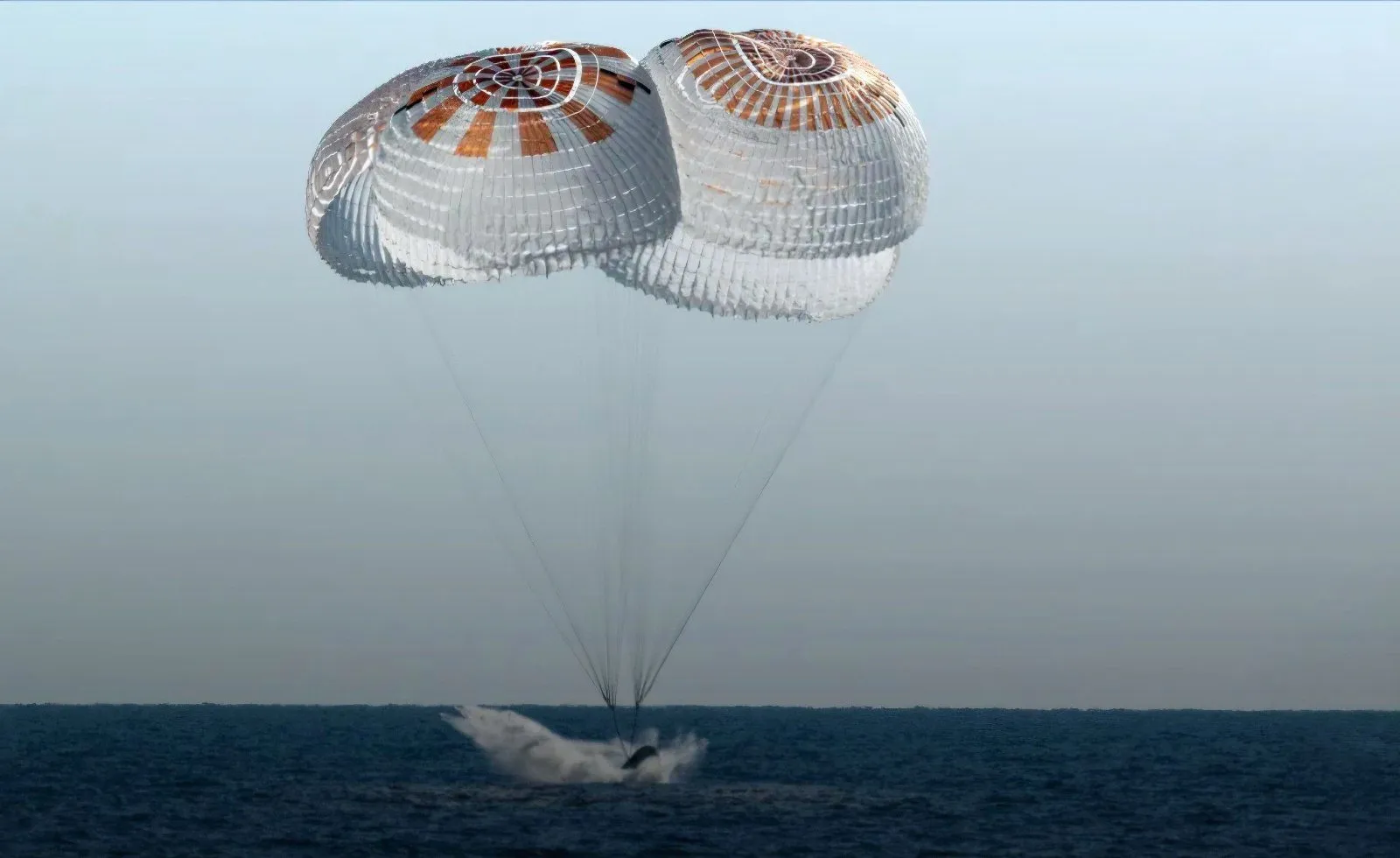
The mission concluded when the SpaceX Dragon spacecraft performed its deorbit burn, shed its trunk, and executed atmospheric reentry. Decelerated by drogue and main parachutes, the spacecraft achieved a flawless ocean splashdown off the Florida coast, where SpaceX recovery vessels promptly retrieved the capsule.
The triumphant conclusion of the SpaceX Crew-9 mission demonstrates the resilience of international orbital cooperation and the mature operational capabilities of NASA’s Commercial Crew Program.