Satyendra Nath Bose: Bose-Einstein Statistics and the Nobel Enigma
The 1924 Breakthrough in Dhaka
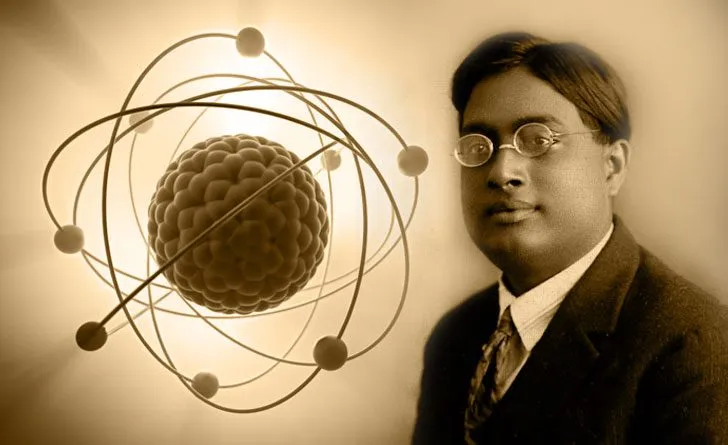
In 1924, while serving as a reader in physics at the newly established University of Dacca (now Dhaka), Satyendra Nath Bose accomplished one of the greatest conceptual leaps in the history of quantum physics. Seeking to derive Max Planck’s black-body radiation law without relying on classical electrodynamics, Bose realized that identical light quanta (photons) must be treated as fundamentally indistinguishable particles.
When his original manuscript was rejected by the British Philosophical Magazine, Bose took a bold step: he mailed his six-page handwritten paper in English directly to Albert Einstein in Berlin, with a polite cover letter requesting its translation into German.
Einstein’s Recognition and the Dawn of Quantum Statistics
Albert Einstein instantly recognized the revolutionary depth of Bose’s derivation. Einstein translated the paper personally into German, adding an enthusiastic note of endorsement, and arranged its publication in the prestigious Zeitschrift für Physik.
Generalizing Bose’s statistical method from massless photons to massive atoms possessing integer angular momentum (spin), Einstein published two follow-up papers predicting that at temperatures approaching absolute zero, gas atoms would drop into their lowest quantum ground state. This predicted macroscopic quantum phenomenon is known worldwide as the Bose-Einstein condensate (BEC).
Experimental Confirmation and the Nobel Enigma
Creating a Bose-Einstein condensate remained a monumental experimental hurdle for seven decades. In 1995, physicists Eric Cornell, Carl Wieman, and Wolfgang Ketterle finally created the first atomic BECs using laser cooling and magnetic evaporative traps, earning the 2001 Nobel Prize in Physics.
Although the theory originated with Satyendra Nath Bose, he was repeatedly bypassed for the Nobel Prize during his lifetime despite multiple nominations. Yet Bose remained remarkably indifferent to formal honors, finding complete fulfillment in the pure joy of scientific discovery, literature, and music.
The Immortality of Bosons
In modern theoretical physics, Satyendra Nath Bose’s legacy is permanently immortalized in the fundamental architecture of the universe. Theoretical physicist Paul Dirac coined the term boson to honor Bose, classifying all subatomic particles in the cosmos into two primary families:
- Fermions (Matter Constituents): Named after Enrico Fermi, particles with half-integer spin (electrons, protons, quarks) that obey the Pauli exclusion principle.
- Bosons (Force Mediators): Named after Satyendra Nath Bose, particles with integer spin (photons, gluons, W/Z bosons) that obey Bose-Einstein statistics and can occupy the same quantum state simultaneously.
Most notably, the discovery of the Higgs boson—the fundamental particle that grants inertial mass to matter—anchors Bose’s name to the very mechanism of cosmic mass generation.
Conclusion
The visionary insights of Professor Satyendra Nath Bose fundamentally transformed twentieth-century physics. By reimagining how particles occupy quantum space, Bose’s work continues to illuminate the deepest frontiers of quantum science.