Meghnad Saha: Unraveling the Secrets of Stars with the Saha Equation
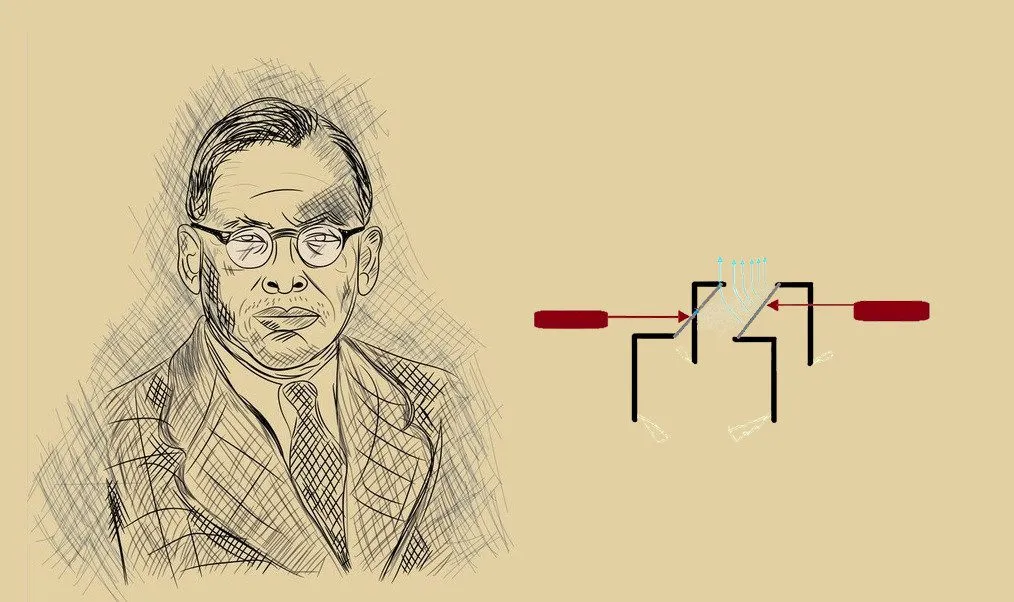
From Rural Poverty to Scientific Greatness
In 1893, in the quiet village of Sheoratali near Kaliakair in the Dhaka district of Bengal, a boy was born into a humble grocery shopkeeper’s family. His name was Meghnad Saha. Confronted with severe poverty, the boy balanced long hours assisting his father in the shop with late-night studies under the faint flicker of a kerosene lamp.
Recognizing his exceptional mathematical intellect, his father enrolled him in a middle school ten miles away in Shimulia, where Saha stayed in a local physician’s home, paying for his lodging by washing dishes and tending cattle. His fierce academic dedication astonished everyone when he ranked first across the entire Dhaka division in his Entrance examinations.
Patriotic Struggle and Academic Excellence
Securing a government scholarship, Saha entered Dhaka Collegiate School. However, during the fervor of the anti-colonial Swadeshi movement, he organized student protests against British colonial administrators, resulting in his immediate expulsion and the cancellation of his stipend.
Rescued by supportive mentors, he completed his intermediate examinations at Dhaka College and proceeded to Presidency College in Kolkata. There, Saha studied alongside another legendary intellect, Satyendra Nath Bose. Saha and Bose earned the joint first rank in applied mathematics and joined the faculty of Calcutta University, where Saha earned his Doctor of Science (D.Sc.) degree.
The Saha Equation: Unlocking Stellar Spectroscopy
In 1920, at the young age of twenty-seven, Meghnad Saha achieved international renown by formulating the Saha ionization equation. At the time, astronomers could record stellar absorption spectra using prisms, but lacked the theoretical tools to interpret what those dark lines revealed about a star’s physical constitution.
Saha synthesized chemical thermodynamics, statistical mechanics, and early quantum theory to explain how high temperatures and low pressures inside stellar atmospheres strip electrons from atomic shells:
$$\frac{N_{i+1} N_e}{N_i} = \frac{2 k T g_{i+1}}{g_i} \left( \frac{2 \pi m_e k T}{h^2} \right)^{3/2} e^{-\frac{\chi_i}{k T}}$$
Applying his equation, Saha demonstrated that spectral differences between stars reflect their atmospheric temperatures and ionization states rather than drastically differing elemental compositions. Later spectroscopic work building on Saha’s formulation proved that the Sun and other stars are composed primarily of hydrogen and helium. The Saha equation provided astrophysics with its first quantitative key to deciphering the cosmos, earning Saha fellowship in the Royal Society of London (FRS) in 1927.
Nation-Building and Scientific Leadership
Saha was not merely an ivory-tower theorist; he was deeply dedicated to utilizing science for national modernization. He established the Institute of Nuclear Physics in Kolkata (now the Saha Institute of Nuclear Physics) and was elected as an independent member of India’s Lok Sabha (Parliament).
As a key member of the National Planning Committee, Saha advocated for river valley flood management—spearheading the Damodar Valley Corporation (DVC)—and promoted industrial electrification and scientific education as vital prerequisites for social progress.
Conclusion
When Professor Meghnad Saha passed away in 1956, he left an enduring legacy bridging fundamental stellar physics and progressive nation-building. His life stands as a testament to how relentless intellect and social conscience can illuminate the stars while uplifting human society.