The Green Revolution: How Science Averted Global Famine
The Mid-Twentieth-Century Agricultural Crisis
During the 1960s, humanity faced an alarming demographic crisis. Rapid population growth across Asia, Latin America, and Africa was drastically outstripping global food production, leading numerous demographers to predict inevitable, widespread famines. Traditional agricultural practices had hit a biological plateau, creating an urgent need for an agricultural breakthrough.
That breakthrough arrived in the form of the Green Revolution—a monumental technological transformation driven by genetics, agronomy, and high-yielding dwarf crop varieties.
The Lodging Problem and Norman Borlaug’s Wheat
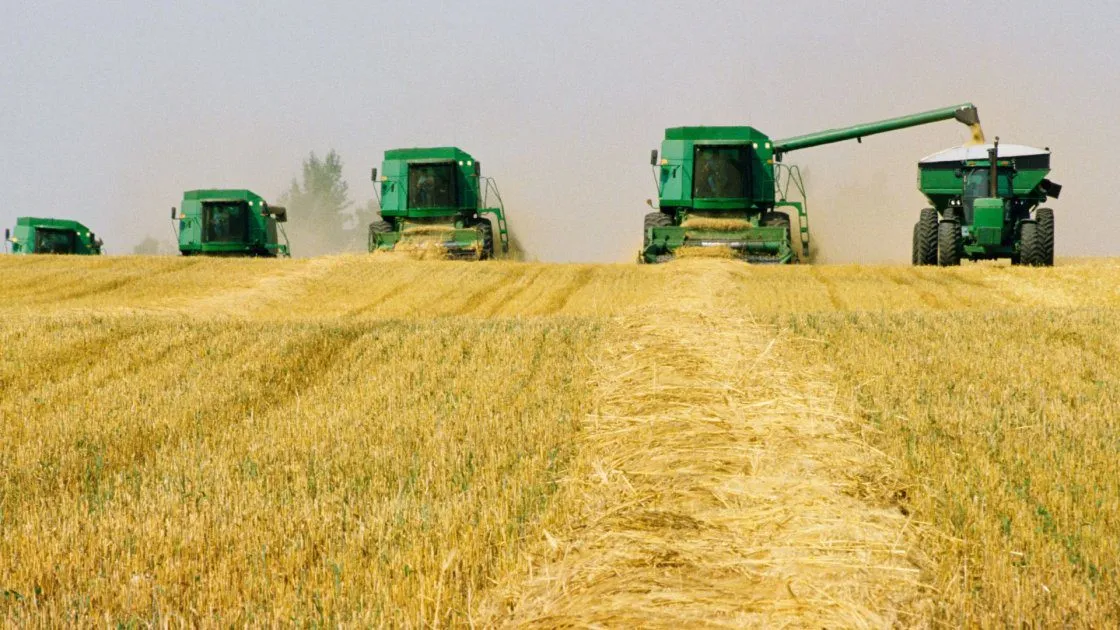
At the International Maize and Wheat Improvement Center (CIMMYT) in Mexico, agricultural scientists led by Dr. Norman Borlaug were dedicated to dramatically boosting wheat yields. They encountered a frustrating biological obstacle: traditional wheat plants were tall and spindly. When farmers applied synthetic nitrogen fertilizers and irrigation, the heavy seed heads caused the slender stalks to bend and collapse to the ground—a destructive phenomenon known as lodging, which rotted the grain before harvest.
Borlaug recognized that high yields required short, sturdy stems. He located a Japanese semi-dwarf winter wheat variety called Norin 10, which had been bred in 1935 but overlooked during the turmoil of World War II. Standing merely two feet tall, Norin 10 carried critical dwarfing genes.
By cross-breeding Norin 10 with Mexican varieties, Borlaug’s team engineered semi-dwarf, disease-resistant wheat strains that channeled nutrients directly into dense grain production rather than excess foliage. When planted in India and Pakistan during the late 1960s, wheat yields multiplied exponentially, averting catastrophe. In 1970, Borlaug was awarded the Nobel Peace Prize for saving an estimated billion lives from starvation.
The Rice Revolution: Developing IR8 at IRRI
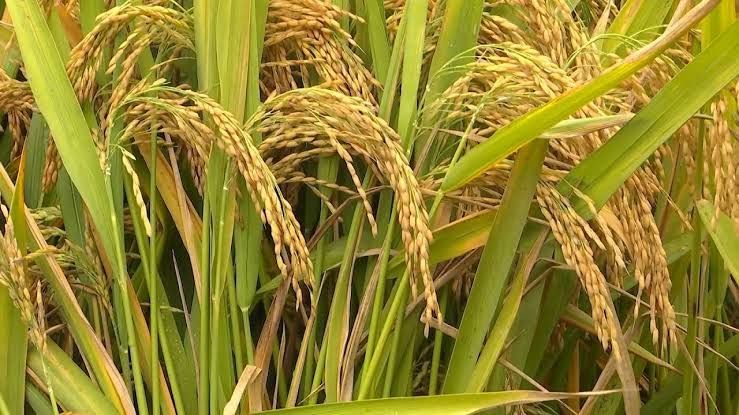
Concurrently, rice agronomists faced identical lodging challenges across tropical Asia. At the International Rice Research Institute (IRRI) in the Philippines, researchers tackled the crisis by crossing Dee-geo-woo-gen, a semi-dwarf variety from Taiwan, with Peta, an Indonesian high-yield strain.
The resulting cultivar, officially released in 1966 as IR8, became universally celebrated as Miracle Rice (known across Bengal as IRRI Dhan):
- It matured in 130 days compared to 160–170 days for traditional varieties.
- Its stiff, upright leaves captured sunlight efficiently without lodging under heavy fertilizer application.
- It routinely produced five to ten tons of grain per hectare, compared to traditional yields of one to two tons.
Sustaining Modern Food Security
The introduction of semi-dwarf wheat and IRRI rice revolutionized agricultural economies, transforming recurring famine zones into food self-sufficient regions. While modern agronomy continues to grapple with the ecological impacts of intensive irrigation and chemical inputs, the Green Revolution remains one of the greatest triumphs of biological science in human history.