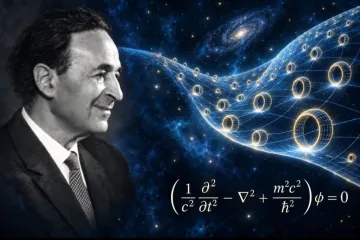
Abdus Salam: The Nobel Physicist Who Unified Fundamental Forces
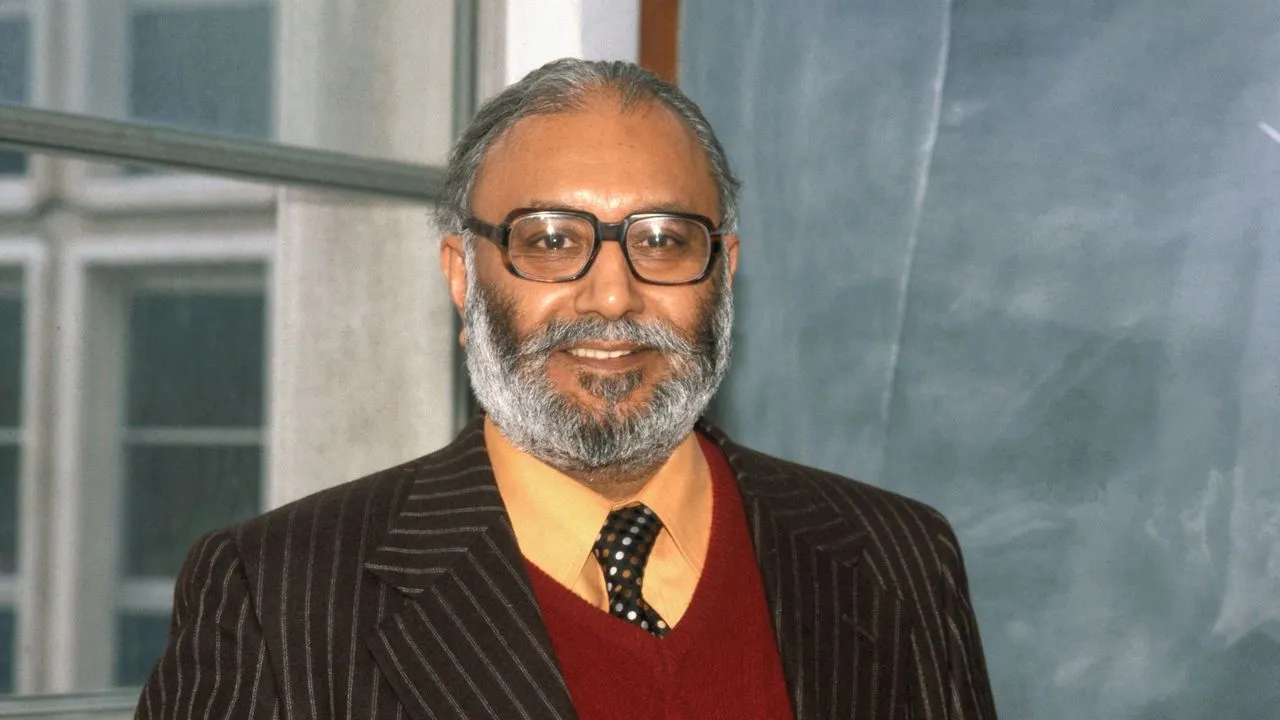
Prodigy of Punjab and Cambridge Scholar
Born in 1926 in the small rural town of Jhang, in present-day Pakistan, Abdus Salam exhibited astonishing mathematical genius from early childhood. Passing his matriculation examinations at the record-setting age of fourteen, he graduated with highest honors in mathematics from the University of the Punjab, never having ranked second in any academic examination throughout his life.
Securing a scholarship to St John’s College, Cambridge, Salam earned first-class honors in both mathematics and physics before completing a doctorate in theoretical physics under the mentorship of Paul Dirac and Nicholas Kemmer. His doctoral research on quantum electrodynamics and quantum field theory quickly commanded the attention of scientific luminaries such as Wolfgang Pauli and J. Robert Oppenheimer.
Electroweak Unification and the Nobel Prize
Following a frustrating return to Pakistan where rigid bureaucracy stymied his research ambitions, Salam took up a professorial chair at Imperial College London in 1957. There, he set his sights on the holy grail of twentieth-century physics: unifying nature’s fundamental forces.
Physicists recognized four primary forces governing the cosmos: gravity, electromagnetism, the strong nuclear force, and the weak nuclear force. In the 1960s, working independently alongside American physicists Steven Weinberg and Sheldon Glashow, Salam proved that electromagnetism and the weak force are manifestations of a single underlying interaction: the electroweak force.
Salam’s mathematical formulation predicted the existence of massive neutral weak intermediate vector bosons—the $Z^0$ boson alongside the charged $W^+$ and $W^-$ bosons. In 1983, particle collision experiments at CERN’s Super Proton Synchrotron confirmed these bosons with extraordinary precision. For their revolutionary theoretical synthesis, Abdus Salam, Steven Weinberg, and Sheldon Glashow were jointly awarded the 1979 Nobel Prize in Physics.
Founding the ICTP for the Developing World
Beyond his theoretical breakthroughs, Salam was a relentless champion for scientific advancement in developing countries. Recognizing that third-world scholars were often isolated from modern research networks, Salam founded the International Centre for Theoretical Physics (ICTP) in Trieste, Italy, in 1964.
Operating under the auspices of UNESCO and the IAEA, the ICTP provided research fellowships, conferences, and peaceful collaboration for thousands of emerging scientists across Asia, Africa, and Latin America. Salam generously donated his entire Nobel Prize monetary award to support developing-world physics fellowships.
Tragic Marginalization and Enduring Legacy
Despite his lifelong dedication to his homeland, Salam faced bitter sectarian discrimination in Pakistan due to his adherence to the Ahmadiyya religious community, which was officially declared non-Muslim by the Pakistani state in 1974. Rather than receiving national veneration, his achievements were marginalized by political factions.
Passing away in 1996 at age seventy, Abdus Salam left behind a monumental legacy that shaped the Standard Model of particle physics and empowered generations of scientists across the global South.